
EU long-term budget: MEPs want a 10% increase to support EU priorities
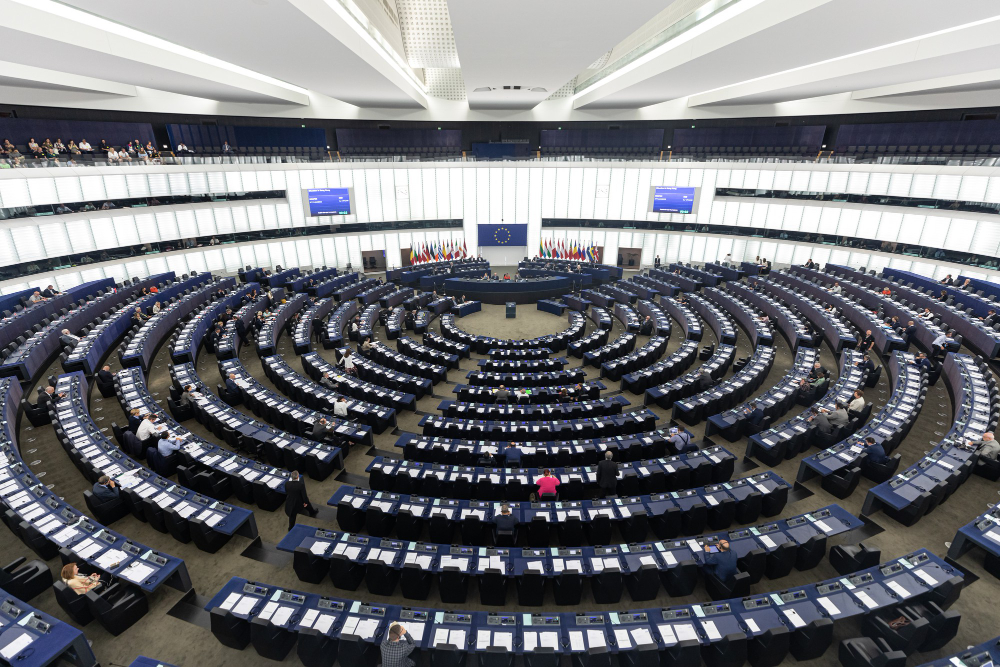
On Wednesday MEPs endorsed their negotiating position on the 2028-2034 EU budget, including a breakdown of the amounts they want to allocate to each EU funding programme.
The 2028-2034 EU budget (the multiannual financial framework – MFF) should be set at 1.27% of EU GNI, with debt servicing for the NextGenerationEU recovery fund (0.11% of GNI) outside the budget ceilings, according to the interim report adopted by the Budgets Committee with 26 votes, 9 against and 5 abstentions. This represents a 10% increase compared to the Commission’s July 2025 proposal, and MEPs propose to allocate this increased funding evenly across the three headings of the budget which finance EU priorities, and to ensure that the budget is protected from inflationary shocks.
MEPs say this is the minimum amount of money the EU needs to meet its commitments, respond to citizens’ expectations, and address major challenges, including large-scale warfare in Europe, economic and social challenges, a competitiveness gap and the worsening climate and biodiversity crises. They stress that the next long-term EU budget must remain an investment budget supporting EU policies, citizens, regions, businesses and SMEs, while securing EU added value compared to national spending.
While the report does not alter the MFF structure proposed by the Commission, MEPs strongly oppose the re-nationalisation of the EU budget, rejecting an “à la carte” EU and warning the Commission’s “one plan per member state” approach could undermine EU policies, reduce transparency, and create competition between beneficiaries.
Distinct and more funding for key programmes
MEPs want strong and adequately funded policies, with distinct allocations for policies under the National and Regional Partnership Plans, including the Common Agricultural Policy and Fisheries Policy, including for outermost regions, the Cohesion Policy, the European Social Fund and Home Affairs. MEPs also stress that regional and local authorities should be fully involved in planning and implementing the programmes.
MEPs welcome the Commission’s proposal to double funding to strengthen the EU’s competitiveness, defence capacity, innovation, the digital and green transitions, infrastructure, health, education and culture. They call for greater support for key programmes such as the European Competitiveness Fund (ECF), Horizon Europe, the Connecting Europe Facility, Erasmus+, AgoraEU and the civil protection mechanism, along with dedicated funding for EU4Health actions as well as LIFE-related actions under the ECF.
While they support increasing the resources for external action, MEPs say the proposed amount is still insufficient and call for stronger funding for enlargement, development, support to Ukraine, multilateral cooperation and humanitarian aid.
Transparency and accountability under threat
MEPs warn against moving key policy choices to Commission work programmes without Parliament’s involvement, stressing that simplification must not undermine transparency, accountability or democratic oversight. They also raise concerns about widespread financing not linked to costs, which could make proper auditing more difficult. While recognising the need for flexibility, they caution that flexibility without transparency could undermine public trust in the EU. The report also emphasises that respect for EU values and the rule of law is a prerequisite for accessing EU funds, while avoiding penalising final recipients following breaches of the rule of law by their governments.
Revenue side
MEPs reaffirm Parliament’s strong commitment to introducing new so-called “own resources” to repay NextGenerationEU debt and finance the EU budget. They support the Commission’s proposed “basket approach” for new revenue sources, and stress they must be adopted together with the next MFF and generate around €60 billion annually. MEPs urge member states to quickly reach an agreement on these new revenue sources and stress that if some proposals are dropped from the list, alternative ones should be introduced instead. Such possible alternatives include a digital services levy, an online gambling levy, an extension of the Carbon Border Adjustment Mechanism (CBAM), or a levy on crypto-asset capital gains.
Proposed top-ups (in current prices, list not exhaustive):
- Overall MFF size: +197.30bn
- Common Agriculture Policy (CAP): +139.31bn
- Structural and cohesion funds: +78.87bn
- European Social Fund (ESF): +124.19bn
- Asylum and migration policies, border management and security: +3.82bn
- European Competitiveness Fund (ECF): +30.05bn
- Horizon Europe: +25bn
- Connecting Europe Facility (CEF): +9.86bn
- EU Civil Protection Mechanism and health preparedness (UCPM+): +1.74bn
- Erasmus+: +6.56bn
- AgoraEU: +2.14bn
- Global Europe programme: +24.06bn
