President Costa travels to Montreal for the EU-Canada Summit
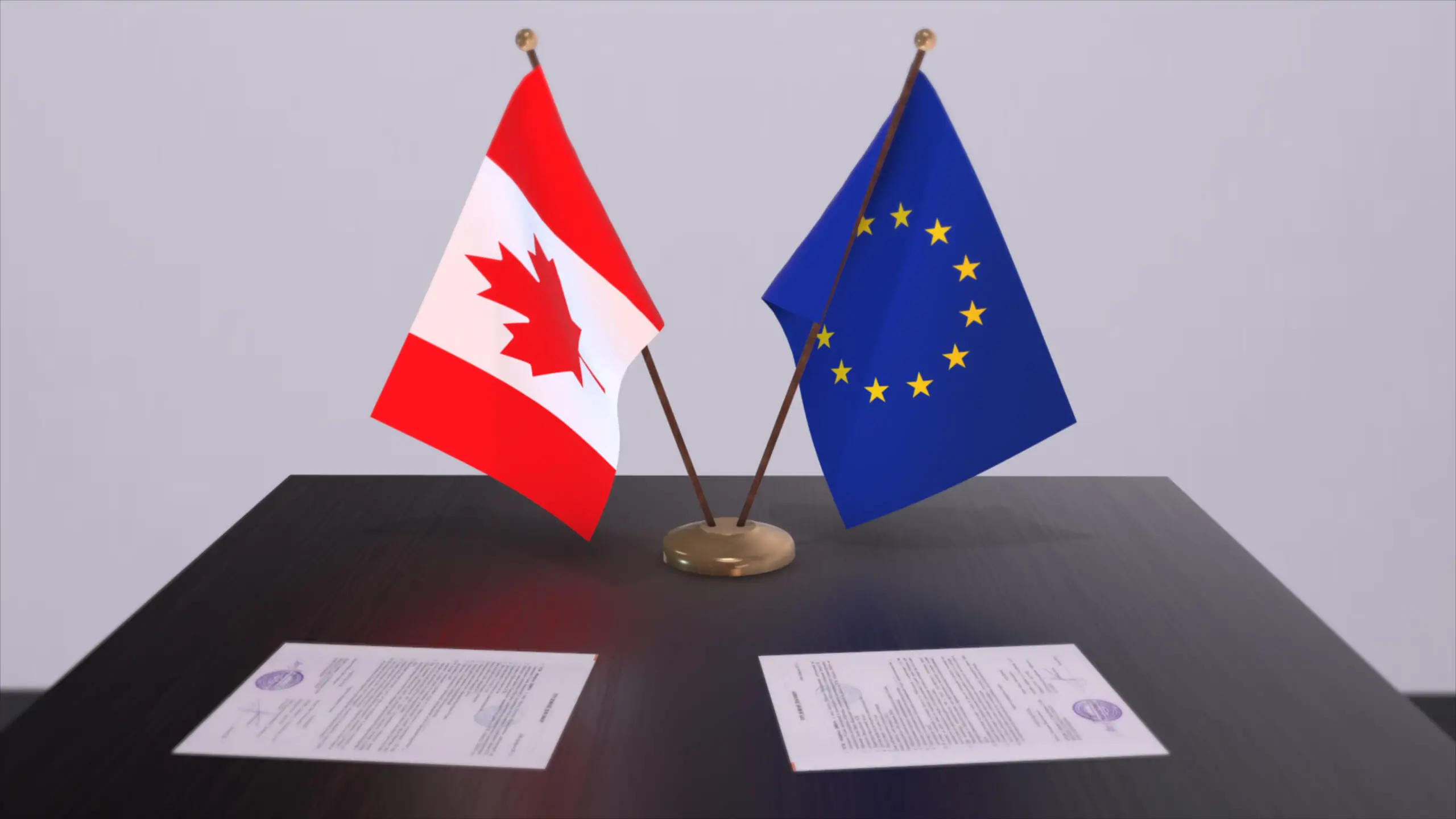
The President of the European Council, António Costa, will travel to Montreal, Canada, for the 21st EU-Canada summit on 29 and 30 October. He will represent the EU together with the President of the European Commission, Ursula von der Leyen. Canada will be represented by Prime Minister Mark Carney.
The summit is set to mark a major milestone in EU-Canada relations, paving the way for an even broader and deeper political partnership and stepping up cooperation. At the summit, EU and Canadian leaders are expected to launch an ‘Alliance for the Future’, a framework for shared prosperity and economic security, underpinned by concrete new initiatives to strengthen people-to-people ties, deepen economic relations and reinforce their joint stance on the global stage.
The agenda of the summit will cover a wide range of topics: from trade, digital and critical raw materials to defence, security, as well as cooperation in the fields of education, research and innovation and youth.
“The EU and Canada have long been close friends, major partners and strategic allies. Our bond is strong and it is growing stronger. In Montreal, we will take our partnership to the next level by launching our ‘Alliance for the Future’ to deepen our political, economic and institutional ties even further.”
– António Costa, President of the European Council
Leaders will also take stock of progress made since the last EU-Canada summit in 2025, which launched the Security and Defence Partnership. Since then, Canada and the EU have deepened their economic and defence cooperation, including through CETA, Canada’s participation in SAFE and reciprocal investment in strategic industries. They have also strengthened dialogue on competitiveness, economic security and supply chains, enhanced consular cooperation, and advanced collaboration on digital and AI matters. In December 2025, the EU and Canada brought into force the mutual recognition agreement for architects’ professional qualifications.
This year’s summit also builds on close cooperation on the global stage. In September 2026, The EU and Canada co-sponsored the Partners for Multilateralism (P4M) initiative in the margins of the UNGA High Level Week together with Australia, Barbados, Brazil, India and Kenya. The P4M declaration reaffirmed their commitment to international law and the multilateral system founded on the United Nations Charter and agreed to work together to reform and strengthen multilateral institutions to foster dialogue, coordination and practical cooperation.
Background
The EU and Canada are longstanding strategic partners sharing common values such as democracy, commitment to the rules-based international order as well as free and fair trade.
They have a longstanding political and economic partnership, underpinned by two major agreements signed in 2016: the Strategic Partnership Agreement (SPA) and the Comprehensive Economic and Trade Agreement (CETA).
Under CETA, the EU and Canada eliminated tariffs on 98% of tariff lines and agreed to gradually remove almost all remaining tariffs. CETA was signed in 2016 and entered into provisional application in September 2017.
At their summit on 23 June 2025, the EU and Canada signed a security and defence partnership. Canada is also the only non-European country taking part in Security Action for Europe (SAFE), the EU’s €150 billion instrument supporting member states that invest in defence production through common procurement. An agreement concluded in 2026 allows Canadian defence companies and products to participate in Member States’ procurement under SAFE.
The European Union and Canada are strong supporters of Ukraine in the face of Russia’s war of aggression. They work together, along with G7 partners, to increase coordination on sanctions against Russia, their enforcement and export controls restrictions.
The EU and Canada are also cooperating on climate and environment through the EU-Canada Green Alliance, set up in 2023. They also cooperate in the field of science, research and technological development; in July 2024, Canada became associated to Horizon Europe, the EU’s research and innovation programme. In November 2023, they launched the EU-Canada digital partnership.
The EU and Canada share a strong commitment to upholding and advancing multilateralism and the rules-based international order. Through close cooperation at both bilateral and multilateral levels, they work together to strengthen democracy, promote peace and security, defend human rights and the rule of law and support effective multilateralism.