
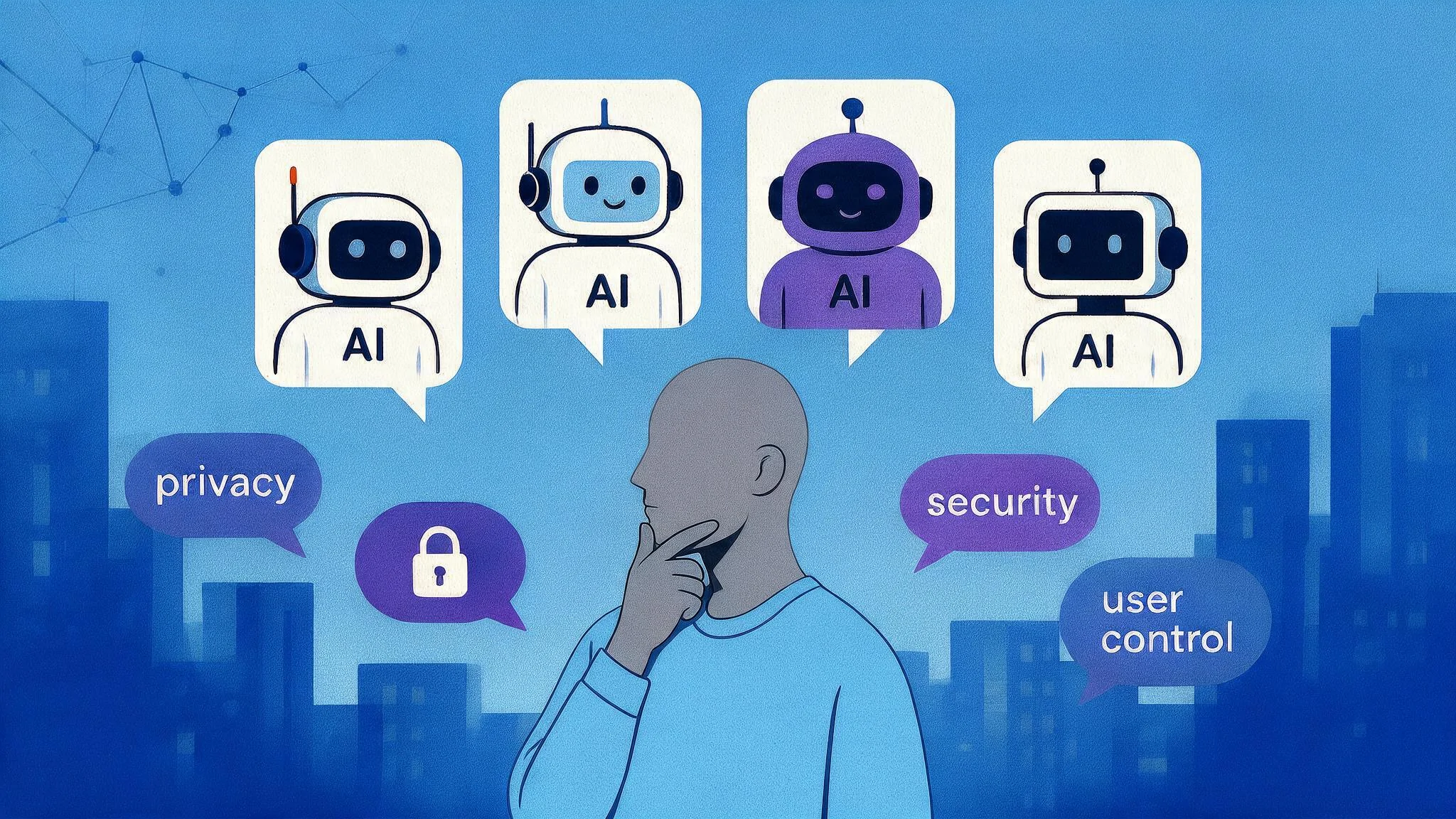
We are delighted to invite you to a hybrid event which will be held on Tuesday, 3rd of November at 12.00.
The event will consist of a lunch discussion on AI assistants and the implementation of the Digital Markets Act (DMA). This will provide a timely opportunity to discuss how the European Commission’s interoperability requirements could more directly affect European consumers and the EU’s digital ecosystem.
The event will also feature a presentation of the findings from a research on consumer sentiment towards interoperability and AI assistants, commissioned by the Chamber of Progress. The research will be published well ahead to the event.
Speakers and further details will be announced in the coming days, however, we are publishing this event now to ensure you save the date.
This event is public and will be held both onsite and online.
Due to a limited number of seats, please await final confirmation from us after registration

This event is sponsored by

About the debate
The European Union is entering a consequential phase in the implementation of the Digital Markets Act (DMA) as the European Commission’s interoperability requirements begin to have a more direct bearing on the digital products and services available to EU consumers. Originally designed to make digital markets more contestable, the DMA is now raising practical questions about how far large platforms should be required to open core operating-system functions to competing services, and what this means for the experience of users in Europe, especially compared with other advanced markets.
These questions are particularly acute in the emerging market for AI assistants. Under Article 6(7) of the DMA, the European Commission has considered how third-party AI assistants should be able to interact with operating-system functions currently used by incumbent services. The Android proceedings have brought this issue into sharp focus with the proposal concerning access to applications and system functions, including the ability of rival assistants to perform tasks on behalf of users. The debate has centred not only on competition and consumer choice, but also on whether expanding access to sensitive device functionality can be achieved without compromising privacy, security and users’ control.
A question which persists is whether the European Commission’s enforcement of the DMA is delivering the outcomes intended for EU consumers, as well as whether these effects are reflected in consumers’ own experiences and preferences. While the EU executive body presents interoperability as a means of increasing choice and competition, some observers argue that safeguards around privacy and security are essential to protecting users as new digital and AI-enabled features are developed.
The resulting debate raises a question that goes beyond the positions of individual companies or the interpretation of a specific DMA provision. Additionally, the expectations of European consumers from the EU’s digital regulatory framework should be also taken into account. Although greater interoperability could give users more choice and reduce dependence on individual ecosystems, the regulatory approach may also affect which products and features are available in Europe and how third-party services interact with devices, as well as increase cybersecurity risks and expose sensitive user data.
Against this backdrop, the public debate may usefully consider what interoperability should mean in the age of AI assistants, and how the EU can balance the objectives of consumer choice and competition with those of privacy, safety and security. A pivotal question is whether the DMA’s current enforcement approach is aligned with consumer expectations and priorities for digital regulation. Recent research on consumer sentiment around interoperability and AI assistants, commissioned by Chamber of Progress, also sheds light on this issue.
This is a public event, hence the Chatham House Rule will not apply.
The event will start at 12.00 both onsite and online, while the onsite welcoming will begin at 11.30. The discussion will last around an hour and a half.
A walking lunch will be served at the event.
Due to a limited number of seats, please await final confirmation from us after registration, if you wish to attend this event onsite.
The audience will be able to ask questions both in person and through sli.do #AIAssistants
We look forward to hosting you on the 3rd of November 2026.
