
We are delighted to invite you to a hybrid event which will be held on Tuesday, 27th of January at 17.00.
The event will consist of an afternoon of discussion on the challenges and opportunities of the EU battery and raw materials industries. This event will also be a timely opportunity to discuss how recent EU initiatives and policy frameworks can support the development of sustainable battery value chains and secure access to critical raw materials in Europe, with our distinguished speakers:
- Hildegard Bentele MEP (EPP/DE);
- Dominik Ruderer, Head of Division “Innovative Supply Chain and Process Industries”, European Investment Bank (EIB);
- Frank Umbach, Head of Research, EUCERS/CASSIS, University of Bonn;
- Emily Ritchey, Policy Manager, Supply Chains, Transport & Environment;
- Michael Blakeney, Head of Government and Public Affairs, Cobalt Institute.
Mark Mistry, Director Public Policy and Sustainability, Nickel Institute, will give an introductory speech.
The discussion will be moderated by Kait Bolongaro, Managing Editor at MLex.
Due to a limited number of seats, please await final confirmation from us after registration.
This event is public and will be held both onsite and online.

This event is organised in partnership with


About the debate
The EU has long recognised batteries as a strategic technology and regards the establishment of a full domestic EV batteries value chain as paramount for the European economy. A European battery value chain for electric vehicles (EV) is critical for the EU to meet its green and sustainable mobility targets, as well as to strengthen its industry and decrease dependency on EV batteries supply from abroad. The metals industry has been the EU industry’s backbone for centuries, plays a central role in the European twin transition and is one of the industries mentioned in the Clean Industrial Deal for immediate sector-specific actions.
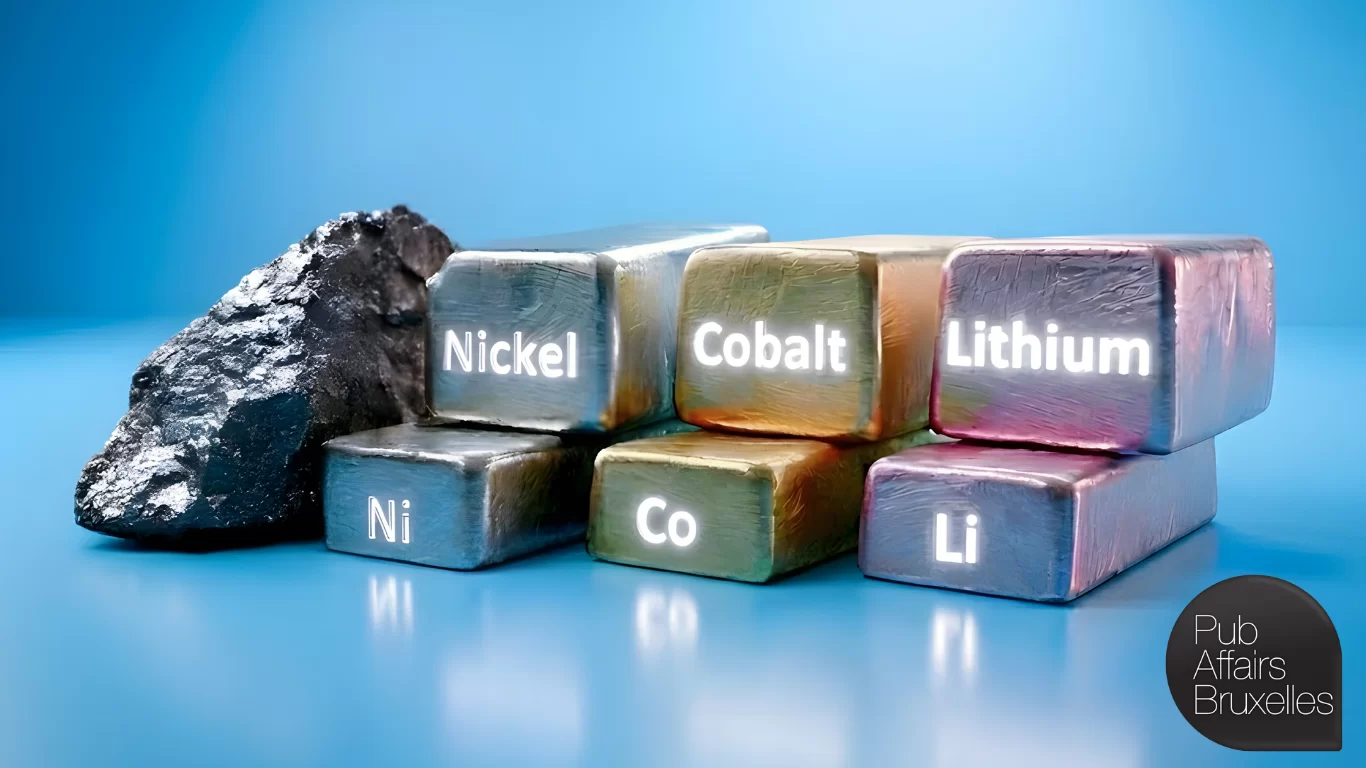
Metals are at the foundations of Europe’s major value chains, including automotive, construction and machinery. Battery raw materials such as cobalt, lithium and nickel are crucial for modern, innovative and high-performance EV batteries and renewable energy systems. The raw materials industries are at the beginning and the end of the EV batteries value chain, as not only do they provide those valuable raw materials, but they also ensure their sound recycling once the batteries reach their end of life. While EU raw material producers and downstream users are facing challenges, opportunities lie in the development of battery recycling technologies and more sustainable value chains.
A strong push to the EU battery sector can also derive from factors such as strong support for research and innovation, as well as policies that promote technologies spurring demand. Whereas, dependencies on third countries, competition with advanced battery producers, and high energy and labour costs may hinder both competitiveness and innovation. As reported in the European Commission’s Competitiveness Compass, Europe is starting to lag behind emerging global hubs on EV manufacturing, most notably China, the United States and parts of Latin America.
The industry also faces various regulatory constraints. Although several issues were addressed in the EU Steel and Metals Action Plan and the Metals Transition Pathways published in March 2025, some outstanding challenges in chemicals management have not been dealt with despite the forthcoming revision of the EU REACH Regulation. Regulatory barriers and uncertainty risk hindering European competitiveness. Investors are increasingly cautious as major projects such as mining, refining or recycling require upfront capital and long-term planning horizons. However, as a result of a fragmented chemical policy, shifting regulatory interpretations and unpredictable timelines, investing in Europe is becoming riskier than in other regions of the world.
Indeed, a capital-intensive industry such as raw materials production requires long-term planning and a stable and coherent regulatory framework based on agreed principles. In parallel, Europe will need to shift its metals import profile to meet its energy transition requirements in the next decade. Against this backdrop, crucial choices will be required, including those encompassing sustainability, resilience and security considerations. As a matter of fact, a fully-fledged and secure EV batteries value chain in Europe can only thrive if safe and continuous access to raw materials can be ensured. The European Commission has reiterated its willingness to reduce EU’s dependence on external importers such as China. In this context, at the Berlin Global Dialogue, President von der Leyen presented “RESourceEU”, a new programme designed to secure raw materials and promote recycling.

This is a public event, hence the Chatham House Rule will not apply.
The event will start at 17.00 both onsite and online, while the onsite welcoming will begin at 16.30. The discussion will last around an hour and a half.
Due to a limited number of seats, please await final confirmation from us after registration, if you wish to attend this event onsite.
The audience will be able to ask questions both in person and through sli.do #CRMs
We look forward to hosting you on the 27th of January 2026.
