

The end of business as usual: the EU amid economic, trade and geopolitical fault lines
The framework trade agreement reached on the 27th of July between US President Donald Trump and European Commission President Ursula von der Leyen marks a significant milestone in the EU’s approach to an increasingly competitive and confrontational international environment.
The deal struck – which is not yet legally binding and whose details are to be defined further – foresees a 15% flat tariff imposed by the US on the majority of EU-imported goods, with some exceptions regarding pharmaceuticals, certain chemicals, agricultural and airspace products, as well as semiconductors. The political agreement also indicates that the EU will open its market to US exports with zero tariffs. The 15% tariff constitutes half the 30% import tax rate Trump had threatened to implement from the 1st of August, matches what has been offered to Japan and is 5% lower than the terms negotiated by the UK, which, however, has a trade deficit with the US.
The EU has also pledged to purchase $750 billion worth of US energy products, especially liquefied natural gas to phase out Russian gas. However, it is unclear whether these figures represent incremental amounts, over what timeframe they will apply and, most importantly, if they will actually apply. Additionally, the EU has nominally agreed to invest $600 billion in the US economy, and apparently committed to buy significant amounts of US military equipment. The automotive sector, cars and car parts will be subject to the 15% tariff, compared to the 27.5% they face now.
Widely acknowledged figures from the Council of the European Union show that the US is EU’s top trading partner for exports and the second partner after China for imports and that, combining both goods and services, the EU had a trade surplus of €50 billion in 2024, representing less than 3% of total EU-US trade.
The preliminary agreement has been subject to a range of criticism, being often defined as lopsided as well as a lost opportunity to send a message to the rest of the world. Whereas, those who defended the deal have argued that, albeit painful, it offers the most practical way to prevent a destructive tariff war between the US and the EU, ending uncertainty and providing predictability.
While it is premature to predict the amplitude of the impact of the final agreement on the EU economy, three features of this deal-making have become apparent. The first one is structural, as EU institutions have never resorted to any tit-for-tat approach due to the differences between member states. Indeed, certain countries advocated for a show of force against the US, whilst others pushed for a swift resolution. The second feature is strategic: as the inflationary pressure which will most likely be triggered by the new tariffs is felt, the current administration could be tempted to blame US trade partners. The last is contingent, as conflicting versions of the trade deal are adding a further layer of confusion on both the substantial details and the timeline of its finalisation.
However, it should also be noted that the Council of the European Union still has to discuss the preliminary agreement, which must subsequently be formalised by both parties and ratified by all EU member states. It is also unclear how the EU’s legal acquis can accommodate this apparent deviation from WTO rules. Last but not least, it remains uncertain whether further negotiations will be required to finalise the details of the deal, as well as whether trade countermeasures worth €93 billion will apply, given that there is no legally binding agreement. For these reasons, some commentators have suggested that there are two possible interpretations of the agreement: namely, “Surrenderists versus Machiavellians”, with the latter group believing that the European Commission has “played a blinder“.
Regardless of what the correct interoperation of the facts is, it remains clear that in a context in which globalisation is being reshaped – but not undone – by geopolitical shifts, technological advances and climate change, the challenges ahead for the actors that privilege a rule-based order rather than sheer power confrontation can be addressed if they are prepared to adapt their economies and commit to work and make endeavours for a framework of common rules.
Indeed, overall, in both the medium- and the long-term period, power dynamics risk, at best, perpetuating longstanding conflicts and, at worst, intensifying them while giving rise to new ones. With special regard to the European Union, several observers have remarked that the EU must relearn how to manage (inter)dependence and pursue its ambitious goals.
Infrastructure, defence, security, research, energy and industrial resilience continue to rank high on the agenda of EU institutions, as reflected in the ongoing debate surrounding the EU budget, or Multiannual Financial Framework (MFF).
At the same time, the European Union faces mounting external pressures, not only from the United States, but increasingly from China and, notably, Russia. Managing these geopolitical challenges, enhancing the competitiveness of the EU economy and ensuring a fair and inclusive green transition is becoming an increasingly complex task. Achieving progress on all three fronts simultaneously may prove extremely hard without a united strategic approach and pragmatic prioritisation. Otherwise, it risks to become Europe’s latest “impossible trinity”.
Regarding global trade tensions, a Project Syndicate Commentary argues that, rather than ending, globalisation is being reshaped by shifting geopolitics, technological change, and climate concerns. The rise of China and growing economic nationalism, particularly in the United States, are transforming global trade dynamics. The author maintains that, despite tensions, strong interdependence means a full economic decoupling is unlikely. Globalisation will become more fragmented and regionally focused, with supply chains adapting for resilience and diversification. Digital technologies are reinforcing globalisation by boosting cross-border services and data flows. Whereas, climate change, while a major challenge, could encourage international cooperation and create new economic opportunities, making sound policy responses essential for a stable transition.
On EU-China relations, a Clingendael Publication sustains that summits are not only about negotiations, but also about recognition between global powers. The author observes that the recent EU–China Summit has highlighted mutual needs: China requires access to the European market, while the EU seeks recognition as a strategic power. This dynamic, according to the author, recalls Sir Christopher Soames’ 1975 diplomatic visit to Beijing, where he promoted Europe’s global role. Today, the EU faces a far more complex geopolitical landscape and remains overshadowed by US dominance. China appears open to engaging, but still views the EU as an extension of American influence. For true strategic autonomy, the EU must not only act united but be recognised as such by others, particularly China, he concludes.
The latest edition of Politique Etrangère from Ifri addresses the decline of the post-war ideal of global governance, which has not been replaced by emptiness, but rather by fragmented multilateral structures. The authors note that established bodies such as the UN and WTO have diminished in influence, yielding to competing interests and new alliances. This shift prompts questions about the potential for cooperation amid the current institutional fragmentation. The publication highlights Lebanon as an example of regional instability linked to the Gaza conflict, with its future dependent on wider Middle Eastern dynamics. Other key issues include Israel’s position, Hezbollah’s influence and possible diplomatic developments with Iran. Overall, the authors argue that the world is entering a transitional period characterised by uncertainty and an absence of clear leadership.
A CEPS Explainer analyses the European Commission’s Single Market Strategy, which aims to remove barriers and foster a competitive service market across the EU through 58 proposed actions under nine strategic pillars. The author notices that emphasis is placed on digitalisation and creating a unified market environment to boost cross-border trade and services. He also stresses that the strategy seeks to address regulatory fragmentation, encouraging innovation and deeper market integration. Its success depends on member states prioritising key actions and overcoming nationalist tendencies. Challenges include managing divergent interests and ensuring member states take ownership for effective implementation. Ultimately, the strategy stresses the importance of cooperation among states to build truly integrated European markets, the author maintains.
On the question of decarbonisation, a CER Insight highlights that, to join the EU, candidate countries must liberalise their energy markets and develop policies for decarbonisation, which is a large undertaking for those still reliant on fossil fuels. The energy crisis sparked by Russia’s war in Ukraine has accelerated partial integration, the author reckons. However, alignment with EU energy policy remains slow and uneven. For this reason, accelerating this process is in the mutual interest of both candidate and EU member states, as a larger electricity market would lower average prices and enhance energy security, she adds. A more integrated system would also strengthen resilience across the region. To support this, the EU should deepen its engagement with neighbouring countries pursuing energy reform, and the European Commission must help manage the social impact of liberalisation to prevent rising levels of energy poverty, she concludes.
An ECFR Policy Brief acknowledges that the global climate governance is facing mounting pressure, driven by the United States’ previous withdrawal from climate commitments and rising domestic opposition to green policies in several countries. In response, the authors argue that the European Union has adjusted its public messaging, yet most governments remain firmly committed to advancing the global green transition. As countries across the world increasingly share the EU’s ambition to decarbonise their economies whilst fostering job creation and industrial growth, such progress depends on robust international partnerships. The authors advocate for greater trade openness, enhanced technology sharing and improved access to climate finance in EU partner countries, particularly in the Global South. By doing so, EU member states can help build equitable green growth and forge broader alliances to reform global governance and reinforce the multilateral climate framework, they conclude.
An SWP Commentary highlights the EU’s growing role in its own security amid US policy unpredictability. The launch of initiatives such as the European Defence Fund signals stronger defence cooperation within the EU, the authors states. The SAFE Regulation notably allows Ukraine’s near-member integration, demonstrating solidarity beyond formal accession. The EU has also renewed defence ties with the post-Brexit UK, reflecting pragmatic diplomacy. Additionally, Brussels aims to expand strategic partnerships with countries including Canada, Japan, and India. Ultimately, the success of this strategy depends on the EU’s capacity to be seen as a dependable and appealing partner in a fragmented global security landscape.
A Finabel Publication elaborates on the recognition that hybrid threats, defined by ambiguity and asymmetry, continue to challenge NATO’s deterrence and strategic credibility. It reviews NATO’s evolving doctrine since acknowledging cyber threats in 2002 and assesses responses to hybrid challenges. While initiatives such as the Counter-Hybrid Support Teams and Baltic Sentry mark progress, they also highlight that NATO’s approach remains predominantly reactive and fragmented due to the difficulty of attributing attacks and because unclear response thresholds hinder swift, collective action. These persistent strategic and doctrinal gaps expose vulnerabilities in NATO’s preparedness. For these reasons, the authors advocate for a shift towards pre-emptive, institutionalised deterrence, to be further developed in future studies.
The forthcoming EU multiannual financial framework (MFF) must prioritise a strong external budget, recognising it as vital for Europe’s security, prosperity and global influence, an ECDPM Commentary argues. While domestic concerns often dominate political discourse, sustained investment in external action supports long-term stability, strategic partnerships, and the EU’s climate and security objectives. The EU’s external funding underpins initiatives like the Global Gateway and addresses challenges at its borders, emphasising proactive engagement over reactive measures. A clear, strategic narrative linking internal prosperity with external influence is crucial to unify member states and political groups. Moreover, the EU must enhance budget flexibility and institutional capacity to respond effectively to global shifts. Ultimately, safeguarding and strengthening the external budget is a strategic imperative, not merely a financial choice.
This editorial is authored by Massimiliano Gobbato, Communications Director. Contributions by PubAffairs Communications Team’s Nicole Finucci, Kristina Vilenica and Jacopo Bosica to the drafting of ‘The Finder’ are gratefully acknowledged.
From our Editorial Partners

What happens next to globalization? | Project Syndicate
Geopolitical shifts, technological transformation, and climate change are reshaping, not reversing, globalization. But these forces can be managed, so long as countries are willing to restructure their economies and agree on a core set of international rules.
Image credits: Belterz/Getty Images
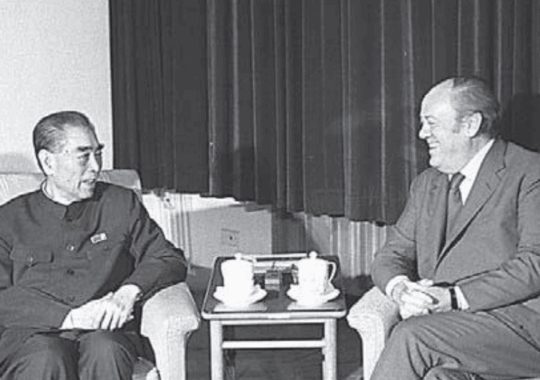
The EU–China summit: past and present | Clingendael
The upcoming EU–China Summit comes at a pivotal time for both actors. If the EU is to make the leap to strategic autonomy, it needs China to recognize it as a pole in a multipolar world. If China is to survive the American confrontation, it needs access to the European market. For China, America’s decline is an opportunity, for Europe, a risk – but for both it may have come too early. Is Europe ready to command great power recognition?
Image credits: Chinese Premier Zhou Enlai met with the visiting Vice President of the EEC Commission Sir Christopher Soames, May 1975 / via BIG Europe
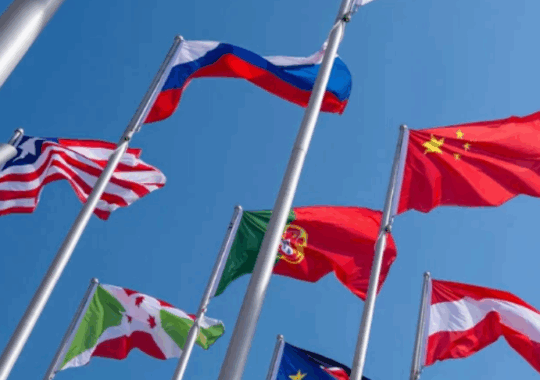
Multilateralisms: survival or revival? | Institut Français des Relations Internationales (Ifri)
Today, Lebanon symbolizes all the ambiguity resulting from almost two years of war in Gaza. Once again, the question relates to political and institutional recomposition, the reconstitution of a Lebanese army in charge of guarding its borders. But it is common knowledge that beyond its internal complexity, Lebanon’s future depends on the general fate of the region: Will Israel accept a political solution to Gaza, downgrading the aggressiveness of Hezbollah? Can Syria and Jordan retain a degree of stability? Can relations with Iran be normalized to an extent through a nuclear agreement?
Image credits: Drive/Shutterstock.com

A new strategy to empower the single market | Centre for European Policy Studies (CEPS)
Following the publication of the European Commission’s new Single Market Strategy in May 2025, this CEPS Explainer looks at the finer details to answer one of the eternal EU questions: will this be the strategy that finally empowers the single market to reach its full potential?
Image credits: www.vecteezy.com

Towards a decarbonised energy system in a larger EU | Centre for European Reform (CER)
The energy crisis that arose out of Russia’s war of aggression on Ukraine has highlighted the need for the EU to strengthen its energy security. This has increased awareness of the alignment between European efforts to decarbonise its energy mix and to enhance energy security: renewable energy simultaneously cuts emissions and reduces dependence on imported fossil fuels.

The power of partnerships: European climate leadership with less America | European Council on Foreign Relations (ECFR)
The author Chimamanda Ngozi Adichie gave a powerful TED talk in 2009 entitled “The danger of a single story”. She argued that the limited representation of a person, place or issue obscures its true and full meaning.
Image credits: Hands Holding Globe, Climate ProtectionImage bypicture alliance / CHROMORANGE | Christian Ohde ©
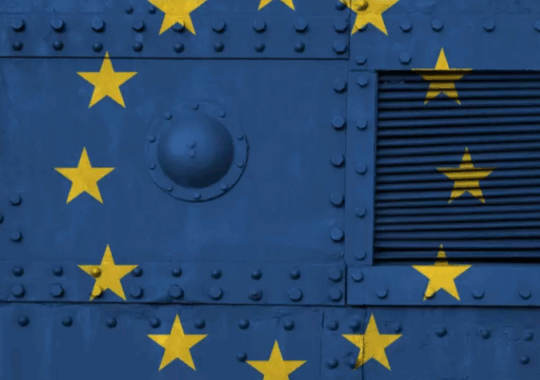
Contours of an EU partnership and alliance strategy | German Institute for International and Security Affairs (SWP)
Since the United States, under President Donald Trump, has implemented a change of strategy in its Ukraine policy and is conducting direct negotiations with Russia without the Europeans, the European security order is in a phase of reorientation. Old certainties are dissolving, in particular the firm belief in the American security guarantee via NATO.
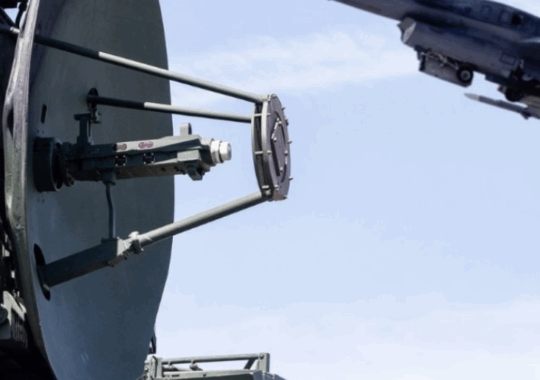
Toward hybrid deterrence: conceptual foundations and the evolution of NATO response | Finabel
Hybrid threats, leveraging ambiguity and asymmetry, increasingly challenge NATO’s deterrence and credibility. This paper critically examines NATO’s doctrinal evolution and responses to hybrid threats since first acknowledging cyber challenges in 2002. Despite doctrinal progress and tools like Counter-Hybrid Support Teams (CHSTs) and initiatives such as Baltic Sentry, NATO’s response remains largely reactive and fragmented, activated only post-crisis rather than proactively deterring threats.
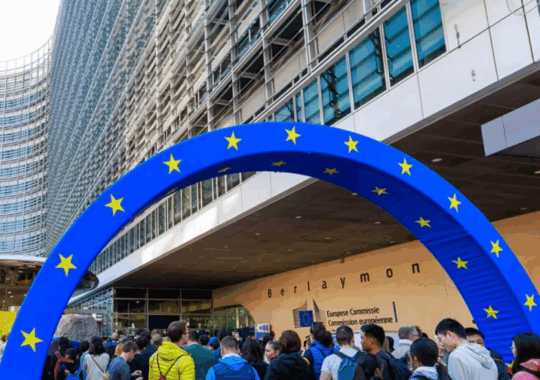
A strong external budget: A strategic necessity in the MFF negotiations | ECDPM
As the EU prepares to negotiate its next long-term budget – the multiannual financial framework (MFF) for 2028-2034 – it must avoid being driven by narrow, short-term internal concerns. Instead, it should make a strategic commitment to well-funded and ambitious external action.
Image credits: Christophe Licoppe / European Union 2025 via EC – Audiovisual Service