
This issue is supported by EUMEPS, the voice of the European EPS industry.
The Finder | Our monthly Insights | Issue 22 – October, 2025
Walking a tightrope: Europe’s struggles and acts of balancing in uncertain times
On the 9th of October Ursula von der Leyen survived a second no-confidence vote. While no one predicted a downfall, the result highlighted the mounting pressure from both the far-right and far-left fringes of the European Parliament. In light of this result, some commentators interpreted the outcome of the vote as a strengthening of her position, given that she garnered more backing than both her allies and opponents had anticipated.
Later on in October, however, the European Parliament’s rejection of sustainability reporting and due diligence requirements for European companies painted a different picture, namely one of growing tension within the so-called “centrist coalition” as alternative majorities involving right and/or far-right groups are emerging. This shift is not only visible at the European Council level but is now becoming increasingly evident in the Parliament itself, as several observers had warned after the 2024 elections.
At the heart of this evolving dynamic lies a central dilemma, namely the European Union’s struggle to strike a balance between boosting economic competitiveness and industrial resilience while advancing climate polices. To make matters more complicated, the same four parties forming the centrist coalition have recently sent to Ursula von der Leyen a strongly-worded letter which called for the revision of the current EU budget proposal, stating that the Parliament cannot consider it an adequate foundation for negotiations.
In this context, the European Union remains under pressure from the broader issues shaping the global agenda, particularly those related to trade, notably due to China’s recent decision to implement tighter restrictions on rare earths exports.
In mid-October, the United States and China imposed new port fees on each other’s vessels in a tit-for-tat move following Washington’s charges on Chinese ships, which the US regarded as a valuable tool to support its domestic industry. Subsequently, China unveiled new trade-related retaliation measures, alongside tighter restrictions on rare earth exports, prompting President Trump to threaten an additional 100% tariff on Chinese goods.
Last week the US and China started talks in order to settle a dispute which could have started a severe trade war, which some commentators have defined as a potential “full-blown economic hostilities that could roil global markets”. At the same time, the EU has prepared a plan which seeks to end its reliance from China on critical raw materials that are notably essential for Europe’s defence, green-tech, automotive and digital industries. The plan was presented by European Commission President von der Leyen at the 2025 Berlin Global Dialogue.
Once again, Europe has found itself vulnerable to external suppliers such as China, which sources nearly all of EU’s rare earths. In response, the European Commission is expected to introduce a new plan named “RESourceEU”, modelled on the 2022 REPowerEU initiative that invested €225 billion to diversify energy supplies following Russia’s invasion of Ukraine.
The European industry is reportedly cautiously optimistic that the new plan will go beyond recycling past efforts and tackle crucial barriers to securing alternative mineral supply chains due to the lack of funding for mining, processing and manufacturing projects both within the EU and abroad.
Beyond trade and economic competitiveness, the war in Ukraine has once again taken the centre stage of the EU agenda. At the start of the month, European leaders meeting in Copenhagen signalled their readiness to back a range of initiatives, including accelerating the development of drone and anti-drone technology and using frozen Russian assets to provide loans to Ukraine.
While several European leaders have opposed raising joint EU debt for a €140 billion Ukraine loan – insisting the funds come from frozen Russian assets rather than member states’ budgets – Belgium’s Prime Minister Bart De Wever rejected the plan, citing legal uncertainty and EU financial institutions’ credibility as primary concerns, calling, in case the EU decides to go forward with this initiative, for a shared action and risk at both European and international level.
Navigating the complex interplay of internal political pressures, global economic challenges and strategic security concerns is becoming increasingly difficult for both the European Union and its member states. Internally, Ursula von der Leyen’s survival of the no-confidence vote has highlighted both her resilience and the fragility of the current political framework, particularly amid diverging priorities over sustainability, industrial policy and budgetary negotiations.
Externally, Europe is again faced with its vulnerabilities ranging from trade to geopolitical tensions. As highlighted in the 2026 European Commission Working Programme, the initiatives to be undertaken in the coming months will once again test the EU’s ability to balance economic competitiveness, strategic autonomy and climate commitments, and should give clearer indications on whether Europe can more effectively address mounting pressures through new, forward-looking measures.
A SWP Commentary argued that this year’s SCO summit in Tianjin represented the organisation’s largest gathering ever, with over 20 heads of state and 10 international organisations representatives. At the SCO+ session, President Xi Jinping unveiled China’s Global Governance Initiative (GGI). The initiative emphasises development, security, civilisation and governance as pillars for a “community with a shared future for mankind”. This reflects China’s vision of a new global order. The commentary highlighted that Germany and Europe must now recognise China as a strategic global challenge.
A PS Commentary highlighted that Donald Trump’s attempt to use the US economy and financial system as a weapon against China, Russia and others is ultimately self-defeating. It noted that such a strategy is unsustainable, as rival nations can more readily create alternatives to the dollar. In contrast, the US faces significant challenges in establishing its own rare earths industry. The analysis suggested that economic coercion could undermine American influence. The publication also implied that global powers may respond by reducing their dependence on US financial systems. Overall, the commentary underscored the limits of America’s economic leverage in a shifting global landscape.
An Ifri Study analysed that the US energy strategy heavily relies on executive orders promoting fossil fuel expansion, especially oil, gas, coal, and nuclear projects, while advancing critical metals’ development. It found that renewable energy sources such as hydropower and geothermal receive only nominal backing, with wind and solar facing significant policy hostility. Offshore wind projects, in particular, are hindered by restrictive measures. The report noted that, despite the “Drill, Baby, Drill” agenda, low oil prices constrain industry growth and exports. Gas production, however, benefits from expanded export capacity and higher domestic demand. Finally, the study observed that the One Big Beautiful Bill Act effectively rolled back clean energy incentives established under the Inflation Reduction Act.
A Finabel Publication explained that the Arctic is becoming a crucial geopolitical arena as climate change opens new economic and military opportunities, particularly for Russia and China. It noted that NATO, historically present in the region, is now adjusting its strategy to meet these emerging challenges. The study examined the alliance’s renewed attention to the High North in light of shifting security dynamics. It also highlighted how climate change intensifies threats and competition in the area. Finally, the publication elaborated on Russia’s growing assertiveness and China’s expanding interests. Overall, it showed that these developments are driving NATO to strengthen its focus and commitment along its northern flank.
A Clingendael Report argued that Europe’s single market serves not only as a foundation for economic growth, but also as a vital source of geopolitical strength. It emphasised that standardisation, though often viewed as a technical process, plays a crucial role in boosting the EU’s global competitiveness. The report also noted that effective standard-setting can help lessen Europe’s external dependencies and suggested that strategic use of standards can expand the EU’s global influence. Furthermore, it warned that growing power rivalries demand a more agile and unified approach. Ultimately, the report called for Europe to make its standard-setting system faster, more coherent and strategically aligned with its geopolitical goals.
A CER Policy Brief proposed a reform agenda for the EU aimed at promoting growth within current political constraints. It built on the Letta and Draghi reports but focused on reforms more likely to gain member-state approval and deliver results within this legislative term. The Policy Brief highlighted the need for smart regulation, urging the Commission to deepen the single market rather than pre-emptively harmonising emerging sectors. It also stressed energy market integration to address high prices and grid fragmentation. The report advocated for a Savings and Investment Union using a ‘bottom-up’ approach to capital markets. Additionally, it called for reforming intra-EU services trade to support city-led growth and reduce regional disparities. Finally, it recommended an innovation-friendly competition policy that preserves the core principles of EU competition law.
An ECFR Policy Brief emphasised the urgent need for the European industry to decarbonise to stay competitive in green technology. It warned that current EU investments in clean technology and heavy industry are insufficient to meet climate targets. The Policy Brief highlighted divisions among EU member states over funding sources and priorities in the next Multiannual Financial Framework. ‘Frugal’ states resist increasing overall EU spending, while the ‘friends of cohesion’ push for more support to agriculture and development. It also argued that broad consensus requires efficient and well-governed policy, investments in green industry are seen as generating long-term economic and security benefits and, overall, decarbonisation is presented as essential for Europe’s competitiveness and strategic position.
A CEPS Commentary explained how the European Commission had pursued simplification in financial regulation to enhance competitiveness. It warned that simplification risked being confused with deregulation, which could undermine policy enforcement. The author cited President von der Leyen’s statements on the Omnibus packages to illustrate this tension. Five guardrails were proposed to prevent simplification from becoming a rollback. These included ‘do no harm’ clauses and time-bounded relief with sunsets. Other measures involved single-window reporting, end-to-end digital compliance, enforceable legislation, and a Simplification Scorecard. The report stressed that careful safeguards were needed to maintain regulatory integrity while promoting efficiency.
An ECDPM Commentary reflected on the EU’s ‘New Pact for the Mediterranean’ and its potential to move from agreement to concrete policy and practice. It examined whether the Pact could improve cooperation compared with the Barcelona Process and the 2021 New Agenda for the Mediterranean. The Pact aligned EU external engagement with energy security, green industrial policy, and supply-chain resilience. North African partners sought energy investment while advocating for greater consultation on EU policies such as CBAM. The Pact aimed to boost private investment and blended finance for renewables, clean technology and start-ups, linking to employment for women and youth. The commentary also emphasised the ‘co-ownership’ principle, departing from previous top-down approaches. Finally, it argued its flexible design allowed coalitions of willing states to act without awaiting full EU consensus.
This editorial is authored by Massimiliano Gobbato, Communications Director. Contributions by PubAffairs Communications Team’s Kristina Vilenica and Jacopo Bosica to the drafting of ‘The Finder’ are gratefully acknowledged
From our Editorial Partners
China’s claim to a new world order | German Institute for International and Security Affairs (SWP)
This year’s Shanghai Cooperation Organization (SCO) summit in Tianjin marked the largest gathering in the organisation’s history, drawing more than 20 heads of state and 10 representatives of international organisations. At the SCO+ session, China’s Head of State and Party Leader Xi Jinping delivered a keynote address, prominently unveiling the Global Governance Initiative (GGI).
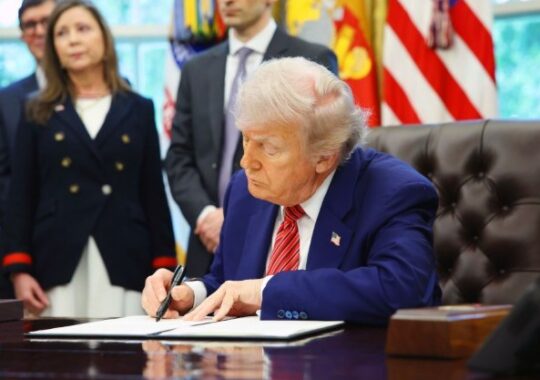
Trump is losing his geoeconomic war | Project Syndicate
In seeking to weaponize the US economy and financial system against China, Russia, and many other countries, Donald Trump has picked a fight that he cannot win. After all, it is much easier for other countries to develop alternatives to the dollar than for America suddenly to develop its own rare earths industry.
Image credits: The Washington Post via Getty Images
The new US energy policy: energy dominance or fallback? | Institut Français des Relations Internationales (Ifri)
Since taking office, President Trump has defined and started to implement a new energy strategy for the United States (US), aimed at supporting fossil fuels, the nuclear industry, and the critical minerals sector.
The implementation of this strategy is conducted through executive orders, including facilitating oil and gas projects (particularly in Alaska), supporting the coal industry, expanding plans for the US nuclear industry, and actions to accelerate the development of critical metals projects.
Image credits: © Shutterstock
NATO’s renewed Arctic commitment: strategic adaptation to climate change, Russian ambitions and Chinese expansion | Finabel
The Arctic is emerging as a region of critical geopolitical importance, mainly due to the wide effects of climate change, which are opening the Russian Arctic to economic and military expansion, and attracting Chinese investments. NATO has been engaged in the region since its creation; however, in recent times, it began to recalibrate its strategic posture to address the new growing challenges.
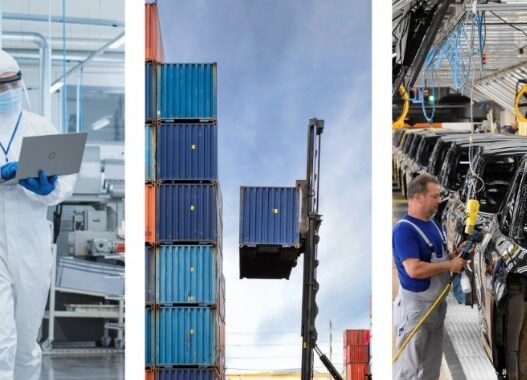
Raising the standard: How to unlock the geopolitical potential of Europe’s internal market | Clingendael
Europe’s single market is not only an engine of prosperity, it is a source of geopolitical power. This report explores how standardisation, often seen as a technical field, can strengthen the EU’s competitiveness, reduce dependencies and reinforce its influence in the world. It argues that to protect Europe’s interests in an era of great power rivalry, the EU must make its system of standard-setting faster, more coherent and more strategic.
Image credits: ©Reuters/Shutterstock/SasinTipchai/Gorodenkoff
A reform agenda for the single market | Centre for European Reform (CER)
The EU needs faster growth. Productivity has stalled, energy prices remain high, and the bloc’s biggest economic asset – the single market – is incomplete. With the US and China both intervening in trade, protecting demand, and investing heavily in industrial capacity and innovation, the EU risks falling further behind. Europe cannot afford another decade of drift.
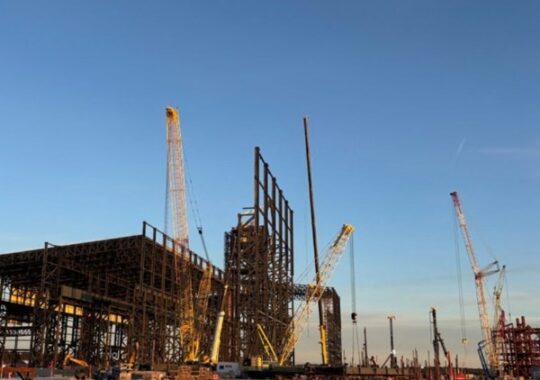
It’s not easy being green: Breaking Europe’s climate spending deadlock | European Council on Foreign Relations (ECFR)
The sun shines in a blue sky over Gliwice in south-western Poland as the technical university’s head of development explains research plans for low-carbon technologies. Close by, in Rybnik, a new centre for renewable energy and hydrogen is being built. It will help transform a region that has been heavily dependent on coal for decades.
Image credits: picture alliance / REUTERS | Simon Johnson ©

The EU is walking a fine line between simplification and deregulation | Centre for European Policy Studies (CEPS)
The EU has entered its simplification moment. After a decade of head-spinning rulemaking, the European Commission is now applying simplification more directly to financial regulation, all in the name of competitiveness.
However, the real question isn’t whether simplification is needed – it is. The real question is whether what’s being flown under that banner is actually deregulation by stealth.
Image credits: www.vecteezy.com

From pact to policy to practice? Reflections on the EU’s “New Pact for the Mediterranean” | ECDPM
At ECDPM we talk a lot about moving from policy to practice. So, the launch of the New Pact for the Mediterranean begs the question: how does one move from a pact to policy and practice? And will the pact be able to better shape cooperation across the Mediterranean than past efforts?
Image credits: Quentin Caron