

The Finder | Our monthly Insights | Issue 23 – November, 2025
Navigating rough seas: Economic, trade, technology, defence and climate-related issues testing the EU
On the 26th of November, following a deal reached with EU member states, the European Parliament approved the 2026 EU budget securing an extra €372.7 million for its priority areas, in addition to what the European Commission had originally set out in its draft budget. The Parliament had opposed the Commission’s proposal because of major revisions to regional and agricultural funding, which together account for roughly half of the entire financial resources at the EU institutions’ disposal. In response, the EU executive body offered limited concessions regarding the empowerment of regional authorities and the protection of rural areas. However, it also maintained its plan to merge the funds into a single instrument as well as to structure the budget around national programmes.
During the same Strasbourg session of the European Parliament, Ursula von der Leyen expressed support for the Ukraine peace negotiations initiated by US President Donald Trump by noting that Europe now considers the process to have reached a “starting point” for a possible settlement. The speech occurred after several days of negotiations in which US and Ukrainian representatives have been attempting to bridge the gaps between their respective positions on the 28-point plan proposed by the US.
The 28-point peace proposal prepared by the United States and Russia to resolve the war in Ukraine took European observers by surprise, as its measures were widely regarded as overly advantageous to Russia. In response, the EU and its partners are now seeking to secure a role in determining the next steps, particularly on issues requiring their involvement, such as sanctions and defence matters. Some commentators have defined this pivotal moment as “Europe’s last chance to stand up for Ukraine”. Against this backdrop, Europe has presented a counterproposal to the US-Russia draft peace plan for Ukraine. The proposal is based on the United States’ 28-point plan, reviewing each point in turn and recommending modifications and removals.
Meanwhile, the European Union and the United States have resumed trade discussions in an effort to resolve outstanding issues from the tariff agreement concluded in July. US officials have urged the EU to adopt “a balanced approach” if it wishes to achieve a cut in American import tariffs on steel and aluminium. However, several commentators have emphasised that the central focus of the discussions is, in fact, the regulations governing major tech companies.
In this context, former digital chief Margrethe Vestager called on the EU to maintain strict oversight of its tech regulations, despite US pressure to relax them in return for lower tariffs. She stressed the importance of safeguarding standards crucial to both the single market and European consumers. The full picture of the current public debate on EU tech regulation includes the European Commission’s proposition of the Digital Omnibus, a package aimed at simplifying and streamlining EU rules on data protection and artificial intelligence “to save billions for businesses and boost innovation”, according to the EU executive body.
Although somewhat less in the spotlight, the COP30 UN flagship climate summit, held in Brazil, concluded with a final text that, according to several observers, avoided a clear roadmap for phasing out fossil fuels, drawing criticism that described the outcome as an “empty deal” and a “moral failure”. Some commentators noted that geopolitics played a major role, with the EU, along with a few other nations, increasingly isolated in advocating for stronger measures to combat global warming amid divisions in the international landscape. Ultimately, the EU settled for a less ambitious deal that referenced fossil fuels only implicitly, citing a broad agreement from two years ago to transition away from coal, oil, and gas by 2050.
Last but not least, on the 21st of November, Christine Lagarde’s speech warned that Europe’s economic prosperity is “geared towards a world that is gradually disappearing”, urging the bloc’s policymakers to end “years of inaction”. In a pointed address, the European Central Bank President criticised Europe’s “old growth model” as outdated, highlighting its reliance on exports as a crucial vulnerability. She also called on EU leaders to bolster the domestic economy, which she said has already exhibited “latent strengths”.
An Ifri Paper argued that the COP30 in Brazil unfolded at a critical moment, as the imperative to cut emissions increasingly clashes with the declining political prominence of climate action. It stressed that the conference offered a crucial chance for governments to reaffirm their commitment and shift decisively from negotiation to implementation. The analysis highlighted the Brazilian presidency’s difficult position, marked by the insufficient ambition of the new Nationally Determined Contribution (NDC) cycle. It also noted the challenge of expanding climate finance for developing countries amid reductions from developed partners. The paper contended that the COP30 had to deliver an outcome capable of rebuilding global confidence.
An SWP Commentary argued that global warming will inevitably exceed 1.5°C by the early 2030s, forcing UNFCCC parties to choose between stabilising temperatures between 1.5°C and well below 2°C, or attempting a reversal to 1.5°C after a multi-decade overshoot. It also criticised the fact that the COP30 document in Belém only casually mentions limiting this overshoot, while omitting the necessary requirement of net-negative emissions. Overall, the commentary highlighted that the EU currently lacks a viable economic framework to turn this transition into a competitive advantage.
A Project Syndicate Commentary maintained that Europe must urgently build sovereign digital infrastructure to counter the “cloud scares” created by overwhelming US dominance. It warned that, with three American firms controlling over 60% of global cloud services, the EU faces severe economic and security risks. The commentary argued that this dependence could be weaponised. It also noted that Europe has struggled to advance technological sovereignty while the United States continues to set the rules of the digital sphere. The analysis proposed a “break-and-build” strategy to dismantle monopolies, strengthen competition, and support structured engagement between the European Commission and major tech firms.
A CEPS publication argued that, while the EU–US economic relationship is broadly balanced, the EU is more dependent on the US for technology and security. This gap is becoming more pronounced as US strategic priorities shift. The paper outlined three potential paths for EU-US relations: continued interdependence and EU vulnerabilities managed divergence, or antagonistic turn, all of which imply a risk of fragmentation both within the EU and with the US. The publication urged the EU to bolster internal unity, reduce strategic dependencies and improve parliamentary oversight and communication with US counterparts.
An ECFR Commentary analysed the strategic implications of the US easing AI export controls to the Gulf to counter Chinese influence. It argued that adhering to European regulatory standards could enhance the credibility of Gulf AI systems. The publication urged the EU to leverage Gulf capital to build sovereign infrastructure, utilising mechanisms such as data embassies and the Quantum Act. It also noted that engaging the Gulf as a neutral AI hub provides access to essential resources for digital autonomy. In conclusion, the commentary emphasized that a joint Euro-Gulf approach is essential to reduce dependence on US and Chinese ecosystems.
A Clingendael Commentary explained that, although EU issues were barely discussed in the run-up to the 29th of October elections, the next Dutch government might be a key factor for Montenegro’s and Albania’s accession. It elaborated that about 15 parties may enter the parliament, with D66 and PVV set to tie at 26 seats and others close behind. Since most of the major parties reject working with PVV, centre-left or centre-right coalitions are more likely. Lengthy coalition talks are expected, and the final coalition will determine the Dutch approach to EU enlargement, with anything possible from critical but constructive to outright sceptic.
A CER Opinion argued that the EU’s lack of coherent strategy towards China and its focus on theoretical cooperation have become untenable as China’s economic, technological, and geopolitical threats grow while the US becomes less reliable. It underlined that China’s trade surplus, industrial overcapacity and Europe’s dependence on Chinese imports creates vulnerabilities that China can exploit, especially in the context of its support for Russia and expanding global influence. The opinion piece urged Europe to build China expertise, deepen ties with Indo-Pacific democracies, reduce dependencies, strengthen R&D, protect intellectual property, and counter Chinese soft power in the Global South through stronger outreach and partnerships.
A Finabel Publication argued that the Ukrainian war has transformed Russia’s isolation into a network of pragmatic defence partnerships with China, Iran and North Korea, collectively known as the “Axis of Upheaval”. It highlighted that this cooperation has sustained the Kremlin’s arsenal and fundamentally altered aerial warfare by prioritising volume over precision. The author noted that this “axis of necessity” enhances the military capabilities of all four states through battle-tested technology. Ultimately, the publication concluded that concrete military cooperation, rather than ideology, defines the group’s true global threat.
An ECDPM Commentary reflected on Africa–Europe relations ahead of the AU–EU summit, noting that, despite apparent differences, both parties rely on multilateral cooperation for peace and security. It argued that the summit provided the AU and the EU with a crucial opportunity to reinvigorate the partnership. The analysis stressed the need to move beyond past patterns for the parties to jointly position themselves in a changing global order. While agreeing on gaps in global governance, they differ on the pace of action. Peace and security could serve as a test for shared approaches. The commentary concluded that the summit must rebuild trust, implement UN Security Council Resolution 2719, and invest in sustained dialogue and technical exchanges.
This editorial is authored by Massimiliano Gobbato, Communications Director. Contributions by PubAffairs Communications Team’s Kristina Vilenica, Jacopo Bosica, Giulia Piera Furlan, Simon Rolland and Aaron Lotz to the drafting of ‘The Finder’ are gratefully acknowledged.
From our Editorial Partners

COP30: An inflection point for climate action and governance | Institut Français des Relations Internationales (Ifri)
Even as the climate crisis deepens – with 2024 confirmed as the hottest year on record, surpassing the 1.5°C threshold for the first time – climate action is slipping down the global political agenda due to geopolitical tensions, rising populism, economic pressures, and the United States (US) withdrawal from the Paris Agreement, which undermines the multilateral, rules-based order.
Image credits: ©Shutterstock.com

Overshoot: Returning to 1.5°C requires net-negative emissions targets
Global warming is set to rise above 1.5°C by the early 2030s. Returning to 1.5°C before the end of the 21st century would not prevent all harms resulting from a period of excess temperatures, but it would reduce risks when compared to permanent warming above 1.5°C.

Risks and opportunities in evolving EU–US financial and economic relations | Centre for European Policy Studies (CEPS)
The EU–US economic relationship has long been broadly balanced, reflecting deep mutual interdependence. However, in the domains of security and technology, the EU has remained significantly more dependent on the US. As US strategic priorities shift, this asymmetry is becoming more visible and may increasingly shape economic and geopolitical outcomes in the EU.
Image credits: www.vecteezy.com

How many more cloud scares does Europe need? | Project Syndicate
Three US companies – Amazon, Google, and Microsoft – now control over 60% of the global cloud market, implying major economic and security risks for Europe. Dismantling these monopolies in the European market, and building sovereign digital infrastructure, is not just possible, but essential.
Image credits: Techa Tungateja/Getty Images

Trump’s AI thaw: How Europe and the Gulf can protect against American and Chinese tech pressure | European Council on Foreign Relations (ECFR)
It is no coincidence artificial intelligence topped the agenda in this week’s White House meeting between Saudi Crown Prince Mohammad bin Salman and President Donald Trump. Arab Gulf states are betting on AI to protect their wealth and global importance in the post-oil era.
Image credits: picture alliance / ASSOCIATED PRESS | Evan Vucci ©

Do the Dutch election outcomes affect the Netherlands position on EU Enlargement? | Clingendael
EU policies, including enlargement, received scant attention in the run-up to the October 29 elections in the Netherlands. Yet, the next Dutch government might be a key factor in Montenegro’s and Albania’s bids to join the EU.
Image credits: ©Reuters

Europe needs to get real about China | Centre for European Reform (CER)
For some years, European governments and the EU have had China policies designed to reflect a balanced approach to Beijing – neither too confrontational nor too deferential. China’s behaviour is making that balance much harder to maintain. China has become the source of more threats than opportunities for Europe.
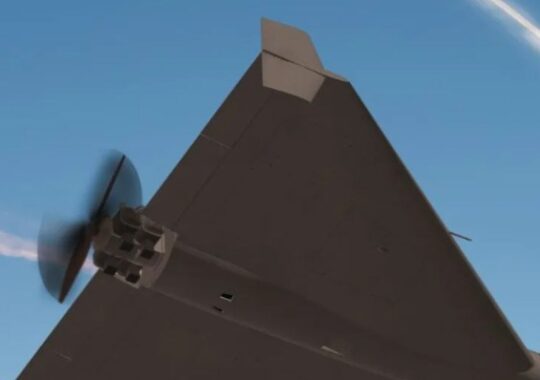
From Isolation to Integration: The rise of the axis of upheaval around Russia’s war in Ukraine | Finabel
The Russo-Ukrainian war has transformed Russia’s isolation into a network of pragmatic defence partnerships with China, Iran, and North Korea. This paper argues that what ties these four states, often grouped as the ‘Axis of Upheaval’, is less ideological unity than war-driven, pragmatic defence integration.
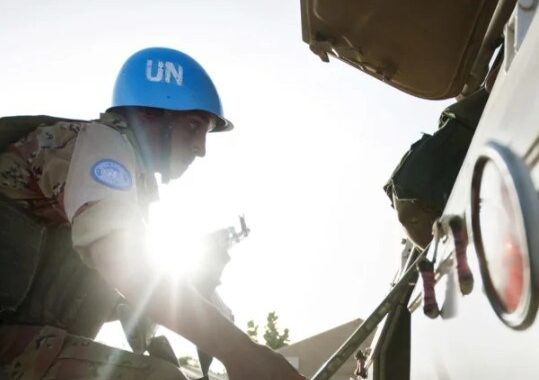
Beyond promises: The AU-EU summit must strengthen multilateral peace and security | ECDPM
The global order that so far shaped relations between Africa and Europe is shifting. Rising global levels of conflict expose the fragility of multilateral institutions that were once seen as pillars of global cooperation. At first glance, Africa and Europe may seem to sit on opposite sides of this transformation.
Image credits: UN via Flickr