

The Finder | Our monthly Insights | Issue 24 – December, 2025
The end of the unfinished businesses? Major EU challenges and divides at year-end and beyond
On the 11th of December, the European Union took the decision to maintain the freezing of Russian Central Bank’s assets for the time being, as part of the emergency economic provisions. In an attempt to assert the bloc’s role as both a diplomatic and financial actor in the conflict, Brussels signalled that it would not permit external pressures to release €210 billion before Ukraine was compensated for Russia’s aggression.
During the Berlin Summit, which took place that same week, the EU’s diplomatic efforts became evident as shuttle diplomacy between Ukraine and its European allies, which aimed to influence negotiations, offered security guarantees to counter the Trump administration’s 28-point plan, which has been viewed by several EU capitals and by Kyiv as overly accommodating to Moscow.
Shortly after, at the Brussels Summit of the 18th and 19th of December, EU leaders encountered internal challenges, most notably Belgium’s opposition to releasing frozen Russian assets to Kyiv, a position that could not be reversed. As a result, the European Council turned to issuing joint debt to keep Kyiv financially supported next year and in 2027, outside the bloc’s common budget and with Hungary, the Czech Republic and Slovakia not participating in the scheme.
Furthermore, European Central Bank’s earlier opinion refusing any use of frozen Russian assets, as the process must fully adhere to international law and avoid compromising financial stability within the Eurozone, has made clear that there is a broader challenge in reconciling the legal and fiscal constraints of EU member states with the imperative of keeping Ukraine financially and militarily resilient.
In fact, several EU initiatives at both the Council and the European Commission level have been heavily influenced by the fact that Washington’s peace proposal includes significant territorial concessions and limitations on Kyiv’s military activities. This US stance, compounded by the United States’ National Security Strategy, has led to a degree of concern in several European capitals, which has further highlighted Europe’s need to provide support to Ukraine without being overshadowed in negotiations that are predominantly led by the United States and Russia.
At the same time, the EU–US dialogue on trade and technology intensified over this period. The Trump administration has escalated threats against European firms, citing discriminatory treatment of US tech giants. On this matter, US Trade Representative Jamieson Greer warned: “If the EU and EU member states insist on continuing to restrict, limit and deter the competitiveness of US service providers through discriminatory means, the United States will have no choice but to begin using every tool at its disposal to counter these unreasonable measures.”
In addition, the questions that have emerged in the wake of the Digital Omnibus proposal have brought to light a political and diplomatic divide within the bloc regarding the way forward. Those in favour of the initiative have suggested that it did address the structural challenges faced by European tech firms, including fragmented rules, heavy compliance burdens, limited access to capital and regulatory uncertainty.
These processes, according to the supporters of the legislative initiative, have resulted in companies being forced to prioritise compliance over scaling globally. Further, others have expressed concerns that, if the EU does not undertake a thorough review of its data protection and AI regulations, it may inadvertently diminish the influence it exerts over international digital standards. This, in turn, could potentially severely affect the EU’s position as a global leader in setting market and societal standards.
The recently released Automotive Package has also highlighted possible further controversies ahead, particularly between EU institutions and private sector stakeholders concerned over the EU’s softened 2035 ban on combustion engines. While the policy action was initially celebrated as a victory for the automotive industry, several executives have more recently expressed concerns that requirements for green steel and “Made in Europe” content may lead to increased complexity and cost in production.
Against this backdrop, the EU budget debate began to intensify. As the US GDP per capita has been mounting up to roughly as twice that of the EU, the future of Europe’s economic model, notably reliant on open markets and affordable and steady energy supply, has been under strict scrutiny by both EU institutions and market players. Whereas, rising defence costs have further signalled that the EU is taking in serious consideration the possibility that the US will not continue to operate as a security guarantor, pressuring European leaders to adopt a more autonomous stance.
In this context, and following last year’s report on the bloc’s declining competitiveness by former ECB president Mario Draghi, the European Commission proposed sweeping reforms to the common budget in July. The proposed budgetary plan prioritises innovation, competitiveness, and defence spending over traditional allocations such as farming subsidies, aiming to strengthen Europe’s resilience and long-term sovereignty.
The farming sector has also gained the spotlight of the EU public debate, this time regarding trade, as those favourable to the transatlantic free-trade pact with Mercosur countries have argued it could counter China’s export controls and US tariffs, while opponents have warned it would weaken environmental regulations and harm European farmers.
With regard to the EU internal diplomatic front, amid protests in Brussels, Italy has joined France in opposing the deal, with Prime Minister Meloni calling it “premature” and demanding guarantees for the sector, while French President Macron maintained his stance, insisting the agreement “cannot be signed” and calling for further negotiations in January. Alongside Italy, France coordinated with Poland, Belgium, Austria and Ireland, seeking safeguards against economic disruption, stricter Mercosur regulations and enhanced EU port inspections. In the end, EU institutions could do nothing more than delaying the ratification of the Mercosur deal.
From a mid-December overview of the current state of play of several crucial aspects which are profoundly affecting the European Union diplomatic and economic global role, it seems unlikely that any of these will have the chance of fading from the EU agenda by the end of the year nor in the foreseeable future.
A CER Policy Brief argued that European security is tottering due to Russia’s war against Ukraine and growing doubts about US NATO guarantees under Trump’s presidency. It noted that Ukraine has clearly chosen Western integration, with support for EU membership rising on a nationwide basis, but faces major obstacles to accession, including corruption and resistance from some EU member states. The brief advised that Europe strengthen its defence and societal resilience and prepare for long-term security against an increasingly assertive Russia, possibly without US support.
An SWP Commentary warned that European cybersecurity heavily relies on US infrastructure and financial support, creating a structural weakness that even building a sovereign local stack cannot fully resolve. It outlined three critical risks where Washington cuts budgets for essential vulnerability databases such as CVE, shifts its political focus away from European security needs, or actively restricts software exports to force concessions. Eventually, the publication urged policymakers to mitigate these vulnerabilities by directly financing open source ecosystems and fostering domestic alternatives to secure digital sovereignty against US volatility.
An ECFR Commentary argued that the Digital Omnibus draws on the Draghi report to justify deregulation for competitiveness, but effectively aligns with US Big Tech interests, a strategy exposed as futile when Washington dismissed the proposal outright. It highlighted that Europe’s innovation gap stems from structural fragmentation rather than excessive rules, criticizing the current approach on eroding essential protections without solving economic weaknesses. The commentary concluded that sacrificing democratic values invites further pressure, urging the EU to instead build leverage through a unified market framework.
An ECDPM Briefing Note argued that the geopolitical context requires a change in the European Union’s approach, moving from regulatory dominance to one of partnership with other global actors. It noted that, when looking at the current EU’s regulatory approach, the ‘Brussels effect’ may seem dead, while it is actually evolving. Countries such as India, Brazil and Japan, are developing their own distinct digital regulatory frameworks. The analysis concluded that is essential that Brussels does not cede its regulatory power, but works with global actors, transforming the ‘Brussels effect’ into a multinational ‘third way’ for digital governance.
A CEPS Report noted that the EU’s lag in AI adoption threatens competitiveness, prompting heavy investment in AI factories and gigafactories. However, it warned that infrastructure alone is insufficient and raised concerns about talent, sovereignty, and energy constraints, as AI (giga)factories prioritise energy, land over talent hubs and face sustainability limits. The report also highlighted risks from dependence on Nvidia and questioned the EU’s attempt to mirror big-tech’s scale-driven, AGI-focused model, proposing instead a sharper strategy centred on interoperability, sustainability, reduced dependencies, AI safety and realistic, mission-driven goals.
A Clingendael Report argued that the European Commission’s proposed EU multiannual budget is ambitious but fails to address long-standing governance weaknesses such as poor planning, accounting, and oversight of results. It noted that “financing not linked to costs”, framed as simplification, is complex to implement. The report highlighted that performance-based funding has previously failed, with funds being paid despite weak, hard-to-measure results. It also warned of “integration by stealth” through expanded EU influence in sensitive national policy areas, and called for reform through an independent audit system, stronger national auditors, and a reformed European Court of Auditors.
An Ifri Paper analysed how the rapid transformation of energy markets worldwide is shedding light on the geopolitical challenges and ideological divides that are hindering the energy transition. It highlighted how President Trump’s policies, combined with the high electricity demand, are changing the game in understanding realistic decarbonisation trajectories. Finally, the paper noted that, in an environment where China and the US have a major impact on its economies and constrain its choices, the EU needs to develop a credible approach that focuses on rapid reductions in emissions and energy security.
A Project Syndicate Commentary argued that the EU should really focus on designing a decarbonisation strategy that leaves space for unexpected innovations and accounts for geopolitical risks. It stressed that electrification will continue to be an essential part of this strategy, but that the EU must not be stuck on a single-minded pursuit of electrification. It should instead apply a broad-based approach that aligns climate ambition with the need for long-term resilience. Overall, the commentary highlighted that innovation arises from diversity, and the EU climate policy must aim to avoid risky dependencies on other countries.
A Finabel Publication contended that the rigid distinction between civilian and military technology is obsolete, advocating for an “omni-use” approach to capture how innovations now fluidly converge across domains. It warned that European competitiveness is currently stifled by weak knowledge transfer mechanisms and reluctance among universities to engage in defence projects due to ethical reputational risks. In conclusion, bridging these cultural divides requires robust public-private partnerships to accelerate commercialization and secure strategic autonomy.
This editorial is authored by Massimiliano Gobbato, Communications Director. Contributions by PubAffairs Communications Team’s Kristina Vilenica, Jacopo Bosica, Giulia Piera Furlan, Simon Rolland and Aaron Lotz to the drafting of ‘The Finder’ are gratefully acknowledged.
From our Editorial Partners
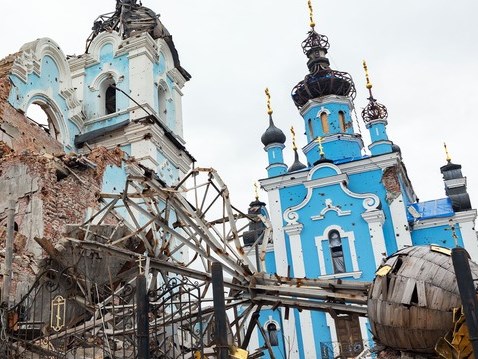
European security in a time of war: Standing with Ukraine, against Russia and without the US | Centre for European Reform (CER)
European security structures have been tottering for more than a decade, first under the impact of Russia’s annexation of Crimea and then following its full-scale attack on Ukraine. Donald Trump’s two terms as US president have provoked European worries about the reliability of NATO defence guarantees.

Europe’s cybersecurity depends on the United States | German Institute for International and Security Affairs (SWP)
The cybersecurity of governments, companies, and individuals in Europe is heavily dependent on the United States. Specifically, US companies dominate the global markets for cybersecurity applications and information on cyber threats. The US military also plays a role in data-gathering.

Thrown under the omnibus: How the EU’s digital deregulation fuels US coercion | European Council on Foreign Relations (ECFR)
On November 24th, EU representatives presented their US counterparts with the European Commission’s new “digital omnibus package”. Its pro-business language and deregulatory aims were not enough to please the Americans. The US commerce secretary, Howard Lutnick, was quick to dismiss the proposal outright.
Image credits: picture alliance/dpa | Jens Büttner ©

Beyond the ‘Brussels effect’ | ECDPM
Gautam Kamath and Chloe Teevan argue that to remain relevant, the EU must work with partners like India, Brazil and Japan to co-create open protocols and standards, transforming the ‘Brussels effect’ into a multinational ‘third way’ for digital governance.
Image credits: Szabolcs Varnai via Unsplash

The EU’s (giga)factory strategy needs a Goldilocks approach | Centre for European Policy Studies (CEPS)
The European Commission has placed the EU’s delay in developing and adopting AI at the heart of the continent’s competitiveness problem. It has launched several initiatives to address this, including the buildout of AI infrastructure backed by a substantial amount of public funding.
Image credits: AI-generated through Canva
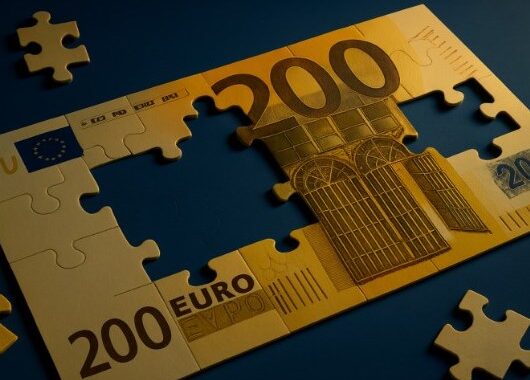
EU budget proposals: Caught between ambition and governance failure | Clingendael
Will the Commission’s proposals for the next multiannual financial framework (MFF) solve the deficiencies that have plagued EU spending for a long time? The proposals are ambitious. Yet, the MFF will continue to underperform without profound reform of the current governance structures. Currently, the MFF suffers from a governance deficit.
Image credits: ©Clingendael

The Energy Transition Faces Geopolitical Challenges. How Can Ideological Divides Be Overcome? | Institut Français des Relations Internationales (Ifri)
President Trump’s positions and policies, combined with record coal consumption and booming global electricity demand, geo-economic confrontation, and widespread concerns about energy security, are changing the game when it comes to understanding realistic decarbonization trajectories.
Image credits: © Capitano Footage/Shutterstock.com

Europe’s electric straitjacket | Project Syndicate
Reaching climate neutrality by 2050 is non-negotiable, but it is impossible to know in 2025 the best way to get there. Rather than attempt to dictate the pathway now, EU policymakers must design a strategy that leaves space for unexpected innovations and adequately accounts for geopolitical risk.
Image credits: @Metamorworks/Getty Images

The EU’s dual-use dilemma: balancing openness, security, and competitiveness | Finabel
The global order that so far shaped relations between Africa and Europe is shifting. Rising global levels of conflict expose the fragility of multilateral institutions that were once seen as pillars of global cooperation. At first glance, Africa and Europe may seem to sit on opposite sides of this transformation.
Image credits: UN via Flickr