

The Finder | Our monthly Insights | Issue 25 – January 2026
A change of course? The European Union’s stance in the world after the 2026 World Economic Forum
President Trump’s appearance at the World Economic Forum in Davos has been seen by several commentators as a tipping point in both America’s international standing in general and EU-US relations in particular. The demand of the US administration to acquire Greenland either by peaceful means – including with the use of tariff retaliation – or even by force, has prompted critical reactions from European leaders, as well as a discussion on some potential retaliatory actions from EU institutions. Whether the Greenland episode has accelerated a process that had long been slowly evolving or the threat of the use of force has crossed a red line and served as an actual wake-up call for Europe, is still to be seen.
However, this setting helps to explain why authoritative commentators have pointed out that the European Union’s pursuit of “strategic autonomy” is likely to accelerate. According to this new course in EU-US relations, the objective would not be to create distance from the United States per se – although a growing share of EU citizens might not oppose such a shift, but rather to mitigate the vulnerabilities arising from deep integration with the US in the absence of sufficient countervailing capacities, which leaves the Union susceptible to pressure from an increasingly assertive administration.
Against this backdrop, Canada’s Carney’s speech at Davos has raised a series of shockwaves, as the prime minister declared the end of the so-called “rule-based international order” and outlined how Canada was adapting by building an autonomous strategy, including a possible trade agreement with China. The Canadian Prime Minister also urged “middle powers” to collaborate in countering the resurgence of great-power rivalry, with the aim of fostering a more cooperative world.
Mark Carney’s words have resonated in Europe on several occasions, notably reflected in President Macron’s remarks at Davos. Among others, and including some (far-)right and conservative leaders, Polish President Tusk stated at the latest emergency summit that there is a difference between “leadership and domination”, while Kaja Kallas, the Estonian EU High Representative for Foreign Affairs and Security Policy, commented that the shift in EU-US relations is “structural, not temporary”. Last but not least, European Commission President Ursula von der Leyen warned that Europe’s response to U.S. President Donald Trump’s threats would be “unflinching”, highlighting that the finalisation of the EU-Mercosur agreement (although delayed) and a potential EU-India trade deal (recently concluded) aim to create a more stable and predictable trade environment.
Following a week at Davos in which Europe, its leaders and its regulations have been heavily criticised, ECB President Christine Lagarde remarked that the blunt assessments might be precisely what the continent requires. The debate on the possible use of the so-called Anti-coercion Instrument also known as “trade bazooka”, initially conceived to counter possible trade blackmailing from China, and the stances of prominent economists, some of whom suggested “targeted export tariffs, taxes on royalties, and the elimination of US Treasuries’ risk-free status” in order for the EU to “hit the US where it hurts”, have signalled the European Union’s willingness to counter the increasingly bold US requests, although Europe would lose more than the US in a trade war and despite the outstanding security question.
Additionally, on the 26ᵗʰ of January, the European Parliament postponed its decision to finalise the EU-US trade agreement signed by Trump and European Commission President Ursula von der Leyen last July, highlighting again the political fragmentation at EU level. The European People’s Party has advocated for the rapid advancement of the deal, similarly to the European Conservatives and Reformists and the far-right Patriots. By contrast, the Socialists, Renew Europe and the Greens adopted a more cautious stance, insisting on greater clarity regarding the Greenland agreement, particularly in light of the perceived unpredictability of US President Trump.
Lawmakers from the centre-left and liberal factions have also called for stipulating that the trade agreement would be rendered void should Trump resume threats to the EU territorial sovereignty, adding further fuel to fire on the discussion about the question of EU technological sovereignty which has followed the release of the Digital Omnibus. This last initiative has been seen by some as excessively aligned to US tech companies. Indeed, some policymakers argued that, as the transatlantic alliance increasingly shows signs of strain, traditional dependence on the United States is being reconceptualised as a strategic vulnerability. Using the words of Commissioner Henna Virkkunen, relying on foreign tech “can be weaponised against us”.
Some commentators remarked that the EU is now more closely aligned than before with countries such as India, Brazil or China, all of which swiftly moved to oppose US tariffs. Others, however, suggested that the EU’s response points less towards geopolitical realignment and more towards the consolidation of a Europe-led strategy. In this reading, Brussels is building on the initiative announced in July to establish a framework for structured trade cooperation, potentially laying the foundations for an alternative to the gridlocked World Trade Organisation. Meanwhile, other analysts noted that Europe is increasingly grappling with how to adapt to a “truly multipolar world” it has long championed, one that is now materialising in ways the old continent could not have anticipated.
A Project Syndicate Commentary argued that the Trump administration’s capture of Venezuelan President Nicolás Maduro definitively exposed the reality of a US-led global order. It contended that any claim to be defending democracy or human rights had been stripped away, along with the veneer of legitimacy surrounding the intervention, leaving only the pursuit of narrow US self-interest. Overall, the commentary maintained that these manoeuvres by the Trump administration constitute a watershed moment for international law and the global order.
A CEPS Commentary argued that President Trump’s threats against Greenland breach NATO principles and strengthen the case for a European defence pillar. It dismissed US claims as unfounded, noting that Greenland is not militarily encircled. The analysis also emphasised Denmark’s openness to Arctic security dialogue and to hosting additional US forces, and highlighted Europe’s slow and fragmented response to the crisis. EU member states were described as engaging in “strategic supplication” to preserve US support for Ukraine. The commentary warned that any US military action could activate the EU’s mutual assistance clause. However, such a response would likely be largely symbolic, deepen EU divisions, weaken NATO, and accelerate the need for a European defence capacity.
A CER Publication argued that, as US backing for Ukraine fades, the EU faces rising pressure to finance Kyiv alone. It noted that Ukraine needs €135 billion for 2026–27, prompting a proposed €210-billion reparations loan backed by frozen Russian assets. The loan would be interest-free and repayable only if Russia paid reparations. The article addressed Belgium’s concerns over legal and liquidity risks linked to Euroclear, but dismissed them as overstated, citing weak Russian legal claims and strong safeguards. The publication added that the EU has already used Article 122 of the Treaty on the Functioning of the European Union to freeze the assets indefinitely, stabilising the scheme, and that any gaps in national guarantees could be covered by the European Investment Bank’s unused balance sheet.
An ECDPM Commentary explored how negotiations on the EU’s next multiannual financial framework (MFF) have entered a more political phase. This shift from exploratory exchanges to a more structured, political process was marked by more explicit political positioning by member states across the whole package. The commentary highlighted the recalibration of the Global Europe initiative towards a more transactional use of the instrument and a closer alignment with internal priorities. Overall, the commentary argued that, moving forward in the negotiations, it will be crucial to maintain coherence between the EU’s internal and external priorities.
A Clingendael Policy Brief argued that Europe is increasingly replacing its former dependence on Russian pipeline gas with a growing reliance on US LNG, creating new geopolitical, price and energy security risks. It highlighted that US gas now accounts for a dominant share of EU LNG and a large portion of overall gas imports. The brief criticised recent EU legislation for redefining diversification too narrowly as eliminating Russian imports, rather than reducing overall supplier concentration. It also stressed that treating Norway as an external supplier obscures Europe’s true vulnerability. Finally, the authors called for genuine diversification, closer monitoring of supplier shares, and faster deployment of renewables to avoid long-term fossil fuel lock-in.
An SWP Commentary argued that Europe’s space dependency on the US compromises its strategic autonomy. It highlighted gaps in launch capabilities and situational awareness as critical strategic failures. It warned that reliance on private US providers such as SpaceX creates high vulnerability to political pressure. The commentary advised fostering domestic satellite production and integrating commercial services into military structures. It observed that the lack of a unified legal framework and fragmented funding stifle industrial scaling. Finally, it concluded that coordinated investment within EU and NATO frameworks is vital for resilience.
An ECFR Commentary argued that the EU-Mercosur deal is a superficial win for free trade that fails to counter China’s industrial dominance and economic coercion. It warned that the EU must replace fragmented defensive measures with a cohesive strategy to secure long-term competitiveness and resilience. The commentary also suggested a transition toward a realistic trade model that prioritizes pragmatic agreements over idealistic principles, and stressed that the full integration of the European internal market is the essential foundation for ensuring economic survival and strategic leverage.
A Finabel Research Report argued that the 2023 Treaty Reform Proposal is essential for transitioning the Common Security and Defence Policy into a shared competence, thereby establishing a European Defence Union to address escalating geopolitical threats. It noted that this transformation would introduce qualified majority voting to resolve decision-making paralysis and place military units under a common operational command supported by a joint armaments budget. The report highlighted institutional innovations such as the Rapid Deployment Capacity and a strengthened European Defence Agency, while observing significant legal hurdles concerning national security prerogatives and the removal of existing veto safeguards.
An Ifri analysis argued that today’s AI owns it popularity to three interconnected bubbles. The first is its reputational hype, as narratives surrounding AI praise its miraculous capabilities and potential. It then analysed the speculative and infrastructure bubbles, and stressed the massive investments being made in AI. Often based on high expectations and comments from people in the technology sector, the amortization of such investments can become a concern. The analysis concluded that the geopolitical rivalry between the US and China, together with the preservation of national interests, also play a role in these dynamics.
This editorial is authored by Massimiliano Gobbato, Communications Director. Contributions by PubAffairs Communications Team’s Kristina Vilenica, Jacopo Bosica, Giulia Piera Furlan, Simon Rolland and Aaron Lotz to the drafting of ‘The Finder’ are gratefully acknowledged.
From our Editorial Partners
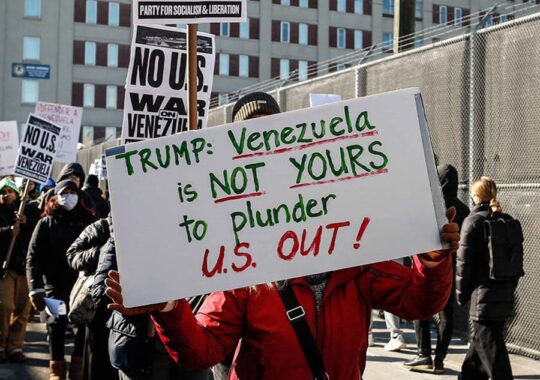
What Now for the “Rules-Based Order”? | Project Syndicate
By dropping any pretense of defending democracy or human rights through its intervention in Venezuela, the Trump administration has ripped off the mask and shown the US-led global order to be untenable. To rebuild the idea of rules-based international relations, we will need a new philosophical foundation.
Image credits: © AFP via Getty Images
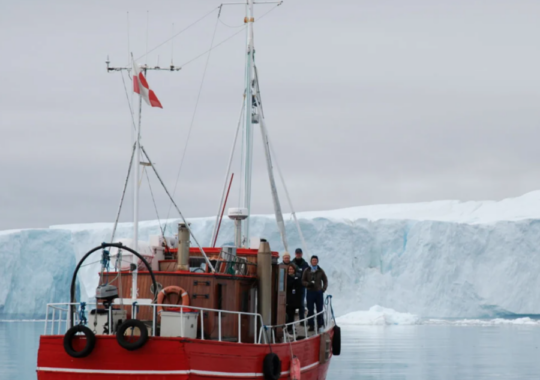
Grabbing Greenland – and how it would impact NATO and the EU | Centre for European Policy Studies (CEPS)
An American move on Greenland wouldn’t finish NATO or the EU – but the Trump administration’s arguments already justify a dedicated European defence pillar. Its threats to ‘take over’ Greenland are inconsistent with NATO’s core logic, namely respect for members’ sovereignty. They contradict the principle that collective security is achieved through cooperation rather than coercion among allies.
Image credits: © 2.5 DK, via Wikimedia Commons
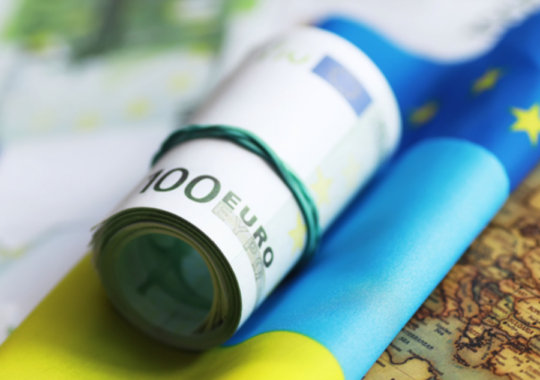
The Ukraine Reparations Loan: How to fix Europe's financial plumbing | Centre for European Reform (CER)
The new US National Security Strategy and the Russia-friendly proposals given to Moscow by Steve Witkoff, US President Donald Trump’s all-purpose ‘peace’ envoy, for ending the war in Ukraine have sent a clear message to Kyiv – and Europe. Whatever security guarantees it offers, sooner or later the Trump administration will abandon Ukraine.
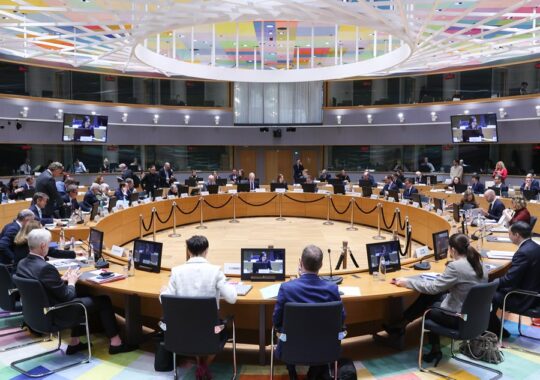
What’s next for Global Europe in the 2026 MFF negotiations? | ECDPM
Negotiations on the EU’s next multiannual financial framework (MFF) have entered a more political phase following the December Council discussions. In this commentary, Alexei Jones explores how emerging horizontal budget choices are reshaping the context for the Global Europe instrument, and why connecting the dots between internal priorities and external action will be decisive as negotiations move into 2026.
Image credits: © European Union
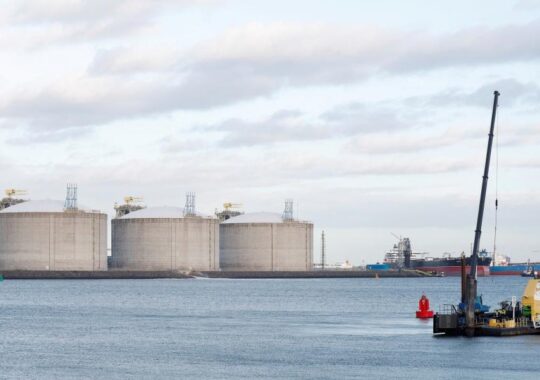
Europe's Selective Blindness on Gas | Clingendael
A new policy brief shows that Europe is rapidly replacing its dependence on Russian pipeline gas with a dependence on US liquefied natural gas (LNG). In 2025, US LNG imports to the European Economic Area (EEA) increased by 61% compared to 2024, and almost sixfold compared to 2019.
Image credits: © REUTERS/Piroschka van de Wouw
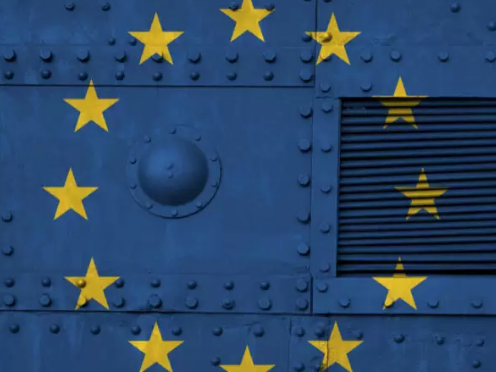
European Autonomy in Space | German Institute for International and Security Affairs (SWP)
Space capabilities are a core element of any modern defence arsenal. In Europe, however, military space capabilities are limited and dependence on the United States remains high. Europe must develop its capabilities in order to reduce dependencies and enhance its capacity to act on its own, thereby fostering European autonomy.
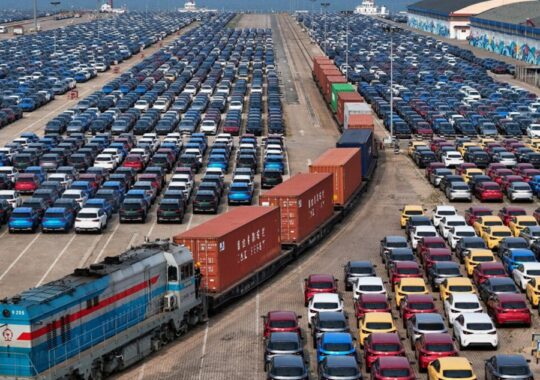
EU-Mercosur deal: Take the win, but change the tune | European Council on Foreign Relations (ECFR)
With the EU-Mercosur deal signed after 25 years of negotiations, free trade advocates in Europe may feel triumphant. But their narrative is no longer convincing. As China undercuts industry worldwide, it’s time to refresh the open market story
Image credits: © ASSOCIATED PRESS
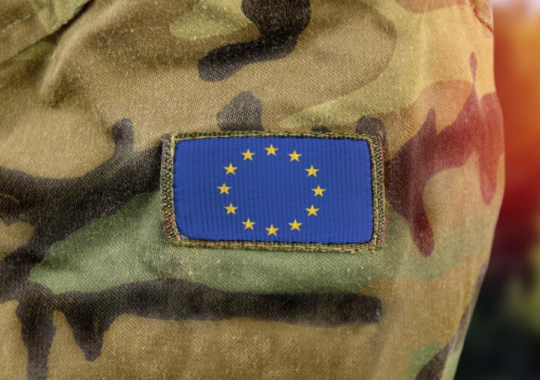
Reforming Europe’s defence: amending the treaties for a European Defence Union | Finabel
To date, Europe’s defence architecture has been growing into a patchwork of more than 160 bi- and plurilateral defence partnerships with limited proposals for military interoperability enhancement. After decades of European patchwork defence, this approach appears insufficient, now more than ever, to make Europe capable of facing external threats that have proven to remain both present and dangerous.

L’IA dans sa bulle : qui paiera la note ? | Institut Français des Relations Internationales (Ifri)
Affirmer que l’intelligence artificielle générative (IA) est en proie à une bulle relève aujourd’hui du lieu commun. Les valorisations boursières stratosphériques des entreprises du secteur, dont la rentabilité demeure un horizon lointain et plus qu’incertain, peuvent suffire à s’en convaincre.
Image credits: © StudioProX/Shutterstock.com