

The Finder | Our monthly Insights | Issue 26 – February 2026
Allies, alignments and polarisation: Europe, the EU and its member states at a defining moment
February has arguably been one of the most eventful months for the European Union in political and diplomatic terms. A series of developments, both within and beyond Europe, has once again brought the role of the Old Continent into the spotlight, highlighting the challenges it faces. January’s diplomatic rift with the United States over Greenland, together with the symbolic military presence of several EU and NATO member states, appears to have prompted Europe to gather momentum in response to the current international context, notably characterised by increasing geopolitical rivalry, more transactional economic and diplomatic relations, and the emergence of a still undefined global order.
On the 11th of February, the European Industry Summit in Antwerp marked the beginning of an equally eventful mid-February. At this informal gathering, Belgian Prime Minister De Wever, French President Macron, German Chancellor Merz and European Commission President von der Leyen met with leading industrial stakeholders to discuss ways to strengthen Europe’s economic competitiveness.
High energy costs, regulatory burdens and intense global competition were among the main issues addressed. However, while the French President reiterated his call for a “Made in Europe” strategy, the German Chancellor – in line with the German-Italian Action Plan put forward in Rome – emphasised the need for simplification, stressing that it is the only viable path to securing Europe’s competitiveness and sovereignty in the current geopolitical environment. Belgian Prime Minister De Wever provided a broader perspective, quoting Jacques Delors, who once authoritatively stated: “Without industry, there is no technological leadership. Without technology, there is no defence capability. And without those two, there is no strategic autonomy.”
Notably, EU defence has firmly climbed to the top of the institutional agenda in Brussels and in European capitals. Russia’s full-scale invasion of Ukraine four years ago forced EU institutions and capitals alike to fundamentally rethink the EU security capacities. Additionally, over the past year, the European Union and its Member States have, collectively, become the largest providers of military and financial assistance to Ukraine.
Alongside the renewed debate over the trade-off between defence expenditure and welfare spending, and the broader question of industrial transformation to enhance Europe’s military capabilities, other fault lines have also (re-)emerged. Hungary’s long-standing reluctance to further EU assistance to Kyiv – probably further exacerbated by the country’s current electoral period – contributed to the blockage of a proposed €90 billion EU loan package.
Despite resistance from Budapest, on a similar but different note, Bratislava competitive visions are taking shape over how best to steer Europe towards greater military autonomy. Last month, NATO Secretary-General Mark Rutte cautioned that European leaders were “dreaming” if they believed the continent could secure itself without backing from the United States. Whereas, at the Munich Security Conference, Ursula von der Leyen argued that the Union must operationalise its own mutual defence clause. Her message clearly pointed at a bolder European bloc to stand as a robust guarantor of security in its own right, even as it remains anchored within NATO.
In this context, on the 14th of February, US Secretary of State Marco Rubio sought to reassure European partners that Washington remains committed to the transatlantic alliance, while simultaneously signalling that certain European policy choices warrant reconsideration. Addressing the audience at the annual Munich Security Conference, Rubio framed his remarks as an appeal for renewed alignment and shared responsibility. Although his comments included pointed criticism, the overall tone was relatively well received by the participating European diplomats and leaders.
Nonetheless, the question of trust across the Atlantic has not faded in the public debate. Indeed, several of Rubio’s statements echoing elements of the US President’s domestic political rhetoric, combined with last year’s speech by US Vice-President Vance, have been highlighted by commentators as raising unresolved questions about the future trajectory of EU-US relations.
At the Munich Security Conference, the agenda also provided space for Chinese Foreign Minister Wang Yi, who, somewhat under the radar and in evident contrast to the US State Secretary, advocated for a more prominent role for the United Nations to give a stronger voice to the so-called “Global South”. Of particular relevance for the EU, however, he repeatedly emphasised that Europe and China should not be regarded as systemic rivals, although he did not clarify what this concept would entail in practice. This stance, and lack of details, should however also be seen in light of the then upcoming German Chancellor trip to Beijing.
Against this backdrop, and unarguably a decisive moment for the foreseeable future of the EU policy making, European leaders gathered, on the 12th of February, at an informal retreat as a result of a broad agreement on the urgent need to revitalise the struggling EU economy, which notably faces low productivity, high energy costs, bureaucratic inefficiencies, a fragmented single market and intense competition from the United States and China within the erosion of the rules-based international order. The IMF study which has pointed out that internal barriers within the single market are equivalent to a 45% tariff on goods and a 110% tariff on services has been the institutional and media mantra which is accompanying the intention to implement the spirit, or the letter, of both the Draghi and Letta reports.
Although no formal conclusions were adopted, EU leaders agreed on the need to move forward rapidly and decisively on several issues. These included advancing the simplification agenda, already underway through the Omnibus package; completing the single market, notably through the proposal of a “One Market for one Europe”; and reviewing the merger guidelines to enable the emergence of champions in strategic sectors.
EU Leaders also highlighted the urgency of short-term measures to address energy costs, particularly electricity prices, alongside the introduction of targeted European preferences in strategic industries, in line with the “Made in Europe” proposal, which is however facing a predictable resistance. In addition, they emphasised the continuation of a proactive trade policy and the accelerated adoption of the Savings and Investment Union initiative.
The outcome of the Antwerp summit and the subsequent informal retreat have brought into focus two principal macro trade-offs, as well as two political and diplomatic cleavages, through which Europe’s forthcoming policy choices may be broadly interpreted.
First, there is the trade-off between openness and protectionism in trade policy, reflected in the divergent reactions to calls for a “Made in Europe” approach. Second, there is the balancing act between competitiveness and climate – and innovation – ambition, illustrated, for example, by the discussions surrounding the reform of the Emissions Trading System.
Beyond this, institutional cleavages are also emerging. The question of which majorities will ultimately shape new legislation in the European Parliament has, despite its significance, received comparatively little public attention in recent months and remains unsettled. In this context, the possibility that certain EU member states may seek to curb the expanding influence of the European Parliament is once again coming into view, highlighting potential divergences not only among member states but also between the EU institutions themselves.
Together, these fault lines provide a framework for understanding the strategic direction the European Union may pursue in the legislative period ahead, along with the evolutions of relations with the US and China, as well as between the US and China, and with the rest of the world. Unsurprisingly, the EU’s shifting stances towards China and the United States have come to dominate the public debate at the end of the month.
The European Union’s trade and broader economic relationships with the United States and China differ notably in their composition and balance, and it remains difficult, if not impossible, to predict their evolution over the medium to long term. However, the current picture is clear.
With the United States, the EU records a surplus in goods trade while running a deficit in services. These exchanges are further reinforced by substantial two-way investment, reflecting a high degree of economic integration across multiple sectors. By contrast, trade with China is characterised by a significant imbalance in goods, with EU imports considerably exceeding exports. Services and investment play a comparatively smaller role in the overall relationship. China represents a major source of goods imports for the EU, while serving as a more limited destination for European exports.
The European Union is seeking some adjustments in its economic, diplomatic and regulatory relations with both powers as it navigates an increasingly complex global environment. It is evaluating measures that would favour European businesses over foreign competitors with regard to public procurement, and this approach would also apply to its current and future long-term budget.
This heightened sense of confidence, grounded in a more pragmatic appreciation of reality, is particularly evident in Europe’s approach towards China. As noted in an interview with a European CEO, Europe is increasingly becoming the “student” rather than the “professor” in terms of technological know-how. He therefore suggested that foreign firms should be required to relinquish control over certain cutting-edge technologies, and establish joint ventures with EU companies in order to gain access to the Single Market, mirroring the strategy China adopted with foreign enterprises during the early stages of developing its new economy. This approach is reportedly under consideration within ongoing European Commission initiatives.
The new EU momentum is also reflected in the current discussions following the decision of the United States Supreme Court, which ruled that some of the tariffs imposed in 2025 by Washington were unlawful under the US International Emergency Economic Powers Act (IEEPA). Along with several authoritative publications which have Europe’s leverage on the US, European Parliament negotiators’ suspension of the EU-US trade agreement – also known as Turnberry agreement – also is a clear indication of the evolving EU stance.
Against this backdrop, reform of the Single Market and efforts to increase Europe’s competitiveness, if successful, would undoubtedly strengthen Europe’s leverage, alongside a more proactive external trade policy as in the case of India and Mercosur. However, the policy choices ahead will be decisive not only for the current legislature, but also for the broader European economic model, determining both the extent of its evolution and its success and influence on the rest of the world, at least, in the medium term.
An Ifri analysis argued that Friedrich Merz’s agenda focuses on the ambition to turn Germany into a leading and incisive actor. Germany’s hesitant behaviour has weakened its credibility and often paralyzed the EU decision-making process. The analysis stressed Mertz’s aim to increase coherence in Germany’s European policymaking, but also highlighted that reality still shows partisan and procedural tensions within his government. It concluded by saying that, despite the promise to end the practice of the “German vote”, the internal tensions still produce indecision and tactical abstentions, which result in delays in Brussels.
A Project Syndicate Commentary argued that, as China heavily rely on the EU market, the EU needs to recognize its bargaining power. The rapid growth of the Chinese economy has sucked many pivotal sectors of the global market, including automobiles and machinery, which is hollowing out the competitiveness of some EU countries, especially Germany. The commentary stressed that, given the US’ entrenched position on protectionism, the EU should not squander its leverage over China. Overall, it argued that, in a new era of geoeconomics, Europe has to act and impose the right conditions on China’s access to its market.
A CER article argued that the long-awaited EU-Mercosur deal exposed Europe’s difficulty in building domestic support, despite being framed as a geopolitical breakthrough. After 26 years, the deal narrowly passed in the EU Council and was promptly referred to the Court of Justice of the EU by a slim majority in the European Parliament. It elaborated that persistent opposition, especially from member states with strong agricultural lobbies and MEPs from across the political spectrum, has slowed the process, and provisional application of trade elements could heighten tensions. The article concluded that, although the EU can negotiate ambitious trade deals, it struggles to secure the internal consensus needed to uphold its credibility.
An ECFR Policy Brief argued that European leaders face a strategic dilemma where losing control over the manufacturing of clean-tech assets undermines both economic independence and political support for the green transition. Reaching 2050 carbon neutrality creates a conflict between cheap Chinese imports and industrial sovereignty, where national stances are shaped by trade exposure: dependent states fear retaliation while those with domestic sectors prioritize de-risking. Fragmentation is worsened by rising costs and populist framing of climate policy as a threat to domestic jobs. Finally, the Policy Brief argues that aligning interests with autonomy requires a transparent debate on the ‘resilience premium’ to avoid becoming a rule-taker in a market shaped by state-backed competitors.
An SWP Commentary argued that the EU’s attempt to lead the transition away from fossil fuels at COP30 was undermined by its structural weaknesses and late preparation. Instead of acting from strength, the delegation entered negotiations hampered by late NDC submissions, internal friction, and funding cuts. These deficiencies, alongside an inexperienced staff, forced Europe into a defensive position that failed to counter the fossil-fuel bloc led by Saudi Arabia and Russia. While a unified front was eventually established, the delay prevented the EU from isolating opponents or securing progress within the UNFCCC’s consensus framework. Finally, the commentary argued that the EU must clearly define its strategic priorities before COP33, as both potential paths require significantly more robust and consistent political preparation.
A Clingendael article argued that the “rupture” of the world order exposes a deeper issue: how the EU is perceived beyond the West, particularly in Africa and the Middle East. While international norms endure, their enforcement has lost credibility as US backing declines. The EU’s reliance on soft power supported by US hard power is no longer viable, creating a credibility gap that demands stronger political will and consistent enforcement. Although signs of greater strategic autonomy of the EU are emerging, the article stressed that many other states prefer multi-alignment with the EU and other major powers. It concluded that the EU must act more independently and pragmatically, balancing norms and interests while respecting partners’ autonomy.
An ECDPM Commentary explored how the EU is struggling to match its CRM ambitions with reality. Reducing the dependence on China and other suppliers has to be the goal, but the path forward for the EU needs a more realistic and pragmatic approach. The commentary argued that, although the European Court of Auditors report functioned as a reality check for the EU’s CRM policy, it fell short in addressing the underlying factors of supply chain dependence. The commentary concluded that the way out for the EU is more about questioning the political economy than about strengthening methodology.
A CEPS Commentary pointed out that the European Commission’s post-2027 MFF proposal seeks major reforms, but has stalled due to scepticism from Member States and the European Parliament. It explained that net contributors oppose the larger budget size, while beneficiaries resist cuts to the Common Agricultural Policy (CAP) and cohesion funds, and the European Parliament rejects centralised “single plans”. The Commentary explained that the plan would cut predictable national allocations from 66% to 46% and expand centrally managed spending, while overall resources decline once Next Generation EU factors are included. The commentary warned that, without a shared strategic vision, the EU risks ending with a smaller, less effective budget.
A Finabel Research Report examined the use of AI in reshaping modern warfare and the lack of a legally binding framework to regulate its use in armed conflicts. The report analysed AI-driven defence initiatives and the EU’s AI Act, pointing out the exclusion of military and defence AI applications from its scope, which translates into a regulation gap. The rapid growth of AI’s power in the warfare sector requires the EU to act and regulate military AI use in compliance with humanitarian and ethical standards. Overall, the Report maintained that responsible AI governance will allow the EU to bolster its technological competitiveness.
This editorial is authored by Massimiliano Gobbato, Communications Director. Contributions by PubAffairs Communications Team’s Kristina Vilenica, Jacopo Bosica, Giulia Piera Furlan, Simon Rolland and Aaron Lotz to the drafting of ‘The Finder’ are gratefully acknowledged.
From our Editorial Partners
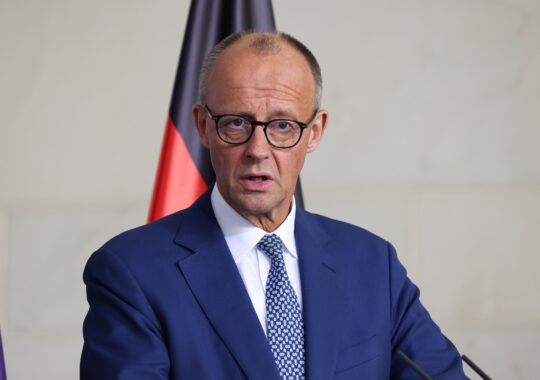
Merz’ European Policy-making: The End of the ‘German Vote’? | Institut Français des Relations Internationales (Ifri)
Friedrich Merz’s European ambition is to turn Germany, long seen as hesitant into a leading actor within the European Union (EU). To that end, he has pledged to end the “German vote,” a phenomenon that epitomizes the paradox of a country both indispensable and frequently absent from European decision-making.
Image credits: EUS-Nachrichten/Shutterstock.com
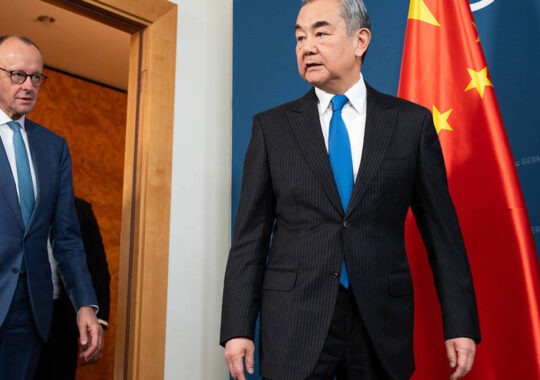
Europe Is Squandering Its Leverage Over China | Project Syndicate
Requiring Chinese companies that want to sell high-tech products in Europe to form joint ventures with local firms would go a long way toward strengthening the competitiveness of European industry. With its market having become a lifeline for China, the EU needs to recognize the strength of its bargaining position.
Image credits: Michael Bihlmayer/Pool via Getty Images
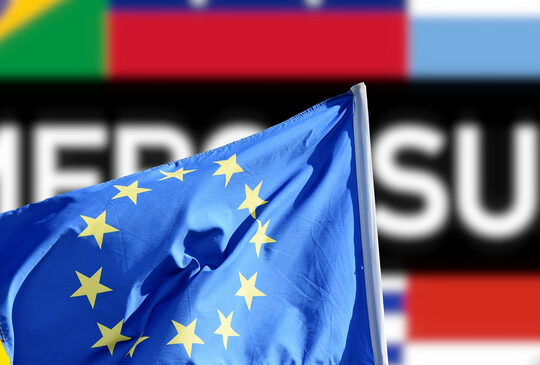
The Mercosur deal tests Europe's geoeconomic ambition | Centre for European Reform (CER)
The struggle to ratify the deal exposes a weakness in Europe’s geoeconomic agenda: the EU can reach ambitious agreements with external partners, but it is poorly equipped to assemble and sustain the domestic coalitions needed to deliver them.
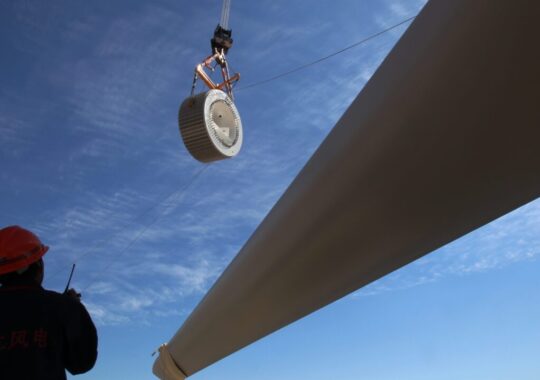
Don’t look down: How Europeans can escape China’s clean-tech gravity | European Council on Foreign Relations (ECFR)
When European Commission president Ursula von der Leyen launched the European Green Deal in 2019, she called it “Europe’s man on the moon moment”. The green deal aimed to create the world’s “first carbon-neutral continent” by 2050.
Image credits: Image bypicture alliance / dpa | Chinafotopress/xu Congjun ©

The Limits of Multilateral Climate Policy | German Institute for International and Security Affairs (SWP)
The fossil-fuel foreign policy of the United States under President Donald Trump has intensified the conflict between petrostates and electrostates in international climate politics. At COP30 in Belém in November 2025, this cleavage was particularly evident in the dispute over a roadmap for the Transition Away from Fossil Fuels (TAFF).
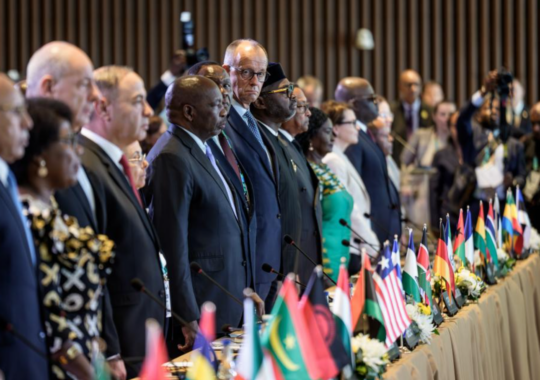
From Rupture to Relevance: Investing in Europe’s Southern Partnerships | Clingendael
Europe’s future relevance in Africa and the Middle East will depend less on normative rhetoric and more on credible enforcement capacity to enable pragmatic partnerships. The EU must honestly confront and navigate the trade-offs between its geo-economic interests and its normative commitments
Image credits: ©Reuters
The EU’s critical raw materials maze: Why methodology won’t save the Green Deal | ECDPM
In the context of the EU seeking more strategic autonomy for its green and digital transition, Poorva Karkare explores the recently released special report on critical raw materials by the European Court of Auditors. She argues that the path forward is less about strengthening methodology and more about questioning the political economy.
Image credits: Matthias Guntrum via Flickr
Six months of MFF negotiations – and there’s still no shared vision for a ‘policy-driven’ EU budget | Centre for European Policy Studies (CEPS)
Negotiations over the EU’s long-term budget, the Multiannual Financial Framework (MFF), are often portrayed as a defining moment. In practice, they rarely produce major change. The European Commission usually proposes an updated version of the previous framework; the European Parliament (EP) calls for higher spending, while frugal Member States argue for restraint; and net beneficiaries seek to protect cohesion and agricultural funding.
Image credits: www.vecteezy.com

Emerging Technologies and the Laws of War: Ai Warfare under IHL and the EU Regulation Gap | Finabel
Artificial intelligence (AI) is reshaping warfare as we know it. As the EU strives to improve its technological competitiveness and resilience in the military, security and defence sectors, the world struggles to find a consensus to regulate the use of AI technology in armed conflict.