
The Finder | Our monthly Insights | Issue 27 – March 2026
Between the promise of unity and the burden of indecision: has Europe’s moment of reckoning arrived?
“In varietate concordia” (United in diversity) has been the official motto of the European Union since 2000, symbolising the continent’s aspiration for integration. For decades, Europe’s trajectory seemed largely upward, marked by incremental political and economic consolidation that began in the post-World War II era and continued through the fifteen years following the Cold War’s end, a period often regarded as the apex of both European and global integration.
This optimism was underpinned by the theory of The End of History, formulated by Francis Fukuyama at the dawn of this last period. Fukuyama argued that the combination of liberal democracy and market economy represented the most viable and appealing political and economic system globally.
Implicit in this view was a belief that a multilateral, rules-based international order – reinforced by the United Nations and the hegemonic role of the United States – would provide the foundation for ever-deepening global economic and diplomatic integration and, ultimately, a more peaceful world. To some extent, Fukuyama’s theory proved accurate for a time. However, the international equilibrium reached during that era gradually gave way to a more fragmented, volatile and unarguably less predictable environment which Europe is struggling to navigate both in economic and diplomatic terms.
Jean Monnet, one of the EU’s founding fathers, famously asserted: “Europe will be forged in crises, and will be the sum of the solutions adopted for those crises”. Indeed, Monnet recognised that national governments are naturally reluctant to cede sovereignty, doing so only when crises – whether economic collapses, wars or any other type of shock – render national solutions inadequate. Notably, Europe, and the wider world, have had no shortage of moments that could have catalysed further integration.
Monnet also suggested that the European project is never “finished” as it should have evolved in response to the crises it faces. Yet, the notion of “more Europe” remains contested in the old continent. While arguments for deeper integration grow increasingly compelling – particularly as the European Union confronts intensifying great power rivalries – it remains unclear whether this perspective is still shared across European countries, whilst recent events have illustrated the issues at stake in this dynamic.
The European Council has convened three times in the first three months of this year, an unusual frequency compared to its typical four or five sessions per year, reflecting the urgency of the challenges at hand. During the 19th of March summit – originally intended to focus on economic competitiveness – the EU remained united in abstaining from direct involvement in the Iran crisis, yet divided on how to address, in a systemic way, the emerging diplomatic, economic and energy challenges (re-)emerging from current military confrontations, as well as on the provision of the long-promised financial aid to Ukraine.
In fact, a looming energy and economic crisis has been the main concern, taking centre stage at this month’s European leaders’ summit and in the public discussion. More specifically, the debate over reforming the EU Emissions Trading System (ETS) has crystallised tensions between environmental ambitions and industrial pragmatism. In the run-up to the summit, ten member states openly opposed several aspects of one of the EU’s climate policy cornerstones, arguing that current mechanisms undermine competitiveness and calling for greater flexibility to balance economic resilience with the green transition.
The future of Europe’s economic model thus hinges on a delicate balance between two competing visions. On the one hand, some argue that Europe should decarbonise at full speed in order to foster an economic model that simultaneously promotes innovation and competitiveness. On the other hand, others contend that the EU must pursue it through a more pragmatic and strategic industrial policy that safeguards competitiveness and prevents the weakening of key European sectors in the face of global competition.
Against this backdrop, some commentators have stressed the importance of flexibility, but by pointing to a growing consensus that the EU’s emissions reduction framework should be simplified and made more responsive, with fewer constraints on how market players should achieve climate mitigation. However, while a possible compromise might be reached around the principle of “decarbonisation, not deindustrialisation”, the implementation of such a policy remains contested at both institutional and societal levels.
As Pascal Lamy and Enrico Letta have recently argued, the European economy [and the opinions on its possible reform] continues to be highly fragmented, organised as a patchwork of national exceptions rather than a unified continental bloc. This disunity, they add, directly affects prosperity and security, undermining competitiveness, weakening companies, restricting investment, slowing innovation and leaving Europe vulnerable or lagging behind in strategic sectors such as AI and energy. The two pundits have also emphasised that, in a world increasingly shaped by rivalries between major powers, new wars and powerful proprietary technologies, scale matters more than ever. This dynamic is diminishing the EU’s capacity to respond effectively to the geopolitical pressures shaping the global landscape.
In this context, Europe faces a renewed question: should the EU prioritise unity and return to the founding ideals that have underpinned its successes, or continue debating over institutional evolutions and/or policy reforms that further delay decisive action? The answer will define not only the trajectory of the European project but also its capacity to navigate a world increasingly defined by uncertainty, rivalry and rapid change. Indeed, to cite entirely Jean Monnet’s famous quote, “these solutions had to be put forward and then put into practice”.
A CER publication argued that the war in Iran destabilises the Middle East and reflects poor strategic planning by the US and Israel. It identified Russia as the main short-term winner, gaining from higher energy prices, increased revenues and added leverage over Europe. Israel benefits militarily by weakening Iran and its proxies, while China may gain in the long term by positioning itself as a stable alternative and exploiting US distraction. The main losers according to the publication are civilians in Iran, Lebanon and Palestinian territories, alongside Europe and Ukraine, which face higher energy costs and reduced US support. The publication concluded that the US itself is also likely to lose overall due to economic strain, weakened alliances, and declining global credibility.
A Project Syndicate Commentary argued that, despite the unprecedented nature of the US-Israeli war against Iran, previous energy and financial crises can offer useful lessons for navigating this complex situation. Nowadays the global economy is less dependent on oil, and the energy supply has proven to be more responsive than expected. Therefore, oil and natural gas producers cannot assume prices will stay high indefinitely. The commentary stressed that many factors can affect this energy crisis, concluding that allying with the US is no longer a synonym for security, and that Asia’s economic opportunities are increasingly attractive.
An Ifri Analysis argued that, in an era of a fractured geopolitical landscape, the EU must step up its game and avoid risky dependencies. In warfare times, the peacetime objectives need to be replaced by a strategic approach and new priorities. The analysis highlighted several action points to ensure energy and economic security. According to the authors, the EU must: display rapid-response crisis units and stress-test policies against unexpected scenarios; diversify gas suppliers; prioritise an electrification breakthrough; implement “Made in Europe” requirements; expand the scope of the CBAM and scale up investments in critical raw material value chains.
A Clingendael Report argued that the EU struggles to respond cohesively to geopolitical events, often acting decisively only by bypassing unanimity through emergency measures or coalitions of willing states. The report also warned that such shortcuts risk undermining the institutional balance in the EU treaties. Disagreements among leaders show uncertainty over who leads EU foreign policy and whether the European Union can act as a unified geopolitical player. The authors maintained that Treaty of Lisbon reforms increased complexity rather than clarifying roles, as the line between Member State-led foreign policy and broader EU action has blurred. The report concluded that crises drive major steps, but divergent national interests hinder long-term reform, shifting focus to short-term measures to strengthen the EU’s geopolitical role.
A Finabel Research Report argued that, while increased military spending strengthens EU capabilities, political and economic challenges risk undermining long-term sustainability. It highlighted that the “warfare vs welfare“ trade-off fuels public backlash as defence costs limit fiscal space for social investments. The Research Report stressed that justifying budget hikes solely through external threats is insufficient, requiring tailored rationales for domestic contexts. It then elaborated that a lack of funding consensus further complicates these shifts. The report concluded that transparency and democratic oversight are essential to transform crisis-driven momentum into a durable security architecture.
An ECFR Policy Brief argued that decelerating Europe’s green transition for short-term stability risks permanent geoeconomic vassalage. The brief highlighted that, while postponing regulations briefly protected legacy sectors, it stifled innovation and ceded regulatory leadership to China, which now promotes alternative carbon-trading models across the Global South. The author also argued that a retreat from climate finance and standards would leave European firms as rule-takers, unable to provide the green technologies required by emerging economies. The Brief concluded that abandoning domestic climate commitments would strongly weaken European global influence, making China the sole provider of green innovation and leaving EU industries to face total geoeconomic obsolescence.
A CEPS publication pointed out that Europe has a strong quantum research ecosystem, producing about 36% of global startups, but its strength remains concentrated in science rather than industrial scale. It explained that public investment has focused mainly on research, limiting companies’ ability to scale into global competition. While the United States and China have embedded quantum within broader industrial strategies, Europe’s fragmented policy landscape lacks a mechanism dedicated to finance scale-up. Consequently, this gap has created a “valley of death” between innovation and commercialisation. The publication proposed an EU Quantum Sovereign Fund to strengthen Europe’s technological capacity.
An ECDPM Article explored the potential for EU-China cooperation on Africa’s green transition as climate action became a ground for geoeconomic competition, with major powers competing with each other. The article stressed how China’s leading role in green technology is perceived by Europe as an economic threat. Therefore, a cooperation between the two in developing countries is unlikely to be considered an option. However, the authors also stated that this approach risks only limiting opportunities for Africa and Europe itself, and concluded by suggesting that the EU understands where and how to collaborate with China.
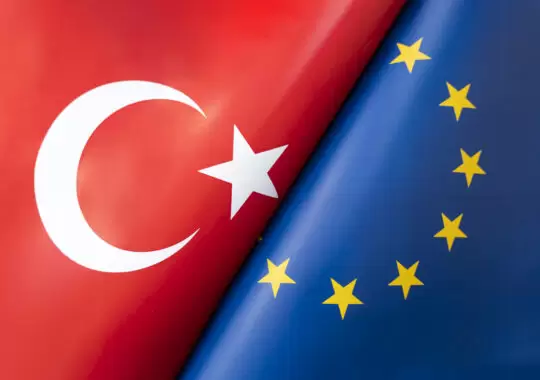
An SWP Commentary argued that, thirty years after establishing the customs union between the EU and Turkey, Ankara identifies economic risks from the EU-India “mother of all deals“. It highlighted that structural asymmetries grant Indian goods access to Turkey without tariffs or reciprocal entry, a disparity exacerbated by previous agreements with Mercosur and Vietnam. These imbalances jeopardise Turkey’s integration into European supply chains and threaten to expand the trade deficit. Finally, the commentary concluded that modernising the customs union to encompass services and agriculture is vital to rectify systemic deficiencies.
This editorial is authored by Massimiliano Gobbato, Communications Director. Contributions by PubAffairs Communications Team’s Kristina Vilenica, Jacopo Bosica, Giulia Piera Furlan, Simon Rolland and Aaron Lotz to the drafting of ‘The Finder’ are gratefully acknowledged.
From our Editorial Partners
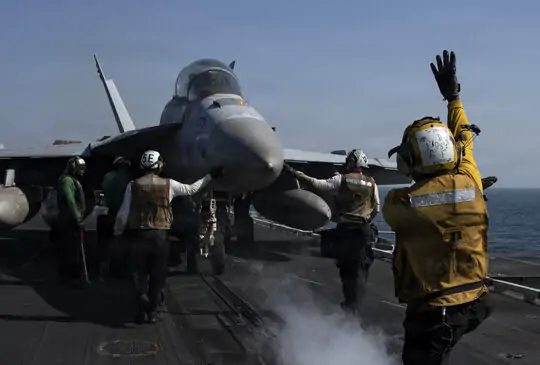
War in Iran: Who wins and who loses? | Centre for European Reform (CER)
The attack on Iran by the US and Israel is good news for Russia but bad news for Europe, including Ukraine, and ultimately for the US itself. China could emerge as a long-term winner. Europeans must look after their own interests, regardless of Trump’s wrath.
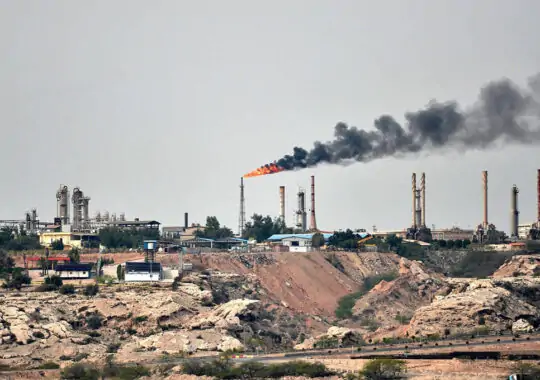
How will this energy shock play out? | Project Syndicate
Requiring Chinese companies that want to sell high-tech products in Europe to form joint ventures with local firms would go a long way toward strengthening the competitiveness of European industry. With its market having become a lifeline for China, the EU needs to recognize the strength of its bargaining position.
Image credits: Fatemeh Bahrami/Anadolu Agency/Getty Images
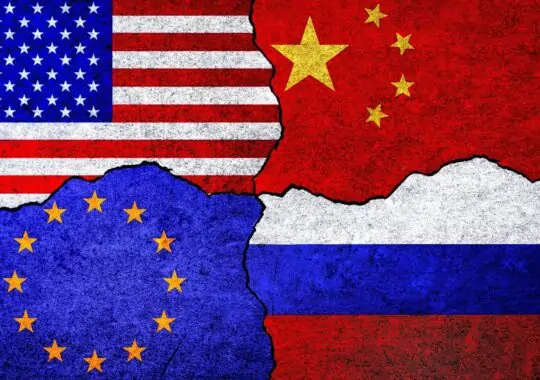
Placing the EU on a warfare footing: energy and raw materials priorities for 2026 | Institut Français des Relations Internationales (Ifri)
The year 2025 has confirmed that one must prepare for much worse in the field of geopolitics and geoeconomics as the intensity and frequency of shocks increase and as the European Union (EU) has no more stable flanks now that crises with the United States (US) become so frequent and reveal a systemic rift. In the world, barriers to trade multiply and dependencies are weaponized.
Image credits: © OnePixelStudio/Shutterstock
From economic giant to geopolitical powerhouse? | Clingendael
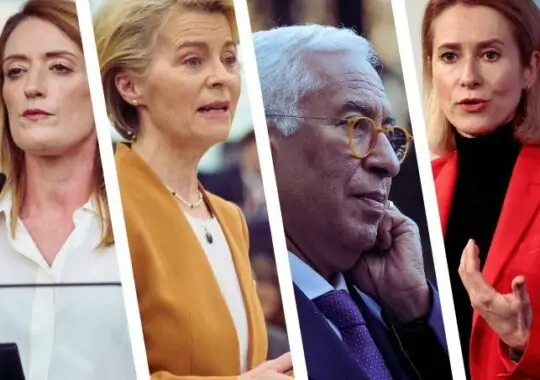
To become a geopolitical actor, the EU could (among others) strengthen the Commission’s role in foreign policy, reduce vetoes through qualified majority voting, improve political preparation of decision-making via a to be established European Security Council and use the opportunities for enhanced cooperation.
Image credit: © Clingendael
Increasing European defence budgets: towards a stronger defence community? | Finabel
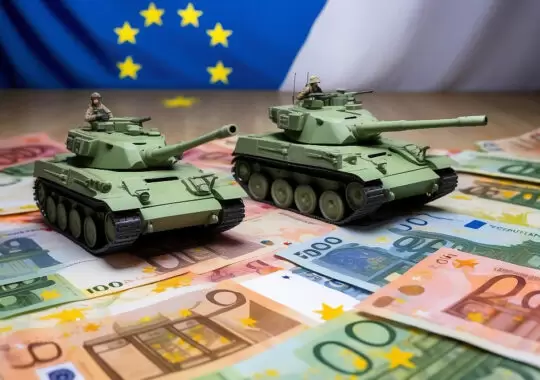
This paper examines the implications of rapidly increasing defence expenditures on the European defence community following recent geopolitical shifts. It finds that while higher military spending has garnered political support and strengthened Europe’s preparedness, it also generates challenges related to domestic political dislocation, regional differentiation among EU Member States, and international misalignment with broader normative commitments.
The electric endgame: Europe’s clean path out of vassalage | European Council on Foreign Relations (ECFR)
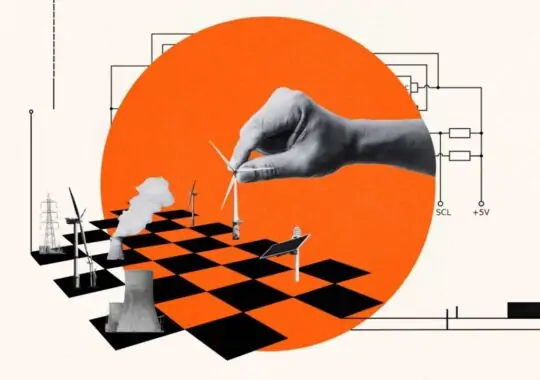
How the EU navigates the energy transition will shape its geoeconomic power. The bloc’s recent moves to dilute climate regulation and prioritise short-term competitiveness could cause long-term damage.
Image credits: Illustration by Portia Kentish
The EU should create a Quantum Sovereign Fund | Centre for European Policy Studies (CEPS)
Europe’s quantum ecosystem is often described as a success story. It hosts world-class research centres, an increasing network of innovation clusters in cities such as Delft, Munich, Oxford, Copenhagen, Paris, and San Sebastian, and a steady pipeline of start-ups emerging from its universities. In fact, around 36% of total quantum companies and startups are European, more than what the US can boast about (only around 24 %).
Image credits: www.vecteezy.com
The EU and China in Africa: is it better to compete or work together? | ECDPM
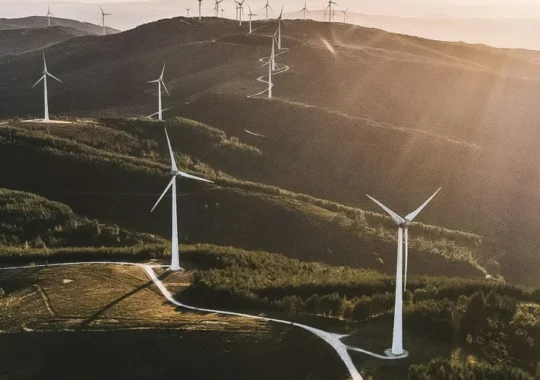
In 2024-2025, ECDPM investigated the potential for EU-China cooperation on Africa’s green transition. We concluded that the best course of action for Europe is to strategically assess where, when and how to work with China, rather than avoid it at all costs.
Image credits: The Sky on Unsplash
Ankara’s critical view of the EU–India Free Trade Agreement | German Institute for International and Security Affairs (SWP)
Thirty years after establishing a customs union with the European Union (EU), Ankara sees growing economic risks in the EU’s free trade agreements with third countries, most recently India. While negotiations on the EU–India Free Trade Agreement were concluded at the end of January, and security cooperation between the EU and India is now also to be expanded, Ankara remains on the sidelines.