

The Finder | Our monthly Insights | Issue 28 – April 2026
The Hormuz stress test: are EU policies going to respond effectively to an age of weaponised interdependence?
Europe’s latest crisis has not emerged from within, but from a chokepoint thousands of kilometres away. The war in Iran and the disruption of the Strait of Hormuz have rendered EU governments and institutions even more aware of the EU structural fragility in the current context. The conflict that has slashed global energy flows and sent prices soaring is not only another external shock, but represents a crucial stress test of Europe’s capacity to act in a world where geopolitics, economics and climate policy are becoming inseparable.
Although the full effects are still to be seen, the scale of the economic disruption is difficult to overstate. The Strait of Hormuz – through which roughly a fifth of global oil and gas trade typically passes – has been repeatedly blocked or destabilised, triggering what analysts have described as the largest energy supply shock in modern history. Oil prices have surged above $100 per barrel, gas prices spiked, and Europe – already emerging from the aftershocks of the Ukraine war – has found itself facing another crisis.
The European response has been immediate and revealing. Emergency measures, prevalently tax cuts, have been rolled out across sectors to absorb the shock of soaring fuel, fertiliser and energy costs. At the same time, this crisis has accelerated a deeper strategic shift, particularly in energy policy whereby the long-standing binary between renewables and nuclear is giving way to a more pragmatic “energy mix” approach.
Faced with volatile fossil fuel markets and supply insecurity, the EU is increasingly embracing nuclear power as a stabilising complement to wind and solar, while pushing for electrification and grid reform. The logic is clear: energy sovereignty can no longer rely on imports, which – however diversified – must be reduced altogether.
EU institutions are also considering lowering electricity taxes to incentivise electrification and reduce dependence on fossil fuels, a move designed to align pricing structures with long-term decarbonisation goals. Yet here too, the tension between urgency and coherence persists. Rapid interventions risk distorting markets, while slower reforms risk political backlash from European households already facing rising costs.
Beyond energy, the geopolitical shock is reshaping Europe’s economic doctrine. Trade policy, once anchored in liberal openness, is becoming increasingly strategic. New trade agreements are being framed not only in economic terms, but as instruments of resilience and geopolitical positioning. The public debate is conducted on a daily basis within and across EU member states.
Simultaneously, the push for a “Made in Europe” industrial strategy reflects growing concerns over dependency on external supply chains, especially in relation to China. Tensions with Beijing over industrial subsidies, market access and technological competition have sharpened, reinforcing calls for reindustrialisation and strategic autonomy. Yet this ambition sits uneasily alongside Europe’s deep trade interdependence with both China and the United States. While transatlantic trade remains foundational, it is increasingly marked by frictions, especially after the threat to annex Greenland and the Supreme Court’s decision which overruled Trump’s tariffs.
Climate and clean tech-related policies also sit at the centre of these competing pressures. The EU’s Emissions Trading System (ETS) and the Carbon Border Adjustment Mechanism (CBAM) are designed to reconcile decarbonisation with competitiveness by pricing carbon domestically, whilst levelling the playing field for imports. The two initiatives represent a sophisticated response of the EU to globalisation and the need to increase innovative investments in a carbon-constrained world. However, they also betray the risk of becoming a source of internal political divide and external trade tensions, particularly with emerging economies and EU partners who view them as protectionist instruments. For these reasons, some observers have argued that the European Union also needs a “carbon diplomacy”.
The challenge is compounded by the broader fiscal context. The EU’s budgetary framework – already stretched by pandemic recovery funds and support for Ukraine – is now under renewed pressure from the European Parliament. The debates around the next multiannual financial framework increasingly revolve around a central question: can the EU finance its expanding role with its “own resources”, without deeper fiscal integration? Or will national divergences once again limit collective ambition?
Underpinning all this, there is a more fundamental transformation: Europe is no longer operating in a rules-based global order where economic and political domains can be neatly separated. The Iran war has demonstrated once again how quickly supply chains can become strategic vulnerabilities, how energy can become a weapon and how external shocks can cascade across domestic systems. In this environment, policy coherence for growth is no longer a technocratic ideal, it is a geopolitical necessity.
And yet, Europe’s monetary and institutional architecture remains rooted in a different era, despite the fact that Peter Magyar’s electoral victory in Hungary has provided a degree of hope for a more cohesive European Union. Consensus-building, incrementalism and regulatory compromise have long been Europe’s standard protocol. Today, these features have long become pernicious constraints. The speed of global change demands faster decision-making, greater flexibility and a clearer strategic direction, on foreign policy as well. Nevertheless, these qualities are difficult to reconcile with a system designed to balance 27 national interests.
Still, part of Europe’s recent history suggests that crisis can be a catalyst. The pandemic led to joint borrowing. The Ukraine war accelerated defence cooperation and energy diversification. The current crisis may yet drive further integration, whether in energy, industrial policy or defence. However, such outcomes may be contingent, not inevitable.
The real question, then, is not whether Europe can respond, but how it will choose to define effectiveness. In a world shaped by volatility, Europe’s challenge is to move beyond reactive policymaking towards a more anticipatory, strategic posture. The Strait of Hormuz may be geographically distant, but its disruption has brought Europe’s vulnerabilities into a sharper focus. Whether this moment will lead to lasting transformations, or simply to another cycle of crisis reaction, remains to be seen.
As Carl Bildt recently observed, Europeans must face reality. The Old Continent is striving to secure its own defence, establish credible deterrence, transition to a low-carbon economy and sustain one of the world’s most advanced welfare system. All while contending with sluggish growth and a shrinking population. Achieving these ambitions, he argued, will demand change and far-reaching reforms.
A Project Syndicate Commentary argued that recent events exposed the fragility of the global economy in terms of energy imports. The definition of energy security must be redefined, focusing on whether the system itself can function under stress. The commentary emphasised the need for a comprehensive framework, prioritising a diversification of routes and sources, stronger energy infrastructures and defence systems, a more resilient system design, strategic reserves, diversification of the energy mix, and depoliticisation of energy strategy. Finally, it warned that no country is insulated, and emphasised that energy independence does not mean immunity from energy crises.
An SWP Research Paper argued that the resurgence of power politics within global markets marks a defining feature of the current geoeconomic shift, where economic tools are increasingly mobilised to achieve foreign and security policy objectives. It highlighted persistent conceptual ambiguities surrounding “geoeconomics”, warning that unclear definitions risk undermining policy coherence and legitimacy, particularly for vulnerable actors such as Germany and the EU. The paper ultimately called for stronger institutional coordination, enhanced engagement with business and academia, and deeper cooperation with like-minded partners to improve the coherence and impact of geoeconomic policy.
An ECFR Analysis argued that Europe’s heavy dependence on Chinese rare earths exposes it to critical geoeconomic pressure, as illustrated by Beijing’s export controls that disrupted industrial supply chains in 2025. While a temporary US-brokered agreement provided limited relief, the EU remains structurally vulnerable and largely absent from negotiations. The paper contended that current “de-risking” strategies are too slow and insufficient against rapid coercive actions, advocating instead for a shift towards deterrence through economic leverage. The analysis concluded that, without a credible strategy to deploy reciprocal tools, Europe risks industrial decline, strategic dependence, and diminished geopolitical agency.
A CER Insight argued that a year after “Liberation Day”, US trade policy has failed, with deficits high and China’s export dominance intact. It explained that Washington had weakened alliances by targeting Europe while misdiagnosing China’s distortions. Despite tensions, EU–US interdependence makes decoupling unrealistic. The “Turnberry” deal imposed uneven tariffs but missed core imbalances driven by China, whose subsidised exports now hit Europe’s industries. It concluded that structural differences, with Europe specialised in manufacturing and the US in tech, sustain imbalances, urging coordinated EU–US sectoral clubs to counter China, especially in critical raw materials.
A Clingendael Policy Brief argued that carbon diplomacy could support the EU’s Clean Industrial Deal by improving competitiveness and reducing trade frictions. It explained that CBAM prices import emissions to prevent carbon leakage but increase costs for import-dependent sectors. If partner countries adopt carbon pricing, CBAM costs fall and cleaner production is encouraged, though many lack adequate pricing systems and MRV capacity. The EU’s carbon diplomacy tools exist but are fragmented and misaligned with industrial priorities. The Policy Brief called for prioritising key partners and integrating carbon diplomacy into trade and investment frameworks. Aligning carbon diplomacy with CBAM can reduce costs, emissions and trade tensions.
An ECDPM Commentary explored the negative consequences of the war in Iran on the energy and food markets of the EU, Africa and Asia. Higher prices for imported fertilisers and natural gas are radically affecting the three continents. The commentary argued that governments and farmers need to act rapidly to reduce vulnerability and mitigate the impacts. Low-carbon fertilisers are an alternative, but the challenge lies in avoiding replacing one dependency with another. It concluded by suggesting that, going forward, the EU and Africa develop industrial partnerships, which could simultaneously help European energy security and support African fertiliser production goals.
An Ifri analysis argued that central banks have become crucial geopolitical actors, shaping international economic balances through their capacity to create liquidity and coordinate responses to systemic crises, a dynamic encapsulated in the “Jackson Hole consensus”. It highlighted a growing fragmentation of the global financial system, as China and Russia develop alternative infrastructures such as payment systems, digital currencies and reserve diversification to reduce dependence on the dollar. Against this backdrop, US political interference in monetary policy and measures such as asset freezes are eroding trust in the existing order, whilst innovations like dollar-backed stablecoins risk accelerating monetary competition and geopolitical rivalry.
A Finabel Research Report examined how rising European defence spending – highlighted by UK Prime Minister Keir Starmer’s pledge to reach 2.5% of GDP – does not automatically strengthen defence capabilities. Despite record investments, the EU faces structural vulnerabilities in accessing critical raw materials essential for defence and industry. The EU’s strategy focuses on diversifying supply through partnerships with resource-rich African states. However, this approach is challenged by competition from China and Russia for access to these resources. Internal EU policy constraints also expose a gap between strategic ambitions and implementation. The article concluded that a long-term, coordinated strategy is needed to secure critical raw materials.
A CEPS publication explained that Hungary’s political shift has reopened talks with the EU over €18 billion in frozen funds tied to rule of law concerns, with the new government willing to meet EU conditions, including reforms on judicial independence, anti-corruption, academic freedom and media pluralism. It argued that EU conditionality could unintentionally harm municipalities, civil society, and universities due to system flaws and government discretion. While “smart conditionality” is difficult, the publication argued that the 2028–34 EU budget’s reallocation model is promising, while calling for more flexible deadlines and transparent enforcement.
This editorial is authored by Massimiliano Gobbato, Communications Director. Contributions by PubAffairs Communications Team’s Kristina Vilenica, Jacopo Bosica, Giulia Piera Furlan, Simon Rolland and Arthur Fertier to the drafting of ‘The Finder’ are gratefully acknowledged.
From our Editorial Partners
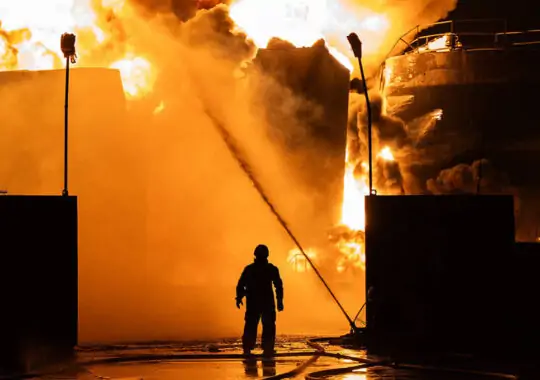
Redefining Energy Security | Project Syndicate
In the aftermath of COVID-19, firms shifted from a “just in time” model to a “just in case” approach that sought to strengthen resilience. With oil and gas infrastructure becoming a primary military target, energy systems must now undergo a similar transition.
Image credits: Getty Images

The Return of Power Politics to the Market: Theory and Practice of the Geoeconomic Zeitenwende | German Institute for International and Security Affairs (SWP)
The return of power politics to the market is a defining feature of the geoeconomic Zeitenwende, as is currently being experienced in international politics. This has brought renewed attention to the long-standing conventional wisdom that economic activity can not only generate prosperity but also promote foreign and security policy objectives.

Beijing hold’em: European cards against Chinese coercion | European Council on Foreign Relations (ECFR)
China’s mineral monopoly threatens Europe’s clean tech and industrial core while its overcapacity is accelerating European deindustrialisation. This gives Beijing coercive power over key sectors and can hold EU competitiveness hostage. The EU’s response has so far been reactive and ineffective, relying on diplomacy and de-risking yet failing to use timely and credible deterrence.
Image credits: Chris Eichberger
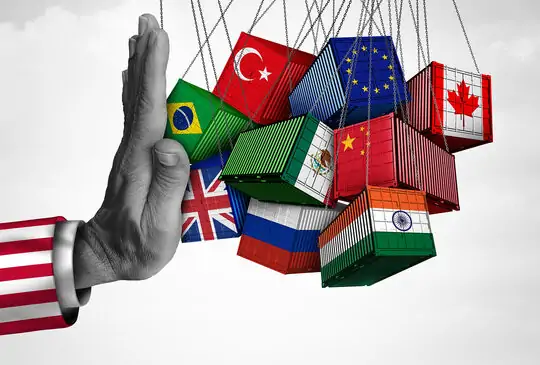
One year liberation day: The delusion of transatlantic economic divorce | Centre for European Reform (CER)
A year after Liberation Day, Washington and Brussels are still fighting each other – not China. Liberation Day was meant to reset global trade. It has not. America’s fiscal and trade deficits remain near record highs, while China’s export surge continues unchecked, with Europe increasingly exposed. Washington misdiagnosed the problem, hitting allies as hard as rivals, and in doing so weakened the coalition it needs to address China’s distortions.
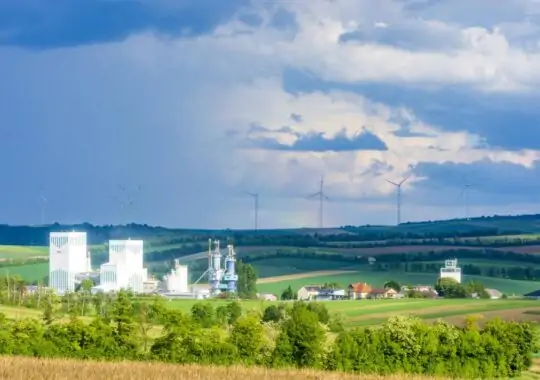
Why European Industry needs Carbon Diplomacy in the Age of CBAM | Clingendael
The EU’s Carbon Border Adjustment Mechanism (CBAM), which applies a levy on carbon-intensive imports from countries without comparable carbon pricing, increases costs for European importers and downstream industries.
Image credits: IMAGO/Volker Preußer via Reuters Connect
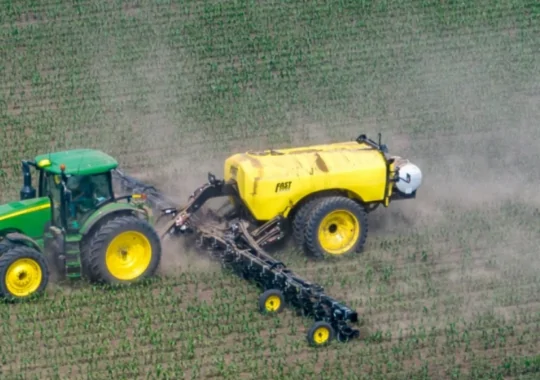
The Iran war and the fertiliser crisis: What Europe and Africa can do | ECDPM
The closure of the Strait of Hormuz has sent shockwaves across the energy and food markets of the EU, Africa and Asia. Nitrogen fertilisers are particularly hard hit: the Gulf region exports both fertilisers and the natural gas used to produce fertilisers elsewhere. This may be a crisis in the making – one that will hit some more than others.
Image credits: James Baltz

Central Banks: Challenges and Tools in Geopolitical Rivalries | Institut Français des Relations Internationales (Ifri)
Central banks have become major strategic players in international economic balances. Faced with systemic crises (2008, Covid-19), the major central banks have developed unprecedented coordination of their interventions, fostering the emergence of the “Jackson Hole consensus.”
Image credits: © Shutterstock
The European Defence Industrial Base: Overcoming Critical Materials’ Supply Chain Obstacles and Vulnerabilities | Finabel
This paper argues that Europe’s defence industrial ambitions are constrained by structural vulnerabilities in the security of its critical raw material (CRM) supply chain, meaning that increased defence spending alone will not guarantee reindustrialisation or strategic autonomy.

Orban’s defeat opens the door to EU funds and to smarter rule of law conditionality | Centre for European Policy Studies (CEPS)
Viktor Orbán’s defeat has revived a familiar question in Brussels: how and when to release the billions in EU funds frozen due to rule of law concerns. Hungary’s prime minister-designate, Péter Magyar, has already signalled his intention to meet the Commission’s conditions to unlock the roughly EUR 18 billion withheld since 2022.
Image credits: www.vecteezy.com