

This issue is supported by EUMEPS, the voice of the European EPS industry, and Montgomery International School
The Finder | Our monthly Insights | Issue 31 – July 2026
Competitiveness, competition and sovereignty: a comparison between the current and the past EU legislative terms
The evolution of EU climate and industrial policies between the ninth (2019–2024) and tenth (2024–2029) legislative terms represents not only a fundamental shift from an environmentally-driven regulatory framework to a competitiveness-oriented strategy, but also a broader change in the way both the European Union and its institutions perceive Europe and Europe’s role in the global economy. This transformation is arguably best illustrated by the evolution of the European Green Deal into the proposed Clean Industrial Deal, built on the earlier Green Industrial Deal Plan. If the primary driver of the previous term was climate action, environmental sustainability and biodiversity, the main goals of the current term are economic competitiveness and sovereignty, lower energy prices and industry preservation.
Indeed, the policy architecture of the current legislative term is largely inspired by the landmark Draghi Report, which notably argues that Europe faces the prospect of structural economic decline, unless its climate objectives are integrated with a robust industrial strategy.
The report also recognises a fundamental challenge, namely that preserving Europe’s manufacturing base will require industries not only to innovate at a significantly faster pace, but also to accelerate the transition towards a more sustainable production in order to remain competitive in the global market.
What the Draghi Report could not fully anticipate, however, is the uneven capacity and willingness of EU Member States, regions and industrial sectors to adapt to this new policy direction. Structural constraints, differing levels of industrial development and divergent national priorities mean that the transformation of European industry is unlikely to be either uniform or painless.
Rather, it has already become a politically and diplomatically sensitive process, exposing tensions between the EU’s competitiveness objectives and the diverse economic realities across its member states. This challenge is reflected in the pace of the report implementation. According to an analysis by the European Policy Innovation Council, only 15.7 per cent of the Draghi Report’s recommendations have been fully implemented, while a further 41.3 per cent have been only partially implemented.
In response, EU institutions agreed earlier this year on a series of implementation deadlines intended to accelerate the competitiveness agenda and reduce institutional bottlenecks. Nevertheless, several commentators have argued that commitments alone are unlikely to overcome entrenched institutional resistance or the divergent political and economic priorities of the member states.
In this context, the European Commission proposal on the ETS reform has reignited the public debate on how the EU should proceed towards a more competitive and sustainable economy.
Regarded as “the bloc’s most effective climate policy over the past two decades“, the EU Emissions Trading System (ETS) currently covers around 40 per cent of the sectors responsible for Europe’s greenhouse gas emissions. Since its introduction in 2005, the scheme is estimated to have reduced emissions from covered sectors by almost half, with the most significant reductions achieved in the power sector.
Nevertheless, the ETS has increasingly become the subject of debate as concerns have grown over the feasibility of meeting the European Union’s 2040 climate targets and the potential impact of more ambitious emissions reductions on industrial competitiveness.
Against this backdrop, the European Commission’s proposed reform of the EU Emissions Trading System illustrates the broader rebalancing of policy priorities taking place during the current legislative term. While the ETS remains the cornerstone of the European Union’s climate policy, the proposed revision reflects a wider recognition that decarbonisation objectives are to be reconciled with the need to preserve Europe’s industrial base and strengthen its long-term competitiveness.
Most notably, the proposal would require member states to allocate at least half of the revenues generated by carbon pricing to industrial decarbonisation, a significant increase from the current share. In parallel, the EU executive body has proposed to slow the annual reduction of emission allowances and extend their availability well into the 2040s, thereby providing energy-intensive industries with additional time to adapt to the transition.
The proposed changes further demonstrate that industrial competitiveness has become an increasingly influential consideration in climate policymaking. Businesses would continue to receive free emission allowances – however conditional upon maintaining investments within Europe – thereby linking climate support more directly to industrial policy objectives and strategic autonomy.
The reform therefore signals a departure from an approach primarily centred on accelerating emissions reductions towards one that seeks to balance environmental ambition with concerns over investment, production capacity and the risk of industrial relocation.
Nevertheless, the proposal has also exposed again the political tensions inherent in this new policy direction. While some Member States have welcomed greater flexibility for industry, others have criticised the reform for weakening the EU’s climate ambition and delaying emissions reductions.
The dialogue between the European Parliament, the Council and the European Commission on industrial policy matters is therefore likely to reflect not only the broader challenges that characterise the current legislative term, but also to amplify the recognition that the so-called “Brussels effect”, an underpinning assumption of the European Green Deal, is a well-deserved EU feature which risks to become increasingly weaker overtime.
In fact, the process whereby the European Union implicitly influence the global marketplace through its regulations may still stand given the EU single market size. However, with a decreasing internal production and an increasing trade deficit “the effect” would have an ever-limited capacity to apply.
Against this backdrop, European institutions have reached a legislation production peak term with a set of crucial legislative initiatives such as the Circular Economy Act, the Industrial Accelerator Act, the Automotive Package as well as the Electrification Action Plan, along with the Carbon Border Adjustment Mechanism (CBAM) which notably complements the EU ETS.
The renewed emphasis on economic competitiveness, international competition and European sovereignty is particularly evident in the energy sector. Whereas, during the previous legislative term, the debate on energy security was largely shaped by the war in Ukraine and the EU’s dependence on Russian imported fossil fuels, the current mandate has broadened the discussion.
Continued geopolitical instability in the Middle East, together with the expansion of domestic renewable energy generation, has further intensified the policy focus on electrification as a means of strengthening Europe’s energy resilience and industrial competitiveness, however arguably without the full recognition that Europe has developed into an advanced transformative economic power despite its inability to meet its own energy needs through domestic production.
Whilst the debate on manufacturing and industrial competitiveness is primarily shaped by concerns over China’s industrial overcapacity and its implications for global trade, the policy discussions surrounding the digital economy and technological governance are largely defined by the European Union’s relationship with the United States.
In this connection, the EU’s pursuit of technological sovereignty has become an increasingly important dimension of its industrial strategy. Initiatives such as the proposed Cloud and AI Development Act, Chips Act 2.0 and the promotion of open-source technologies are intended to reduce Europe’s dependence on American –and, to a far lesser extent, Chinese– digital infrastructure by strengthening domestic technological capabilities. At the same time, these measures have generated new tensions with Washington as US policymakers and major technology companies increasingly view them as protectionist and discriminatory towards their firms.
During the former EU legislative term, digital sovereignty was treated primarily as a regulatory defensive shield designed to check the power of dominant foreign tech companies and protect European data and user rights relying on the fact that the EU had been the world’s premier digital rule-maker. Whereas, current initiatives aim at fostering shared European infrastructure, boosting local semiconductor manufacturing and securing advanced chip supply chains for European artificial intelligence goals.
Ultimately, the comparison between the ninth and tenth EU legislative terms suggests that the European institutions are undergoing more than a shift in policy priorities according to both a new self-perception and a renewed approach to both internal external risks. In fact, the EU is redefining the foundations of both its economic model and its stance in a changing international context.
The transition from a regulatory agenda centred on environmental leadership towards one focused on competitiveness and industrial resilience reflects an acknowledgement that climate ambition alone is no longer perceived as sufficient to secure Europe’s prosperity or geopolitical relevance. Rather, the current legislative agenda recognises that sustainability, industrial capacity and economic security have become mutually dependent objectives.
Whether this new approach will prove successful remains uncertain. The effectiveness of the Clean Industrial Deal, the implementation of the Draghi recommendations and the outcome of key legislative initiatives will ultimately depend on the ability of the European institutions and its member states to overcome political fragmentation and reconcile competing national interests.
More fundamentally, the challenge for the European Union will be to preserve the regulatory influence that has characterised the so-called “Brussels effect” while simultaneously rebuilding the productive and technological capacities that increasingly underpin global economic power.
The current legislative term may therefore come to be remembered not as a departure from the European Green Deal, but as the moment in which the European Union acknowledged that competitiveness has become a prerequisite for sustaining both its climate ambitions and its strategic autonomy.
A Project Syndicate Commentary argued that today’s global imbalances, particularly from China’s growing trade surplus, are not simply the result of poor macroeconomic coordination; rather, they reflect a long-term industrial strategy. The Commentary explained that some countries intentionally channel resources towards manufacturing, innovation, and export-oriented sectors through high savings, capital controls, exchange-rate management, and industrial policy to build scale and technological leadership. These strategic policies strengthen China’s competitiveness and contributed to its growing surplus. It concluded that policymakers should recognise global imbalances and strengthen international rules on subsidies, market access, and other strategic economic policies.
A CEPS Report examined the EU’s evolving rules favouring EU-origin goods, companies and production in public procurement and related funding since 2022. It argued that these measures have emerged through different legal instruments, creating a fragmented but identifiable “Made in Europe” regime. The report identified four forms of origin preference: diversification, reciprocity, EU-origin content, and requirements on suppliers’ establishment, control and production. It also proposed five principles for designing and assessing such measures, including compliance with EU law, compatibility with international obligations, proportionate review, operational mitigation over exclusion, and coherence across instruments. Rather than favouring openness or strategic autonomy, it argued that either approach should be legally sound, internationally compatible, economically justified and coherent.
A CER Insight argued that the EU should strengthen its Emissions Trading System (ETS), as a strong carbon price is key to industrial decarbonisation and competitiveness. It argued that high energy prices and geopolitical uncertainty, rather than the ETS, are Europe’s main industrial challenges. While the phase-out of free emissions allowances will strengthen incentives to cut emissions, ETS revenues should be directed more effectively towards industrial decarbonisation. The article concluded that a stronger ETS, combined with targeted investment support, would help industry reduce its reliance on fossil fuels and improve Europe’s long-term competitiveness.
An ECFR Policy Brief argued that biomanufacturing, powered by falling renewable energy costs and AI, is evolving from a niche climate solution into a foundational industrial technology capable of reshaping competitiveness and geopolitical power. China has identified the sector as strategically critical, backing it with massive state investment, cheap energy, and dominant fermentation capacity, while Europe, despite leading in patents, research, and specialised industrial clusters, risks repeating past mistakes by inventing key technologies only to cede production and profits to China. Europe’s underlying strengths across capital, infrastructure, energy, feedstock, and AI, could be limited by slow regulatory approvals, limited investment coordination, and growing dependence on Chinese manufacturing.
An SWP Commentary argued that the kerosene price shock caused by the war in Iran should not be used as a pretext to weaken EU aviation climate policy, since rising costs comes rather from fossil-fuel dependence than from the EU Emissions Trading System (ETS). While parts of the aviation industry are calling for the ETS’s international flight exemption to be extended and for CORSIA, the UN’s offsetting scheme, to be relied on instead, the commentary contends that CORSIA lacks ambition, transparency, and environmental integrity. It therefore recommends bringing all flights departing the European Economic Area under the ETS from 2027, setting aside the resulting revenue for sustainable aviation fuel and carbon dioxide removal (CDR), and rejecting any dilution of ReFuelEU.
An ECDPM Brief examined the challenge in regulating the Global Europe instrument, trying to reconcile EU geopolitical ambitions with its commitments to a rules- and values-based international order. It argued that while the instrument is becoming the main vehicle for projecting Europe’s geopolitical role, the focus should remain on fighting poverty, creating jobs, sustainability, as well as contributing to peace, democratic consolidation, the rule of law and human rights. As a potential means of the EU’s soft power, the instrument retains its credibility only if it effectively determines these priorities. The Brief noted that the Global Europe instrument must reinforce development effectiveness and concluded that a pro-poor development policy should enhance, rather than weaken, the EU’s geopolitical influence.
An Ifri Analysis explored how Germany is reassessing its role after the deterioration of three key complementary relations. The country relied on U.S. military protection, Russian energy supplies, and economic integration with China to ensure peace, growth, and security. The analysis argued that, after Trump’s return, the war in Ukraine, and China’s rising power, Germany’s economic and security model wavered. It highlighted the challenges posed by energy security from Russia, industrial competitiveness vis-à-vis China, and geopolitical fragmentation in the relationship with the US. Finally, to preserve its security and strategic autonomy, Germany must reduce its dependencies, strengthen European cooperation, and reassess its economic model.
A Clingendael Report argued that NATO’s forward presence in the Baltic States strengthens political deterrence but is increasingly vulnerable due to persistent battlefield transparency. Advances in intelligence, surveillance, reconnaissance (ISR), drones, and rapid targeting reduce concealment, compress decision-making timelines, and increase incentives for adversaries to strike first. As a result, tensions between deterrence by punishment and deterrence by denial are heightened, potentially enabling a rapid fait accompli rather than preventing one. It concluded that NATO should adopt a hybrid deterrence posture combining dispersed, low-signature capabilities with a limited but credible forward presence, with deterrence increasingly dependent on survivability, operational ambiguity, and disrupting enemy targeting cycles.
A Finabel Research Report argued that the end of UNIFIL’s 48-year mandate, with withdrawal planned for 2027, creates a security vacuum in Lebanon at a moment of severe regional turmoil, but also opens a window for the European Union to shift from a UN-led framework toward a more autonomous role in stabilising the country. The paper claims that the EU cannot replace UNIFIL but should scale up support to the Lebanese Armed Forces (LAF) through existing capacity-building missions such as MIBIL and MTC4L, while backing diplomatic efforts to implement the Taif Agreement and negotiate the disarmament of Hezbollah and other non-state actors. It warns that a rapid European disengagement after UNIFIL’s departure would leave a major security gap.
The editorial is authored by Massimiliano Gobbato, Communications Director. Contributions by PubAffairs Team’s Kristina Vilenica, Jacopo Bosica, Giulia Piera Furlan, Simon Rolland, Arthur Fertier, Ginevra Caruso and Irene Falcone to the drafting of ‘The Finder’ are gratefully acknowledged.
From our Editorial Partners
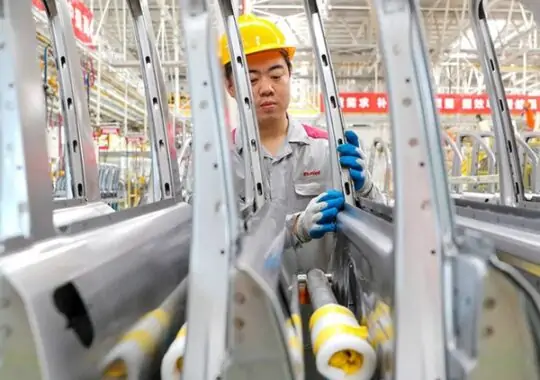
Rethinking global imbalances | Project Syndicate
Today’s global imbalances, starting with China’s massive trade surplus, are not simply the result of poor macroeconomic coordination. Rather, they reflect long-term strategic thinking and a departure from the bias toward openness on which the postwar trade order was built
Image credits: Costfoto/Nurfoto via Getty Images
Made in Europe, inadvertently: origin preference in EU procurement and funding | Centre for European Policy Studies (CEPS)
Since 2022, and against an increasingly difficult geopolitical landscape, the EU has built a body of law that conditions access to public contracts, and to the EU funding linked to them, on EU origin, control or production. It did not design this body of law. It accumulated it, instrument by instrument, none drafted to fit the others. The result is a regime of origin preference whose shape becomes visible only when the instruments are laid side by side.
Image credits: www.pexels.com
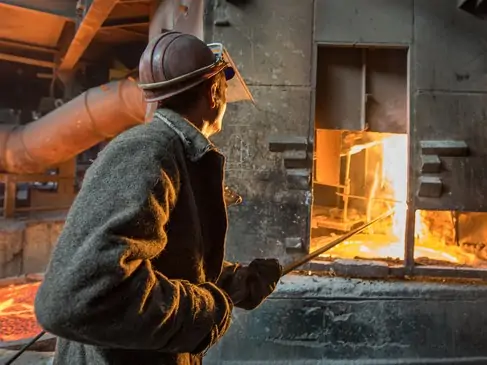
A stronger carbon market is necessary for a more competitive European industry | Centre for European Reform (CER)
While worries about the EU’s global competitiveness have taken centre stage at recent EU leaders’ summits, Europe is split over whether it should stay the course on carbon pricing. The EU Emissions Trading System (ETS) puts a price on emissions of carbon and other greenhouse gases. But in recent months, some heavy industry lobbies – especially in chemicals and steel – have called for the ETS to be weakened in the name of competitiveness.

The future is fermented: How Europe can succeed in the next industrial race | European Council on Foreign Relations (ECFR)
Biomanufacturing uses biological processes to produce food, fuels, chemicals and materials that today rely on fossil resources.
The underlying science is not new. But advances in AI and falling renewable energy costs are transforming biomanufacturing from a niche climate solution into a new production paradigm, with the potential to reshape industrial competitiveness and geopolitical power much as fossil fuels did in the previous industrial age.
Image credit: picture alliance / imageBROKER | Oleksandr Latkun

EU Aviation between Crisis and Climate Policy | German Institute for International and Security Affairs (SWP)
The war in Iran has led to kerosene prices roughly doubling and forced airlines to cancel thousands of flights. Some voices from the industry have used the crisis to call for climate policies to be relaxed. However, this misreads what the crisis actually demonstrates: Costs are being driven not by too much climate policy, but by dependence on fossil energy itself.
Global Europe: A geopolitical instrument in need of strong development safeguards | ECDPM
All cards are now on the table. The negotiations on the European Union’s 2028-2034 multiannual financial framework can start in earnest. The proposed Global Europe instrument is becoming the main vehicle for projecting Europe’s geopolitical role in the world, while official development assistance remains its main financial component.
Image credits: Christophe Licoppe / EC Audiovisual Services
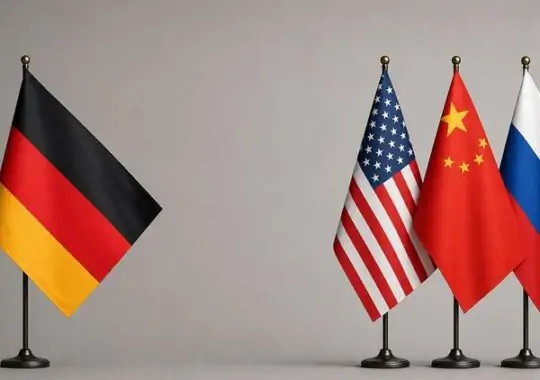
Germany in the Shadow of the United States, Russia, and China – Systemic Paradigm Shifts | Institut Français des Relations Internationales (Ifri)
Since reunification, Germany has built its prosperity on an international order based on free trade, multilateralism, and geopolitical stability. This model relied on three relationships considered complementary: U.S. military protection, Russian energy supplies, and economic integration with China. For several decades, Berlin viewed these interdependencies as factors contributing to peace, growth, and security.
Image credit: Shutterstock

Visibility, Vulnerability, and First-Mover Incentives | Clingendael
NATO’s forward presence in the Baltic States strengthens political credibility but increasingly undermines operational survivability under conditions of persistent battlefield transparency. As such, military personnel and equipment are under continuous risk to be quickly identified by a vast array of sensors and will subsequently be decisively engaged.
Image credits: © NATO
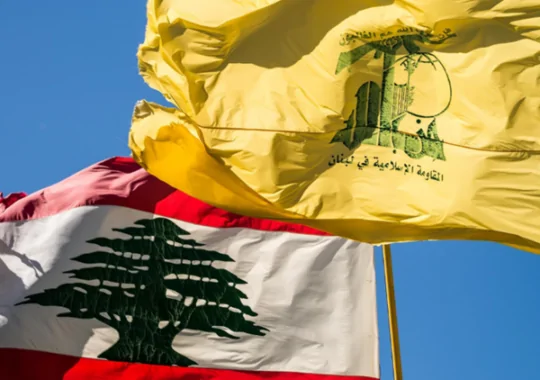
The Thin Blue Line: The European Union and the Future of Lebanon’s Security Beyond UNIFIL | Finabel
The planned withdrawal of UNIFIL in 2027 will create a security vacuum in Lebanon amid unprecedented regional turmoil. EU land forces represent a strategic opportunity to contribute to Lebanon’s stability and European southern flank security in the post-UNFIL. However, the country faces great external and domestic instabilities, with political and economic fragility, armed militias and internal refugee crisis due to active conflict in the South.