

This issue is supported by EUMEPS, the voice of the European EPS industry, and Montgomery International School
PubAffairsBruxelles welcomes the first PubAffairs baby, Elio Pietro Monaco, who was born on the 11th of August, 5:42 pm.
The Finder | Our monthly Insights | Issue 32 – August 2026
A midsummer night’s dream? A glimpse on some of Europe’s underlying questions ahead of the State of the Union address
European Union institutions are resuming their activities after the summer recess, during which the EU public debate has continued, albeit quietly and with limited intensity, despite the importance of the issues at stake. Against this backdrop, the EU institutional calendar is returning to one of its recurring fixtures, namely the State of the Union (SOTEU) address, which will take place on the 16th of September.
Despite not being widely known among EU citizens, the address is well established among those closely following European institutions. Introduced under then-European Commission President José Manuel Barroso, who delivered the first State of the Union address on the 7th of September 2010, the SOTEU provides the European Commission President with an opportunity to set out the EU executive body’s vision, priorities and pivotal initiatives for the year ahead, while addressing in a comprehensive manner the most pressing challenges facing Europe.
The speech also serves a broader political and institutional purpose. Beyond outlining the European Commission’s policy agenda, it provides an opportunity to assess the extent to which its priorities and positions are shared by the other EU institutions, offering valuable indications on the direction of the current legislative term and, potentially, on European institutions’ political and diplomatic debate for the months ahead.
This is particularly relevant even when the topics of the address can be anticipated with a reasonable degree of accuracy. Indeed, several of the issues likely to feature in the speech have usually already been the subject of public and/or institutional discussion. What is less predictable – and therefore often more revealing – is which priorities the European Commission’s President will elevate, which degree of political emphasis will be placed on each of them, as well as how she or he will choose to frame the issues at stake.
Against this backdrop, and despite the fact that the European Commission President’s address will most likely provide a more comprehensive and revealing assessment of the EU’s priorities, several crucial questions concerning the future direction of the European Union have discreetly remained at the centre of public debate throughout the summer, both at European and international level.
The competitive edge of the European economy has, unsurprisingly, presided as one of the pivotal issues over the summer, with authoritative commentators reportedly anticipating how this question will feature in President von der Leyen’s forthcoming address of the 16th of September. At the same time, the launch of the Rhine Group, a new forum founded by Mario Draghi and Stripe Co-Founder Patrick Collison to translate Europe’s competitiveness debate into a concrete agenda for action, has further marked the importance of restoring the continent’s economic dynamism and long-term prosperity.
The group’s founding statement highlights a familiar concern, namely only four of the world’s 50 largest technology companies are European, while the continent remains comparatively weak in several of the emerging technologies expected to shape the global economy in the coming decades. This diagnosis has been a recurring topic since the publication of the Draghi report and has become something of a leitmotif in the debate over Europe’s economic future.
What is potentially more consequential, however, is the explicit link between economic stagnation and Europe’s capacity to finance other strategic priorities, from defence and healthcare to pensions, education, climate investment and social protection. While this underlying concern has been present in the Draghi report, its actual implications have arguably not always been articulated so directly.
For some observers, therefore, the significance of the Rhine Group lies not in yet another “wake-up call” for Europe, but in the attempt to build a bridge between research and analysis, political feasibility and industrial execution. Indeed, the challenge now is no longer to simply analyse Europe’s competitiveness gap, but rather to translate an established body of evidence into policies capable of delivering tangible results which have been measured to the extent to which the Draghi report has been implemented.
The upcoming presentation of the Industrial Accelerator Act (IAA) illustrates the shift from diagnosis to implementation, particularly through the debate over the so-called “Made in Europe” clauses. Proponents argue that giving preference to European products, technologies and suppliers in selected strategic sectors could strengthen domestic industrial capacity, reduce critical dependencies and ensure that public investment contributes more directly to Europe’s economic resilience. Critics, however, warn that such measures risk introducing protectionist distortions and increasing costs while weakening competition precisely when European industry needs greater efficiency and innovation.
The debate therefore goes beyond the merits of individual procurement preferences, as it reflects a broader tension at the heart of the EU’s competitiveness agenda between the desire to build stronger European value chains and the need to preserve European manufacturing. How European institutions will ultimately balance these competing considerations will be an important indicator of whether its industrial policy is moving towards a more assertive form of economic security, and where it draws the line between strategic autonomy and protectionism.
According to some authoritative observers, however, this broader tension should be understood against the backdrop of persistent global economic imbalances, particularly China’s large trade surplus. From their perspective, these imbalances are not merely the result of weak macroeconomic coordination, but also reflect long-term strategic choices and a gradual shift away from the openness that underpinned the post-war international trading system. In this connection, they argue that this should imply the use of aggressive tariffs and retaliation without failing to address the underlying dynamics that caused the problem in the first place. By contrast, other equally authoritative observers remain sceptical about the prospect of a meaningful economic rebalancing, particularly in relations with China. From this standpoint, they argue that Europe may have little choice but to adopt a more protectionist approach in order to safeguard its industrial base and address the structural imbalances affecting its economy.
Unsurprisingly, trade has continued to feature high in the European and international discourse, with the travel to China of a delegation of EU officials set to depart in the coming days as the EU executive body seeks to make progress in its ongoing trade negotiations and reduce the unprecedented trade deficit which has reached approximately €1 billion per day. The European Commission is hoping that the technical talks will produce “tangible” progress ahead of October, when EU Trade Commissioner Maroš Šefčovič is expected to travel to Beijing.
Yet the negotiations – which were initiated by Brussels and Beijing in June – have encountered growing difficulties in recent weeks, following China’s decision to prevent companies from providing information requested by the EU in investigations conducted under the Foreign Subsidies Regulation, the framework through which the EU seeks to address distortive foreign subsidies. In response, Commission President Ursula von der Leyen has signalled that the EU remains prepared to deploy its trade-defence instruments against Beijing.
China, however, has not been the only major international actor to attract European attention, as the increasingly tense relationship between Canada and the United States has also taken on growing significance for Europe. In January, at the World Economic Forum, Prime Minister Mark Carney’s government sought to reposition Canada as a more autonomous diplomatic and economic actor amid growing uncertainty in transatlantic relations, including tensions with the United States over trade and tariffs.
More recently, trade talks between the United States and Canada collapsed after Canadian Prime Minister Mark Carney abruptly recalled his negotiating team, plunging the two nations into a trade war. For Europe, this matters because Canada is simultaneously a major trading partner, with which the EU already has a comprehensive trade framework, and a diplomatic ally, especially when it comes to Europe’s concerns about economic security, multilateralism and the future of the international trading system.
Some commentators have therefore argued that Europe should seek to strengthen its alignment with Canada, particularly as uncertainty surrounding US policy has encouraged closer cooperation among like-minded partners. Others, however, have stressed that the EU’s position on these issues remains constrained by its economic exposure and strategic dependence, making any attempt to build a broader coalition necessarily more complicated. Whatever the merits of these competing assessments, one point is already certain: Prime Minister Carney has been invited to attend Ursula von der Leyen’s State of the Union address, an indication that the relationship with Canada is likely to feature prominently in the broader political conversation surrounding Europe’s future economic and geopolitical positioning.
Defence is also expected to occupy an increasingly important place in the European Commission’s agenda, reflecting the growing recognition that Europe’s security cannot be taken for granted and that member states need to strengthen their capacity to act collectively. The Commission has sought to support this objective through programmes such as the European Defence Fund, which finances collaborative research and development in defence technologies, while the broader Readiness 2030 agenda aims to mobilise hundreds of billions of euros in additional defence spending and investment across the EU.
What is at stake, however, goes beyond the issue of how much Europe should spend. The central issue is whether this new flow of investments will translate into a genuinely stronger European defence industry and greater strategic autonomy, or whether it will remain fragmented across national markets and continue to depend heavily on non-European suppliers. The debate therefore will raise fundamental questions about the future role of the EU in European security, the balance between national and European responsibility, and the extent to which increased defence spending can be reconciled with competing priorities such as social expenditure, climate investment and economic competitiveness.
In this context, the future of the EU budget is likely to become another defining issue of the current political and diplomatic debate, particularly as European institutions are still not able to reconcile increasingly ambitious priorities without an agreement on the size, the expansion and the use of their financial resources. The Commission has proposed a €1.76 trillion Multiannual Financial Framework for 2028–2034 with a significant restructuring of EU spending towards competitiveness, defence, security and other strategic priorities, while proposing to reduce the relative weight of traditional areas such as cohesion policy and the Common Agricultural Policy. The central political and diplomatic question is therefore not simply the overall size of the budget, but also how European resources should be redistributed and who should ultimately bear the cost.
Member states are, however, divided over whether a larger EU budget and new own resources are necessary to finance the Union’s growing responsibilities, while net contributors remain concerned about increasing national transfer to the EU. Whereas, the European Parliament has argued for a larger budget than the one the European Commission proposed, reflecting its view that the EU cannot simultaneously expand its ambitions in defence, competitiveness, climate, migration and social policy without providing the necessary financial means.
Institutionally, the negotiations will also test the balance between the Commission’s desire for greater flexibility in allocating funds, the European Parliament’s demand for a larger budget and stronger democratic oversight, and the Council’s role in defending national budgetary interests.
Ultimately, the significance of the forthcoming State of the Union will lie less in the individual initiatives announced than in the broader political direction it will point to for the European Union. Indeed, competitiveness, trade, defence and the future of the EU budget are increasingly interconnected questions, all pointing to the same fundamental challenge: how far Europe is prepared to strengthen its economic and strategic autonomy, and, most importantly, how willing its institutions and member states are to provide the political and financial capital required to achieve it and/or which trade-offs will be politically and diplomatically viable.
A CER Report argued that Europe’s economic outlook has improved cautiously, but that structural weaknesses in productivity, market integration and fiscal coordination remain. US protectionism and Chinese competition require Europe to strengthen trade defence while maintaining openness. The euro is unlikely to rival the dollar soon without deeper financial markets and greater geopolitical strength. Rearmament is financially possible, but fragmented procurement limits its effectiveness. Manufacturing faces structural pressures from energy costs, technology and China, requiring targeted industrial policy. Europe also struggles to channel its savings into productive investment. Ultimately, greater integration, scale and political coordination are needed to turn Europe’s economic potential into strategic power.
An Ifri Analysis examined global imbalances, underlining how the standard prescription involves better coordination of macroeconomic policies. It challenged this view and argued that imbalances may not only result from poor economic coordination, but can also reflect strategies from countries to build industrial and technological competitiveness. The analysis pointed at the concept of “transfer paradox”: a current-account surplus can represent a transfer of real resources to deficit countries, but these transfers may represent a disadvantage for the latter, allowing surplus countries to exploit global markets to leverage scale and strengthen technological dominance. The authors concluded that global imbalances should be seen as reflecting conflicting strategies, allowing policymakers to better address them.
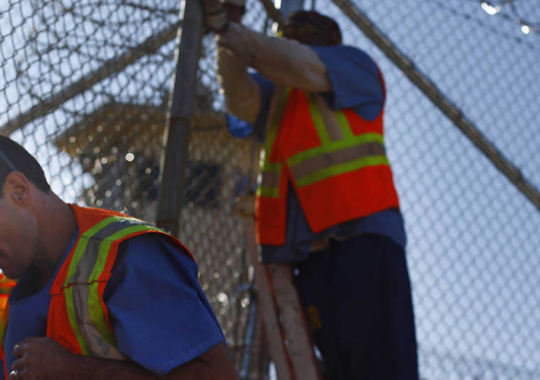
A Project Syndicate Commentary argued that Trump’s new tariffs in violation of international agreements, officially justified by concerns over forced labour, are an attempt to seize a larger fraction of global value and supply chains. It called out Trump’s hypocrisy on imposing tariffs on other countries while prison labour is a deeply rooted reality in the US. The commentary noted that the EU already has rules on the importation of goods produced with forced labour, and that it should not capitulate to these tariffs, but respond with reciprocal measures. In conclusion, Trump’s policies are harming the US economy without any reshoring of manufacturing. In this context, the commentary suggested that rival governments embrace stronger resistance against his measures to prevent further escalation.
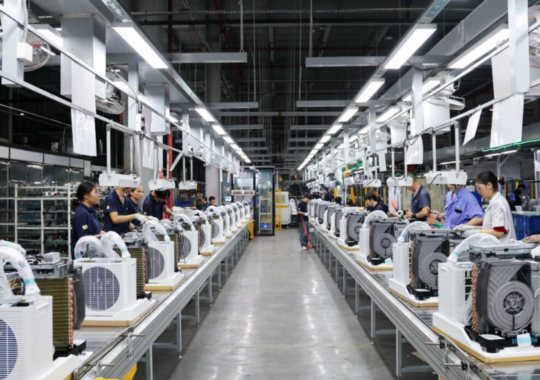
An ECFR Commentary argued that Europe should learn from China’s approach to climate adaptation and industrial policy by preserving strategic options rather than accepting existing dependencies. While Chinese air conditioners are helping Europeans cope with rising temperatures, China’s success also reflects decades of deliberate industrial upgrading and state support. The commentary argued that Europe should reduce vulnerabilities by diversifying supply chains, developing alternative production capabilities and building partnerships with other countries, particularly in critical clean technologies. Rather than seeking to replicate China’s model, European policymakers should focus on maintaining viable alternatives that strengthen resilience and competitiveness.
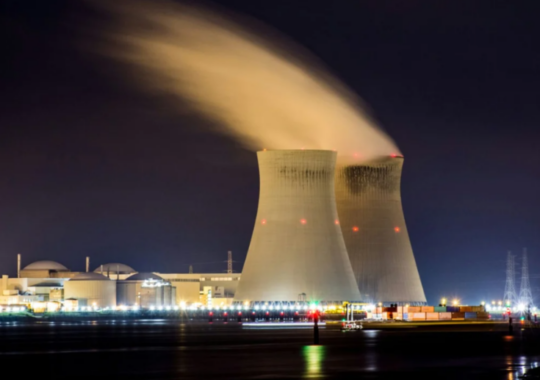
A CEPS publication explained that nuclear power is back on the EU agenda, driven by concerns over energy security, strategic autonomy, industrial competitiveness and the need for domestic low-carbon energy. It warned that expanding nuclear capacity will be difficult, as the industry must rebuild supply chains and improve project delivery to address chronic delays and cost overruns. It also stressed the need to future-proof new technologies and account for long-term energy needs. Member states must provide consistent political support, regulatory predictability and avoid stop-and-go policies. Finally, financing frameworks are needed to reduce investment risks and provide long-term certainty for capital-intensive projects.
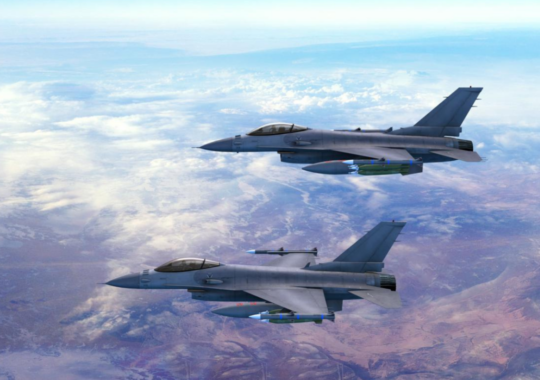
A Finabel Research Report argued that the failure of the Future Combat Air System (FCAS) highlights the persistent difficulties of European joint capability development, particularly the tensions between industrial workshare, national requirements and strategic autonomy. Despite increased defence spending, European states continue to rely heavily on non-European suppliers, undermining the development of a sovereign defence-industrial base. The report examined how these structural frictions affect cooperation across different military domains and argued that industrial fragmentation could undermine interoperability. It suggested that emerging digital architectures could offer a pragmatic way to improve the harmonisation of European armed forces despite continued national differences.
A Clingendael Policy Brief argued that the war in Ukraine is likely to end in a ceasefire rather than true peace, leaving unresolved disputes and prolonged instability. An ambiguous ceasefire could increase uncertainty and the risk of renewed escalation. The article therefore proposed “managed disorder”, where Russia, Ukraine, Europe and the US remain rivals but follow clearer rules. This would rely on verification, deterrence, conditional incentives and limited cooperation, freezing the situation without legitimising Russia’s territorial gains. However, it concluded that political coordination would remain difficult, requiring incentives for key actors to comply and consequences for violations.
An ECDPM Dossier examined how the EU’s long-term budget, the Multiannual Financial Framework (MFF), shapes its priorities and global role. The current €1.2-trillion MFF runs until 2027, with discussions now focusing on the 2028–2034 framework. The publication highlighted the growing importance of EU external action within the MFF and its role in supporting Europe’s global ambitions. The authors noted that the EU budget has become a test of the EU’s geopolitical credibility, and explored how EU funding could strengthen the European Union’s role as a development and international actor. The publication also contributed evidence to the development of the EU’s external action toolbox and the new Global Europe instrument, and reflected on lessons and impacts from previous EU budget frameworks.
An SWP Commentary argued that route-based approaches in migration analysis could improve protection along migration corridors, but could also legitimise the outsourcing of migration control to countries of origin and transit. Rather than treating individual country contexts in isolation, they shift attention to developments along key migration corridors, taking into account the complex and transnational character of mobility dynamics. The commentary also explored how these approaches resonate across different political camps, offer operational synergies and may help allocate scarce resources more effectively by looking at how they are implemented in the EU and in Europe in general.
The editorial is authored by Massimiliano Gobbato, Communications Director. Contributions by PubAffairs Communications Team’s Jacopo Bosica, Giulia Piera Furlan, Simon Rolland, Arthur Fertier, Ginevra Caruso and Irene Falcone to the drafting of ‘The Finder’ are gratefully acknowledged.
From our Editorial Partners

Ditchley conference report: Europe's precarious bid for third pole economic power | Centre for European Reform (CER)
Years of angst about Europe’s stagnating growth and declining competitiveness have given way to cautious optimism. The second Trump administration’s erratic policies, erosion of US institutions and research excellence, and trade wars have dented confidence in American economic exceptionalism. Trump’s capriciousness has sparked renewed investor interest in Europe, pushing up the euro and enabling European borrowing at relatively low cost.

The Transfer paradox. Rethinking global imbalances | Institut Français des Relations Internationales (Ifri)
Global imbalances have come back to the top of the policy agenda. Many analyses and reports have been produced over recent months. The standard prescription involves better coordination of macroeconomic policies, with three familiar recommendations: higher consumption in China, higher investment in Europe, and fiscal consolidation in the United States.
Image credits: shutterstock
Trump’s new tariffs are an opportunity to fight back | Project Syndicate
Here he goes again. US President Donald Trump is increasing and decreasing tariffs willy-nilly, violating international agreements that he himself signed and almost surely violating federal law. The only difference this time is that he has a new pretext for abusing tariffs: stopping forced labor. Of course, the administration is right that too little is being done about forced labor. But its stated concern is a ruse.
Cold comfort: What China can teach Europe about adaptation | European Council on Foreign Relations (ECFR)
If Europeans need any reminder of the real impact of climate change, they should simply look out of the window. This summer, a few extra degrees of sustained heat have forced school closures, disrupted railways and cut nuclear power plant output. More than 25,000 excess deaths across Europe have been attributed to extreme heat so far, while wildfires are causing over €15bn of economic damage.
Back to the future? What it will take to deliver nuclear energy in the EU | Centre for European Policy Studies (CEPS)
Nuclear energy has returned to the centre of European energy debates. Politically, this broader openness to nuclear reflects growing concerns over energy security, strategic autonomy, industrial competitiveness and the increasing need for ‘homegrown’ low-carbon energy.
Image credits: www.unsplash.com
Spend together, build apart: The collapse of FCAS and the limits of European defence integration | Finabel
In June 2026, France and Germany cancelled the New Generation Fighter (henceforth NGF), the manned centrepiece of the Future Combat Air System (henceforth FCAS), a €100 billion programme launched in 2017 as the flagship of a sovereign, integrated European air defence (Archambault, 2026; Defence Blog, 2026a; Mueller, 2025, p. 875).
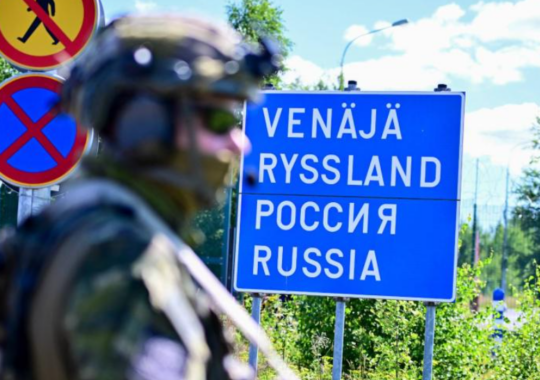
Managed disorder: The hard road to a modest peace with Russia after Ukraine | Clingendael
It is 2028. The war in Ukraine ended in an uneasy ceasefire eighteen months ago. Russian forces remain in occupied territories, and Ukrainian forces hold defensive positions, armed with American weapons and European money. The ceasefire talks failed to establish either a buffer zone or an observer mission because the parties could not agree on the terms.
Image credit: Reuters
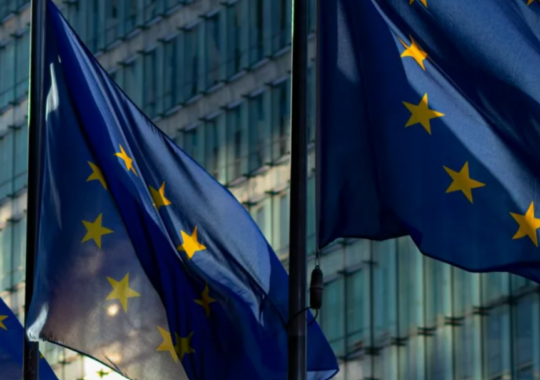
Inside the EU’s long-term budget: The multiannual financial framework explained | ECDPM
The multiannual financial framework (MFF) is the EU’s long-term budget, shaping its priorities at home and its influence abroad over a seven-year period. While the current €1.2 trillion framework runs until 2027, discussions are underway for the 2028-2034 MFF. EU external action is increasingly central to the MFF.
Image credits: Marco via Pexels
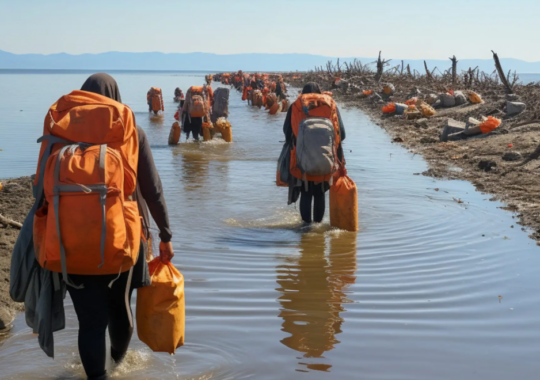
Migration routes in focus | German Institute for International and Security Affairs (SWP)
Route-based approaches promise a paradigm shift in international refugee and migration policy. Rather than treating individual country contexts in isolation, they shift attention to developments along key migration corridors. The analytical value is obvious, given the complex and transnational character of mobility dynamics.