

This issue is kindly supported by Unesda
Issue 9 – September 2024
The two main events which have gained the spotlight of the public debate related to European institutions this month are unarguably the European Commission President’s announcement of the Commissioners-designate for the next term and the presentation of the Draghi Report. At the same time, on the other side of the Atlantic, the reactions to the Harris-Trump debate have pushed the US presidential campaign to a higher level. Before the announcement of the proposed new College of Commissioners, the resignation of the former Commissioner for the internal market took observers by surprise, also for his statement on the alleged “questionable governance” of Ursula von der Leyen. The immediate reactions led some commentators to speculate on whether Thierry Breton’s quitting the Commissioners’ race was due to a move from France’s President Macron or if it had been the result of the notorious acrimony that has characterised the relationship between Breton and von der Leyen. However, prior to this event, other commentators highlighted the recent shifts in France’s political landscape, suggesting it could lead to a decline in its influence over Brussels’ institutions.
Regarding the very announcement of the Commission’s chief, she stated that the new College structure will be “leaner” and more “interactive and inter-linked“, centred on the core principles of “prosperity, security and democracy“. Indeed, the new Commission structure is composed of six vice-presidencies, while the division of labour among Commissioners is shared differently compared to the previous legislative term. This setting has induced some commentators to define this new institutional setting as a new, more vertical power structure. Regarding the division of labour among vice-presidents, for example, it is noticeable that the portfolio of the Executive Vice-President (EVP) for Clean, Just and Competitive Transition, assigned to Teresa Ribera, not only includes the continuation of the work began with the European Green Deal, but also encompasses competition-related questions.
Whereas, former Breton’s portfolio, which included industrial and tech-related policies, has been split into two, namely into the vice-presidency for “tech, sovereignty, security” and democracy, for which Henna Virkunnen is the designated candidate, and the vice-presidency for “prosperity and industrial strategy”, of which Stéphane Séjourné should be responsible. While the post of High Representative for Foreign Affairs and Vice-President of the European Commission has already been assigned to Kaja Kallas, Romania’s Roxana Mînzatu and Italy’s Raffaele Fitto also have to gain the approval from the Parliament for the remaining two vice-presidencies, namely “people, skills and preparedness” and “cohesion and reform”.
Along with the speculations on the future balance of power in the College of Commissioners, the reaction to President von der Leyen’s announcement was variegated and no clear-cut shared assessment has so far emerged: some media pointed out some “unexpected” assignments, others remarked that the Commission President has given “top economic jobs to interventionist countries”, yet another noted that the new Commission nominations has been influenced by right-winged parties, while other commentators emphasised the need for the new executive body to pay more attention to the question of security. However, lately, the focus has shifted towards the Candidates Commissioners’ hearings and how the European Parliament will act during the scrutiny of the nominees.
There is surely widespread consensus that the EU is faced with epochal challenges. However, as remarked by Jean Pisani-Ferry, putting these reforms into action will [also] demand European leaders to overcome “the inertia that prevails among member states”, allegedly the Achilles’ heel of the EU institutional setting. The complaints of several ministers of central and eastern European countries about the former ECB President’s report neglecting the continent’s most dynamic economies, coupled with the non-paper signed by twenty EU member states to eliminate Single Market barriers – a task they believe has been overlooked in both the Letta and Draghi reports – are signs that the Council may be one of the EU institutions in which policy divergences could be most difficult to reconcile. These latest developments do not come as a surprise, as, despite the fact that the Draghi report has been praised as an opportunity to make the European Union stronger, it was presented as a chance to tackle Europe’s “existential challenges”. The report, which has received mixed, but overall positive, reactions, proposes “radical changes” and it is unclear to what extent EU institutions as a whole are willing to pursue them.
In a CEPS Explainer, Jacques Pelkmans acknowledged that the Draghi report has thoroughly examined the EU’s economic weaknesses and recognised that it is of pivotal importance to take into account its suggested reforms, including their implications, potential challenges and the likelihood of their implementation. The author also noted that the core message of the report is hard to dispute: the EU must undergo significant changes, as the current situation is unsustainable, and only bold reforms can effectively address the Union’s economic troubles. In addition, Professor Pelkmans remarked that “the main message emanating from Draghi is that the EU should be deeply concerned about its economic growth falling behind and the causes underlying it. ‘Behind’ is principally measured in comparison with the US and – often – China”. Last but not least, the author highlighted that the main factor behind this trend is declining productivity and that this last is the primary worry which undermines the EU’s capacity to achieve its goals with special regard to the report’s underpinning principle of combining sustainability and competitiveness.
Regarding the question of sustainability, a CER Insight highlighted the need for the EU to enforce stricter carbon offsets for them to be recognised as a reliable means of reaching net-zero emissions. The author also noticed that it remains uncertain whether the data supporting corporate pledges can be verified and that several members of the European Parliament are attempting to restrict the use of offsets. However, he maintained, the European Commission is justified in adopting a more measured stance as offsetting will play a crucial role in reaching net-zero emissions, and the EU must demand stricter offsetting measures to maintain credibility.
As far as the international context is concerned, Mark Leonard’s ECFR Commentary examined the scenario in which a second Trump presidency will occur. The author stated that “with the US election only two months away, European leaders have shifted from dealing with fears of Trump-related nightmares — such as new trade wars, abandoning Ukraine, and pulling out of NATO — to feeling an emotion they had nearly forgotten: hope.” He also remarked that the rise of Vice-President Kamala Harris to the forefront of the Democratic Party has removed Trump’s lead in the polls and enabled Europeans to explore alternatives to their most dire predictions. Yet, Mark Leonard highlighted that “even if Harris wins, it would be foolish to expect complete continuity with Joe Biden’s administration”, and that Europe must be prepared for what’s coming next.
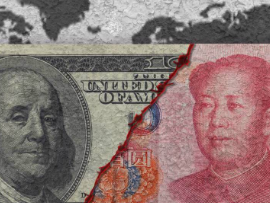
As in Leonard’s commentary, the question of trade emerges as a primary concern not only for the EU but also for the rest of the world, the US included. Indeed, Barry Eichengreen expressed his concerns in a Project Syndicate Commentary regarding US-China economic relations by stating that the consequences of the escalating divide between China and the United States are significant, as many of the world’s urgent economic issues can only be resolved with inputs from both countries. Therefore, the author maintained, active collaboration between these two economic giants is essential to tackle global challenges. The author elaborated on how better Sino-American relations would have beneficial effects on the fight against climate change, technological advancement, economic growth, and on reducing the debt burden of low-income countries, helping them finance their green transitions.
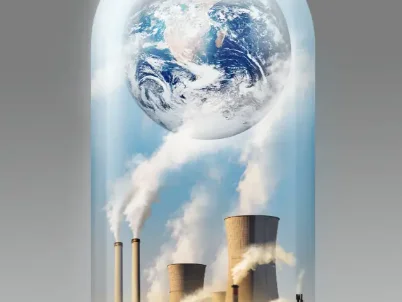
Yet, another concern regarding a possible second Trump term are unarguably climate-related policies. An SWP Commentary elaborated on the dangers of a climate policy U-turn under a second Trump Presidency. The author noted that with under three months remaining until the US elections in November 2024 (where not only the president but also the entire House of Representatives and a third of the Senate will be chosen), EU institutions need to brace themselves for the potential of another shift in US climate policy. This shift would raise a critical question: how resilient will US climate policy be if a Republican President and a Republican-controlled Congress take charge?
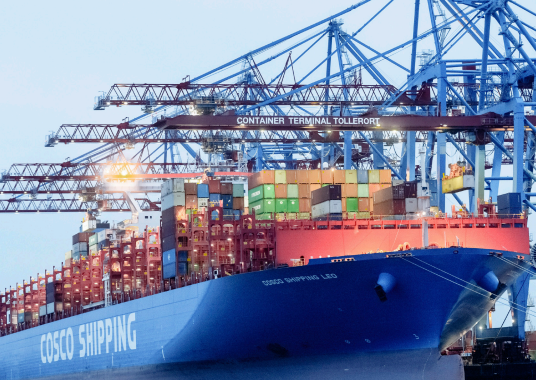
Returning to the question of EU economic competitiveness, a Clingendael Paper stressed the importance of a European strategy regarding ports. The authors elaborated on European seaports and their associated logistics, with special regard to the role they play in international trade. They also took into consideration the involvement of foreign countries. The authors also envisaged both individual EU member states and the EU collectively to influence future outcomes by regulating the level of foreign involvement in European seaports and logistics, with a particular focus on China’s influence. However, the absence of EU cooperation on foreign involvement undermines EU’s strategic autonomy, limiting its control over future developments, they remarked. Consequently, the report aimed to develop a comprehensive EU policy framework designed to enhance strategic autonomy in the seaport and logistics sectors, using China as a case study.
The question of China’s global influence was also tackled in an ECDPM Paper as the authors firstly noticed that the 2024 Forum on China-Africa Cooperation countered the idea that China’s involvement in Africa is declining. They also expressed the concern that this development has consequences for the future leadership of the EU as it revises its narratives and priorities regarding engagement in the Global South. The rationale behind geopolitical competition and the framing of the EU’s Global Gateway strategy as a preferable alternative to China’s initiatives are not endorsed by partner countries, which instead indicate a clear desire for diverse development partnerships, the authors remarked. Against this background, the paper analysed how partner countries perceive EU support compared to China, with a special focus on the Democratic Republic of the Congo, Morocco, and South Africa and their green initiatives.
The Ukraine War and its consequences are unfortunately continuing to be a source of analysis and research for think tanks. In line with this trend, a Finabel Publication analysed the evolution of the concept of neutrality in Europe. The author started by stating that neutrality is a dynamic concept that has significantly evolved over time, influenced by changes in political, military, and economic contexts. She also examined how neutrality has transformed in Switzerland, Sweden, and Finland, particularly in response to the invasion of Ukraine. According to this publication, the European case studies illustrate neutrality as a complex and adaptable practice rather than as a rigid principle, shaped by shifting geopolitical contexts, public opinion and expanding alliances.
Whereas, an IFRI Analysis (in French) examined how the countries of the South Caucasus are working to establish their position in a progressively divided international environment, also a result of the recent geopolitical tensions. In addition to local concerns, such as Georgia’s democratic future and the peace process between Armenia and Azerbaijan, the author observed growing competition among major global powers regarding the best approach to engage with the region. These phenomena, he remarked, raise the question of whether the South Caucasus should be accessible to everyone, including Western countries or if it should remain under the influence of Eurasian powers.
This editorial is authored by Massimiliano Gobbato, Communications Director. Contributions by PubAffairs Communications Team’s Nicole Finucci, Kristina Vilenica and Jacopo Bosica to the drafting of ‘The Finder’ are gratefully acknowledged.
From our Editorial Partners

A critical first response to Mario Draghi’s competitiveness report | Centre for European Policy Studies (CEPS)
On 9 September 2024, Mario Draghi, the former Italian prime minister and former President of the European Central Bank, presented his long-awaited report on the EU economy and EU competitiveness. This is an immense report, 400 pages in total, containing a myriad of proposals to reform and rejuvenate a stagnant and sluggish EU economy, an economy that he claims is fast losing ground to other major global competitors, such as the US and China.
Reducing or removing CO2 emissions: Can offsets make the difference? | Centre for European Reform (CER)
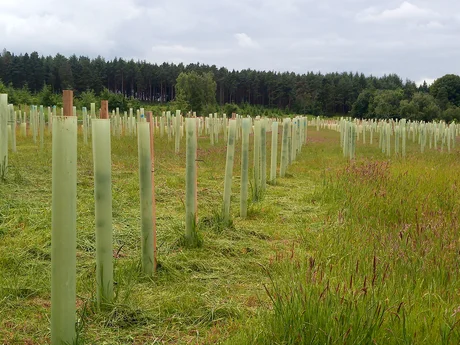
The EU must insist on more rigorous carbon offsets for these to become a credible tool to achieve net zero emissions.
It is almost 18 years since the release of Lord Stern’s review on ‘The Economics of Climate Change’ in October 2006, which warned that all countries would need to act to cut their greenhouse gas emissions. Since then, more than 140 countries, along with many regions, local authorities and public institutions, have already set emission reduction targets.

The US election will overturn Europe’s strategic status quo | European Council on Foreign Relations (ECFR)
Kamala Harris’s ascent to the top of the Democratic ticket has eliminated Donald Trump’s polling lead and allowed Europeans to contemplate alternatives to what would be their worst-case scenario. Yet, even if Harris wins, it would be foolish to expect complete continuity with the Biden administration.
Resetting US-China economic relations | Project Syndicate (PS)
The implications of the deepening Sino-American rift are far-reaching, because several of the world’s most pressing economic problems can be solved only with contributions from both countries. And, to address global challenges, active cooperation between the two economic powers is indispensable.
The resilience of the Biden administration’s climate policy | German Institute for International and Security Affairs (SWP)
The United States will play a crucial role in global climate protection in what has been called the “super election year” of 2024. After three-and-a-half years of having scored huge successes in climate protection, President Joe Biden could be succeeded by Donald Trump in January 2025, according to opinion polls. Trump used his first Presidency (2017–2021) to largely reverse the climate protection measures of the previous administration; and he intends to take the same approach if he wins in November.
Port politics: Strategic autonomy and European ports | Clingendael
European seaports and related logistics are a key part of international trade and logistics. In recent years, foreign involvement by third countries has gained greater significance in this sector, especially where China is concerned. The recent calls for a European port strategy in the European Parliament underline this. Individual Member States and the EU as a whole can actively influence future scenarios by managing the degree of foreign involvement in European seaports and logistics, with special attention for China’s influence.
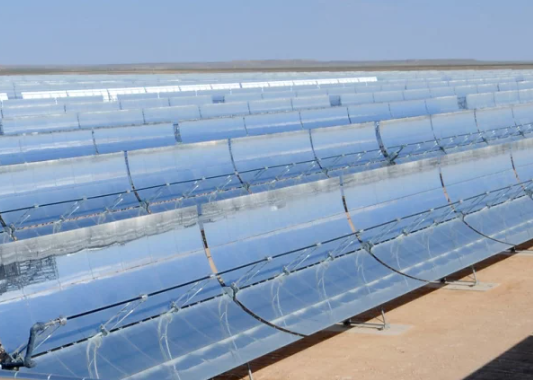
The EU and China in the Global South: Perspectives from African countries | European Centre for Development Policy Management (EDCPM)
The 2024 Forum on China-Africa Cooperation challenged the narrative of a declining Chinese engagement in Africa and waning interest from African leaders towards Beijing. This has implications for the future EU leadership as it reworks its narratives and priorities for engagement in the Global South.
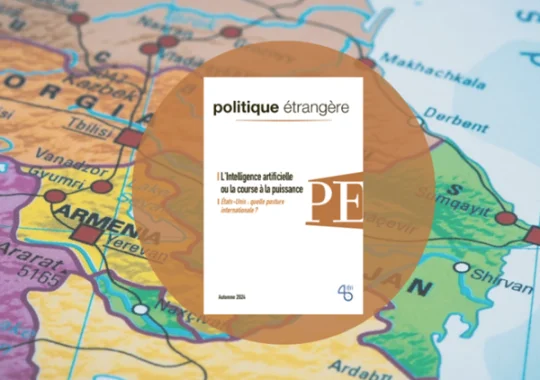
The South Caucasus: A new strategic space? | Institut français des relations internationales (Ifri)
Beyond regional issues such as the future of democracy in Georgia and peace between Armenia and Azerbaijan, global rivalries between the major powers are intensifying over how the region might best be opened up: should the South Caucasus be open to all, and thus to the West, or is it the preserve of the Eurasian powers?

The evolution of neutrality in Europe | Finabel
Neutrality is not a static concept but has evolved significantly, reflecting changes in political, military, and economic contexts over time. This paper argues how neutrality has changed in Switzerland, Sweden, and Finland, particularly in response to the invasion of Ukraine.