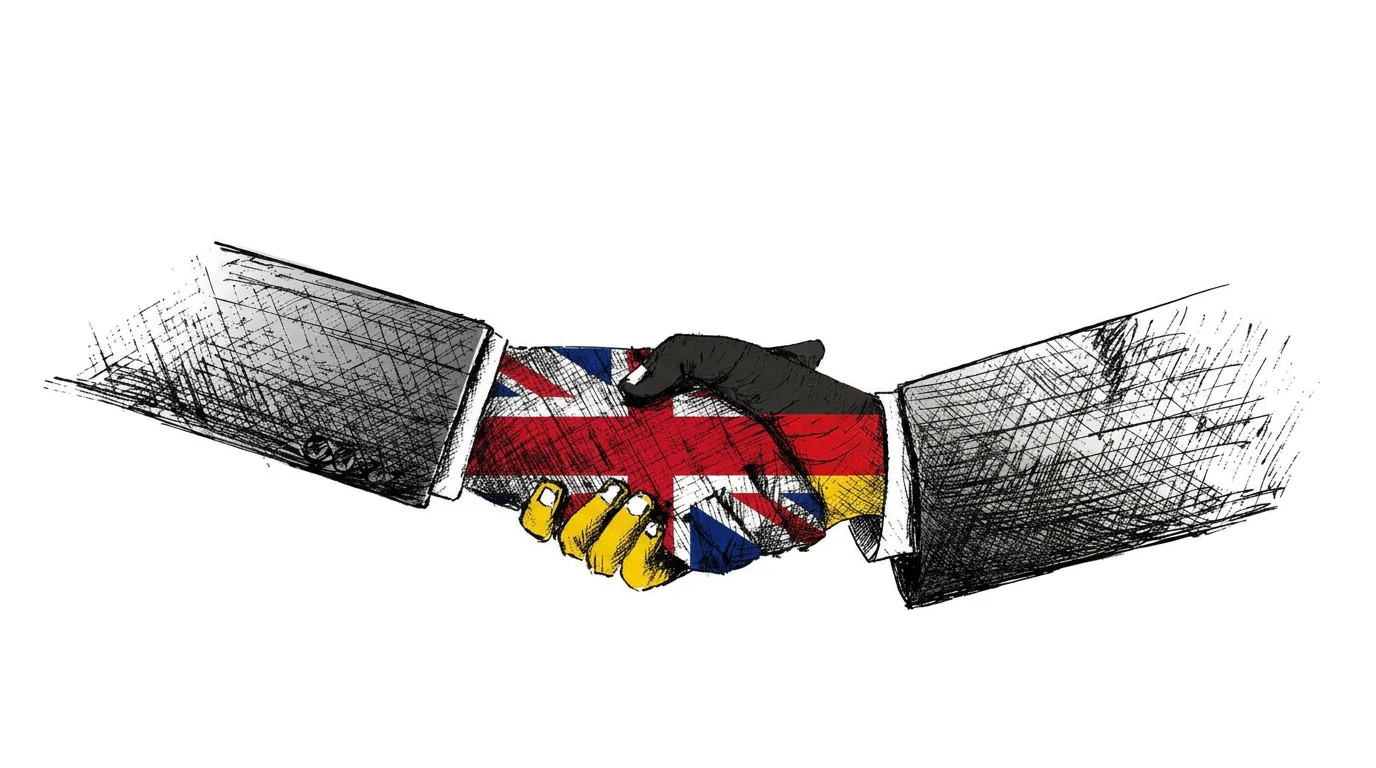
Since the UK’s withdrawal from the EU, UK-German relations have undergone a remarkable transformation: from Berlin’s deliberate distancing from London during the Brexit negotiations, when Germany consistently prioritised EU-27 unity over bilateral arrangements, to a gradual rapprochement, culminating, for the time being, in the 2025 Kensington Treaty of Friendship.
In the context of Germany’s Zeitenwende, defence policy has become a central pillar of bilateral relations, encompassing mutual defence commitments and nuclear dialogue. However, the diverging trajectories of defence spending raise questions about how these ambitions can be translated into practice.
Particular attention is paid to the comparison within the E3 triangle. Unlike the Lancaster House Treaties between the UK and France, the Kensington Treaty includes a bilateral mutual defence guarantee. For Berlin, the E3 format and “Weimar Plus” remain the preferred mechanisms for engaging the UK strategically, while the European Political Community, championed by Paris, and the “Coalition of the Willing” play no role in Franco-German-British cooperation.
About the Authors:
Dr Nicolai von Ondarza is Head of the EU/Europe Research Division at the German Institute for International and Security Affairs (SWP) in Berlin and an Associate Fellow at Chatham House. His research focuses on Germany’s role in Europe, EU politics and institutions, EU–UK relations as well as democracy in Europe.