
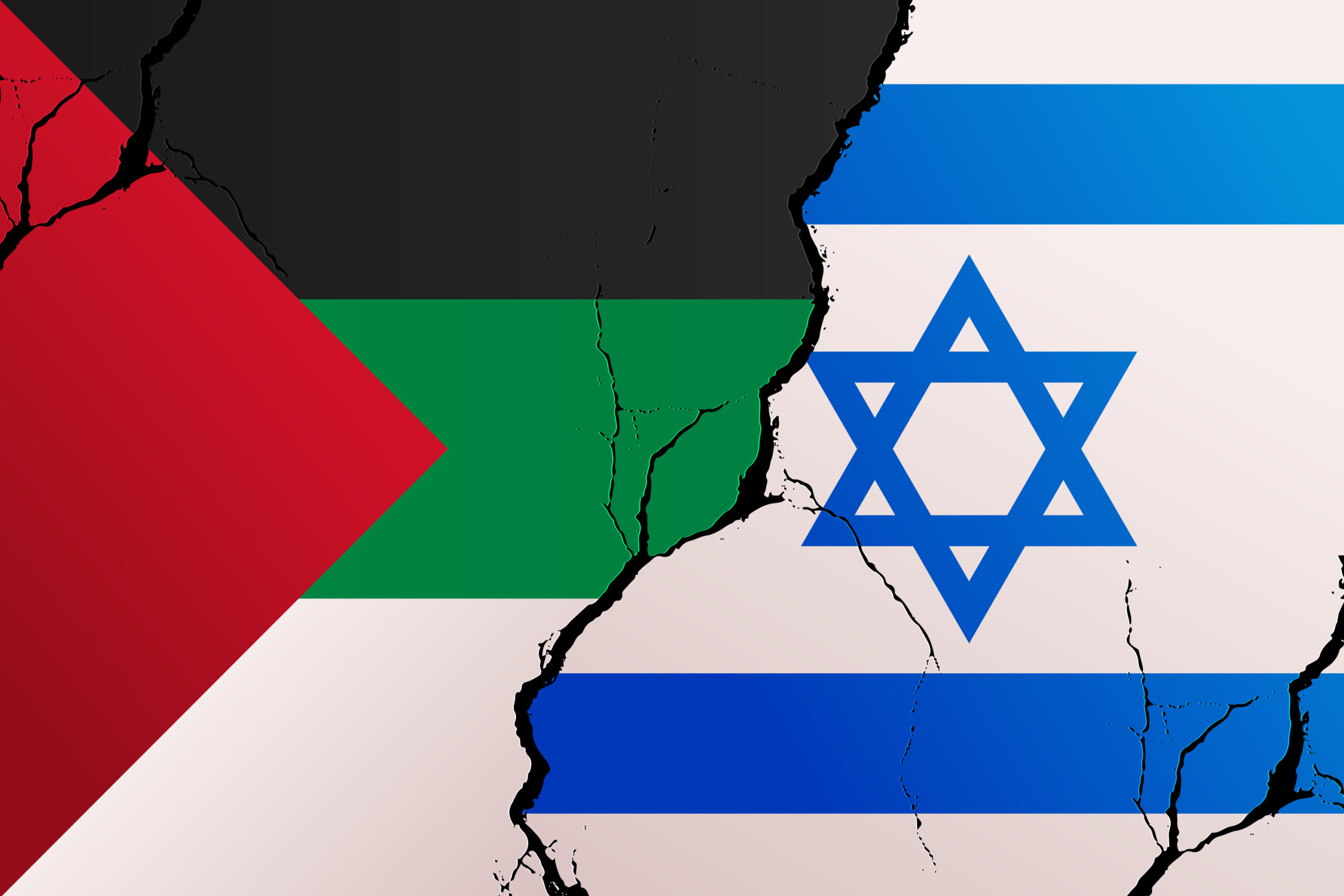

Trump’s peace plan could finally bring an end to Israel’s destruction of Gaza. But gaps in timing, guarantees, and last-minute Israeli amendments risk failure unless European and Arab states intervene.
Thanks to European and Arab engagement, Trump’s peace plan for Gaza gets the basics mostly right: it rejects the forcible displacement of Gazans and Israeli annexation of the Strip, accepts a future role for the Palestinian Authority (PA), and gives guarded support for Palestinian self-determination—all major shifts in US policy. Beyond a full end to the war and hostage release, the plan also envisages a complete staged Israeli withdrawal from Gaza and the disarmament of Hamas and other Palestinian armed groups.
But it still risks failure. Trump’s plan offers no clarity on timing or implementation, and sidesteps the Israeli government’s rejection of a two-state solution as well as the impact of Israeli sanctions on the PA and the illegal West Bank settlements. Israeli prime minister Binyamin Netanyahu also secured last minute, vaguely worded additions on Gaza’s demilitarisation and PA reform that risks letting Israel dictate the scope and pace of the plan’s implementation once the hostages are released.
The Israeli amendments caught Middle Eastern capitals by surprise. Egyptian authorities were furious at the exclusion of the PA in the updated proposal. They vowed not to send a peacekeeping mission without a clear commitment to Palestinian sovereignty and returning the PA to Gaza. Other Arab countries, like Saudi Arabia and Qatar, have echoed these conditions for joining any joint international force in Gaza.
To be successful, Trump needs to expand the plan to gain not just regional support but full commitment from Hamas. For the moment, however, the absence of clear, enforceable guarantees—particularly on the scope and timeline of Israeli withdrawal—risks entrenching a fragmented, externally managed and ultimately unsuccessful peace process. European countries should work closely with Arab and Muslim states to clearly define the benchmarks and guarantees required. Ultimately, European capitals must push to prevent a US and Israeli “take it or leave it” approach to Hamas, which will likely implode the whole process.
Post-conflict security
The Trump plan’s post-conflict security order for Gaza rests on three pillars: The phased redeployment and eventual withdrawal of the Israel Defence Forces (IDF); Hamas’s disarmament; and the deployment of an International Stabilisation Force (ISF). These are critical to the success of any ceasefire deal and the possibility of a longer-term settlement. But these require clearer terms of reference, as well as pressure on Hamas and Israel to abide by their commitments.
Withdrawal of the IDF and disarmament of Hamas
The original US plan required Hamas and other Palestinian factions to fully commit “to destroy and stop building any offensive military infrastructure, including tunnels and weapon production facilities.” At Israel’s behest the final plan now specifies that “all military, terror, and offensive infrastructure, including tunnels and weapon production facilities, will be destroyed and not rebuilt.” This new formulation is far more expansive and seems to imply the full disarmament and de-militarisation of all Palestinian factions in Gaza. This is one of Israel’s long-standing goals and possibly an attempt to manoeuvre the plan into one Hamas will reject.
Not only would full disarmament be akin to complete surrender for Hamas, it could also expose the group to attacks by a host of enemies. Moreover, even if Hamas’s leadership accepts Israel’s demand, many of its fighters would likely refuse to hand over their weapons and could defect to more hardline groups that are less likely to surrender (such as Islamic Jihad, the Popular Resistance Committees or Mujahideen Brigades).
Coaxing Hamas into a decommissioning process will require a greater Israeli commitment to withdraw from Gaza and engage in Israeli-Palestinian peace negotiations. But here too, Israel has shaped the plan in its favour. The amended proposal envisages a three-phased withdrawal. While the first and second phases are conditioned on the release of Israeli hostages and the deployment of the ISF “as per the standards set in the Trump plan”, Israel will retain a “security buffer zone” encompassing over 17% of Gaza’s territory until the Strip “is properly secure from any resurgent terror threat.”
Again, unclear benchmarks and timelines give Israel ample scope to stall its withdrawal (as it has done in the West Bank under the Oslo Accords), by arguing, for example, that Gaza has not been fully demilitarised and secured by the ISF, or that there is an enduring threat of a Hamas resurgence. Absent changes to the text, Israel will likely manage to retain control of vast swathes of Gaza, including most of its agricultural land as well towns such as Rafah and Jabalia—just as Netanyahu implied after his White House press conference. Without any guarantee that Israel would allow internally displaced Palestinians to freely return to these areas, there is the added risk that Israel could finish raising these areas and build Israeli settlements there.
Deployment of the International Stabilisation Force
The deployment of an ISF will be critical to demilitarising Gaza and ensuring Israel’s full withdrawal, and could be an important source of leverage for international players (including for the European countries that take part). Yet absent a clearly defined and agreed upon mandate, there is a danger the mission will be sucked into the conflict. To avoid this, the ISF will need to limit its role to monitoring and deconfliction. This will determine the extent of its cooperation with Hamas and the Gazan population.
As specified in the plan, an international force also has an important role to play in training a new “vetted” Palestinian civil police, with Jordan and Egypt presumably taking the lead given their ties with the PA and other Palestinian factions. However, the composition of a new Gazan police force to handle day-to-day security is undetermined. The PA will undoubtedly push to re-activate and incorporate what is left of its own security force which policed the Strip prior to Hamas’s 2007 take-over, along with the 5,000 policemen it has been training in Egypt and Jordan. Israel may likewise push for the inclusion of members of Israeli-aligned groups such as the so-called Abu Shabab gang (a criminal network responsible for looting UN aid convoys under IDF protection).
But given realities on the ground and the need to secure Hamas’s consent, it will likely have to incorporate many of the approximately 15,000 members of Gaza’s current police force.[2] These are mostly not members of Hamas and have been previously vetted and cleared by Israel as part of a 2018 ceasefire arrangement. Their full demobilisation would risk them derailing any post-conflict stabilisation process.
The governance of Gaza
Under the plan, Gaza would be placed under two layers of government. The first local layer is a technocratic, apolitical transitional committee responsible “for delivering the day-to-day running of public services and municipalities for the people in Gaza.” The committee will be made up of both Palestinians and international experts. This layer is where both Hamas and the PA want decision-making power to reside—and where it will need to reside to ensure Gaza’s reconstruction model actually delivers Palestinian redevelopment and re-housing.[3] The second layer is the Board of Peace (BoP) under Trump and former UK prime minister Tony Blair. While the plan mentions “oversight and supervision,” its scope and mandate are yet to be determined.
As this is a likely rebranding of the Gaza International Transitional Authority (devised by Tony Blair and Jared Kushner), the BoP could act as de-facto government, with sweeping powers over Gaza’s humanitarian, economic, legislative, security and reconstruction issues. This could lead to the BoP appointing its own judges, firing members of the administrative committee, as well as controlling Gaza’s natural resources, including its untapped gas marine field, and distribute land with no real accountability or oversight.
The friction between these two governmental layers, combined with Palestinian demands to determine their own affairs, could spark conflict as the plan gets underway. Though Hamas is willing to step away from governance, it still wants a decision-making process where it can assert its position.
The PA is likely even more concerned as this governance model could leave it with little to no authority in Gaza, entrenching the separation between the West Bank, which it controls, and the Strip. Moreover, PA president Mahmoud Abbas fears that Israel one day could try to replicate the BoP model in the West Bank.[4] Linked to this, Trump’s plan makes no mention of reconnecting Gaza to the West Bank, nor how to end Israel’s blockage of the Strip, without which there can no sustainable economic redevelopment.
Palestinian Authority reform
The PA’s return to Gaza and the launch of a new political track is conditioned on the PA completing a reform programme tied into “President Trump’s peace plan in 2020,” as well as a Saudi-French proposal. The latter calls for the repeal of its payment system for “martyrs and prisoners”, reform of school textbooks, and a commitment to holding elections within a year of a Gaza ceasefire. To date, the PA has largely fulfilled the first two steps, and Abbas has pledged legislative and presidential elections within a year of a ceasefire. Although it is unclear what this means for Hamas’s participation (which will be an important domestic legitimiser and enabler of any electoral process) nor for a deeply unpopular Abbas.
Once again, however, the American addition risks undermining such reform: The 2020 Trump plan also required the PA to forfeit its right to join “any international organization” without Israel’s consent and refrain from taking any action at bodies like the International Criminal Court and the International Court of Justice. During his press conference, Netanyahu added the need for the PA to recognise Israel as a Jewish state. These American and Israeli conditions are all long-standing Palestinian red lines, and their acceptance would further deplete the PA’s already fragile legitimacy among Palestinians.
Where the future lies
The plan has no shortage of political snags. Nevertheless, it does identify the need for “a credible pathway to Palestinian self-determination and statehood.” This fundamental principle, however, runs straight into Israeli rejection: Netanyahu was quick to dismiss Israeli troops leaving Gaza as something “that’s not happening” and has repeatedly rejected the existence of a Palestinian state—echoing nearly every Israeli party.
A credible peace track has to start with a ceasefire in Gaza, but it will not last without a fundamental shift in Israeli public and political attitudes and a reversal of Israeli settlement-expansion in the West Bank. Securing political deliverables from Israel is also needed to sustain a Hamas decommissioning process. All of this requires a relentless joint effort from European and Arab states to pressure Israel directly. They should also urge the US to confront Netanyahu in order to secure the necessary Israeli commitments. Without this, Trump’s plan could crash before it even gets off the ground.
About the author:
Hugh Lovatt is a senior policy fellow with the Middle East and North Africa Programme at the European Council on Foreign Relations.
Muhammad Shehada is a visiting fellow with ECFR’s Middle East and North Africa programme.