
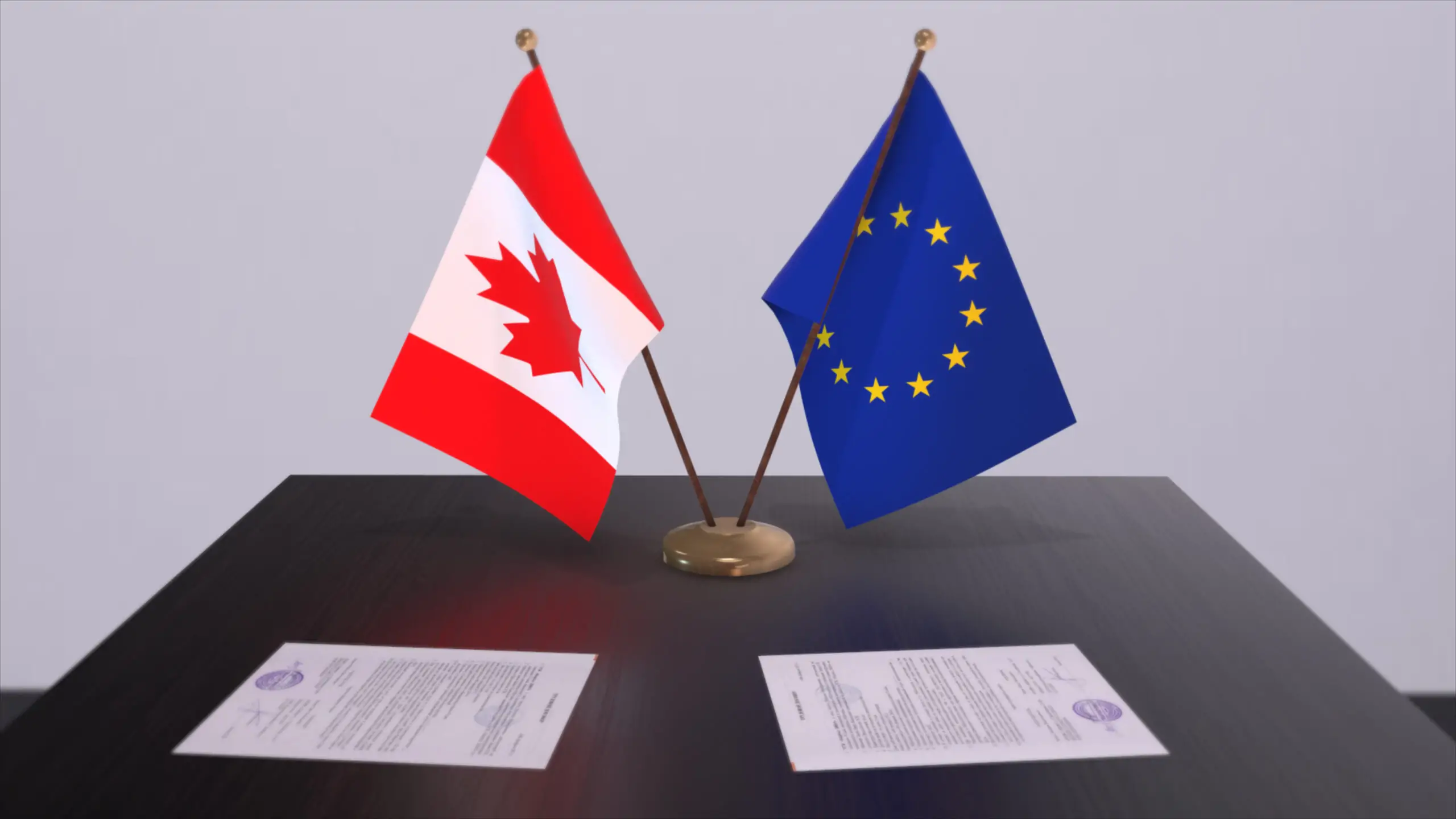

Canada’s enthusiasm for closer EU ties is real, and so is the EU’s need for allies beyond America. But as long as the EU’s offer of “associate membership” to Canada remains undefined, it risks ending up as empty symbolism
Problem
European Commission president Ursula von der Leyen’s offer this week of “associate membership” for Canada was received rapturously in the European Parliament. But member states, noting that the EU treaties say nothing about “associate membership”, have already tempered expectations, as has the Canadian ambassador to the EU. Make no mistake, “associate membership” does not mean that Canada will join the single market or become bound by EU directives anytime soon. The offer is currently a rhetorical gesture that, without a legal definition, risks meaning nothing at all, or becoming an expanded version of CETA, the EU-Canada trade deal in force since 2017, rather than a genuine new form of partnership.
Solution
As the United States estranges its allies, the EU has an opportunity to position itself as an alternative geopolitical anchor. New forms of association could help the EU build the capacity to act as a genuine world power. But to succeed, “associate EU membership” must be narrow but deep. Narrow in that it stops short of single market access or freedom of movement (not because it is undesirable but because it is currently unworkable); deep in that it can provide the basis for a unique alliance on security, defence and resilience—and offer a template for co-operation with other allies.
To prevent the proposal from landing dead on arrival, the commission should quickly define what associate membership means, with a timetable and clear objectives. This would also reassure candidate countries that others are not jumping the queue, and distinguish the offer from the “associate membership” Friedrich Merz, Germany’s chancellor, has pitched for Ukraine as a waiting room for accession.
To carry real weight, associate membership must address the pressures driving Canada into the EU’s arms in the first place. Security, defence and resilience are where both sides depend the most on America, where both sides face similar threats, and for which they can get public buy-in. Easy wins exist in low-friction defence-institutional steps, such as deeper Canadian participation in PESCO, the EU’s defence-cooperation scheme; an administrative arrangement with the European Defence Agency; and a role in future EU security missions.
But the boldest step would be to make Canada a full member of the EU’s defence technological and industrial base. This would bind Canada into Europe’s security architecture and give EU members access to Canadian expertise and industrial capacity for joint development and procurement. France’s protectionist zeal will be an obstacle; its EU ambassador this week pushed for tougher “Made in Europe” rules that would restrict non-EU firms’ access to defence funding. However, if Germany, the Nordics and the Baltics put their combined weight behind associate memberships, they might just bring the French on board.
Context
The war in Ukraine, America’s treatment of its allies and rising global instability have prompted EU states to explore association models that offer their neighbours and allies closer ties without watering down EU membership itself. In her State of the European Union speech, von der Leyen invited Canada to become the bloc’s first “associate member”, but the commission has yet to explain what that would mean in practice.
About the author
Anand Sundar is the special adviser to ECFR Director, Mark Leonard, at the European Council on Foreign Relations, based in the London office.