

As Europe rearms, the real vulnerability is not on tanks or missiles but the software and networks behind them. The union can import weapons. It cannot afford to outsource the digital systems that make modern military power possible.
In March 2026, Iranian drones struck major data centres in the United Arab Emirates and Bahrain. Months earlier, the UN’s aviation body formally condemned Russia for jamming satellite navigation across European skies. Together, these incidents reveal something important about contemporary warfare: the decisive layer of battle no longer sits only on tanks, ships and fighter jets, but on the digital systems connecting them.
Europe is rearming rapidly. But while it is buying more hardware, it is not yet building enough of the architecture needed to operate them independently. Europe does not need to own every supply chain behind every weapon it buys. But it must control the layers that could halt or blind an operation: mission software, encrypted data links, satellite services, software updates, AI compute, defence cloud infrastructure and critical components for which there is no timely substitute.
Steel matters less than software
To its credit, the EU has begun treating defence as a collective problem rather than just a national one. Military spending hit a record €343 billion in 2024 across the union,or 1.9% of GDP. More importantly, Brussels has built instruments for Europeans to spend together, such as SAFE, a €150 billion loan facility launched in May 2025. Meanwhile, the European Defence Industry Programme, adopted in December 2025, ties EU money to European industrial production. And the Readiness 2030 roadmap sets four concrete priorities, including a European Drone Defence Initiative.
The US nevertheless remains the main arms supplier of European NATO members, accounting for 58% of imports in 2021–25, according to Stockholm International Peace Research Institute. That is not necessarily a problem. Buying US fighter jets or Patriot air-defence systems is acceptable provided there is contractual security of supply and no embedded software that Washington could switch off. Duplicating the entire US defence-industrial base would cost more than European budgets can absorb and take many years.
As the scholars Henry Farrell and Abraham Newman argue, the goal is not to escape interdependence but to stop others from weaponising it. The rule follows: depend on allies for what can be replaced, never for what can be switched off.
What must remain European
By that standard, Europe should seek operational control over four critical layers: navigation systems, connectivity, AI compute, defence cloud systems, and drones, including counter-drone capabilities, spectrum control and mission software.
Navigation: Weapons that cannot locate themselves cannot fire.Russia is already jamming GNSS over the Baltic. If Europe cannot guarantee navigation and timing independently, even the most advanced missiles, drones and aircraft could become ineffective in a crisis.
Connectivity: Modern militaries depend on uninterrupted communications to coordinate forces, transmit targeting data and maintain command chains. IRIS², the EU’s planned satellite constellation, can help provide this. The challenge is that IRIS² sits between civilian, governmental and defence roles. It is not a purely military programme, but parts of its ground segment will support defence-relevant communications. Those parts should therefore be built to military standards.
AI compute and defence cloud systems: The Gulf strikes showed that data centres can become physical targets, not merely cyber ones. If Europe cannot protect its own strategic computing infrastructure, it risks losing operational coherence during a crisis.
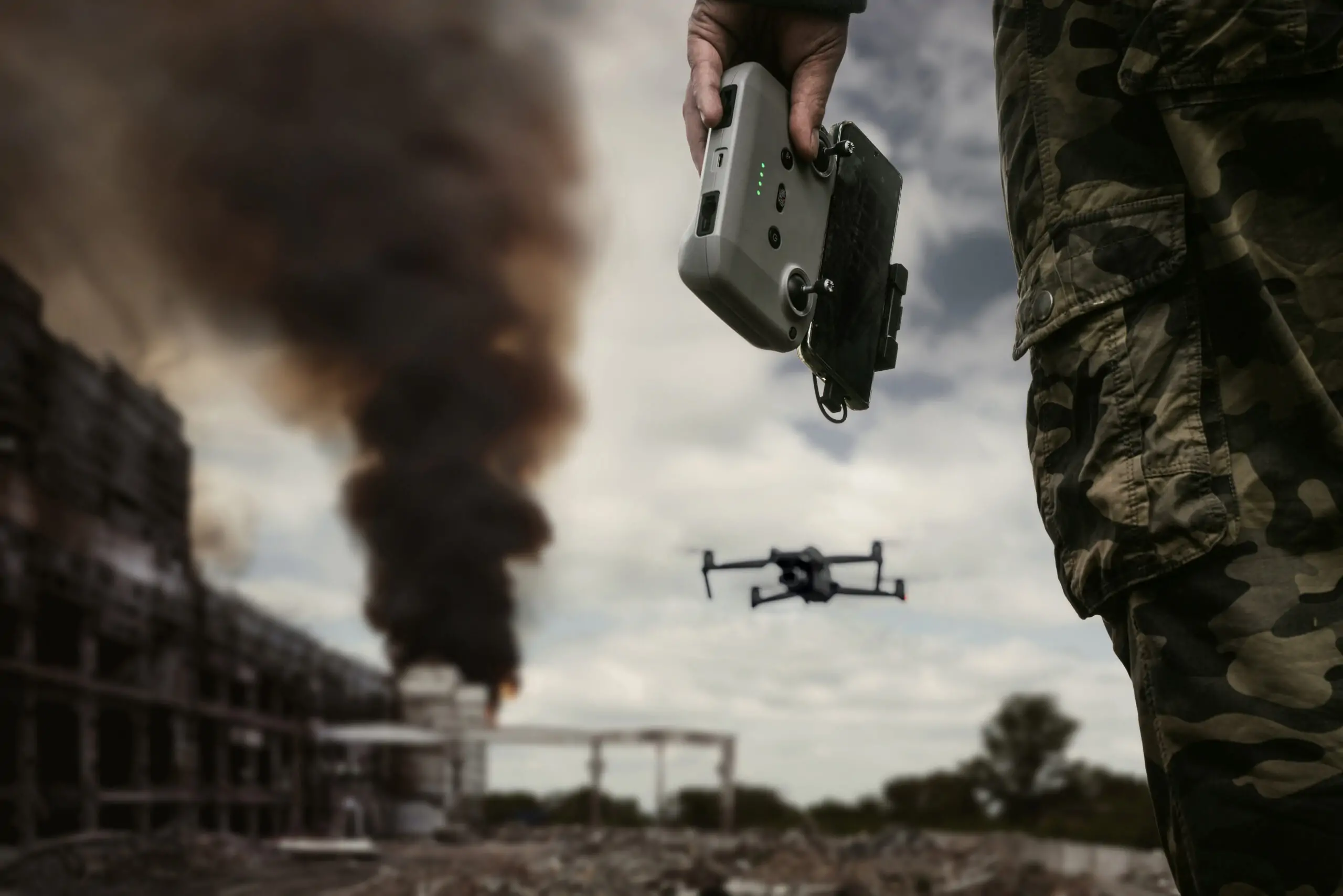
Drone systems and spectrum control: Drones do not need to be fully European in every component. Europe can import commodity parts where there are multiple trusted suppliers. But it must control the design, mission software, encrypted data links, counter-drone capabilities and spectrum-related updates. Losing access to software, updates or data links can mean losing the fight.
Recommendations
- Fund the critical layers as European public goods. Drones, counter-drones, electronic warfare, AI compute, defence cloud systems, data fusion (the ability to combine multiple signals and intelligence into a common operational picture), navigation systems and secure connectivity should be planned and funded at the EU level, under common specifications and pooled procurement, rather than left to 27 competing national budgets.
- Make interoperability binding. Open architecture, common standards and shareable interfaces should be hard contract conditions, with waivers a rare and justified exception. Without interoperability, joint procurement produces parallel inventories instead of a common force. Drones, air-defence systems, satellites, cloud platforms and command systems must be able to exchange data in real time.
- Treat IRIS² as strategic defence infrastructure. Build its defence-relevant ground segment to military standards, protect its deployment schedule from budget cuts and embed formal defence requirements into its governance without collapsing its civil mandate.
- Harden the ground. Designate Europe’s strategic data centres as defence-grade critical infrastructure, with physical protection, geographic dispersal and integration into national air-defence and counter-drones planning.
- Make Ukraine integration permanent. Ukraine is the only European actor iterating drone and software cycles in weeks. Lock that knowledge in through contractual joint procurement and shared testing, not ad hoc bilateral deals.
The choice is not autonomy versus dependence. Over the years in which Europe will keep buying from abroad, the real question is whether it does so as a customer for technology built elsewhere, or as a producer and indispensable node in the networks that will shape the next generation of conflict. The task is to design the dependence, not to abolish it.
About the authors
Ángel Melguizo was a visiting fellow at the European Council on Foreign Relations, based in Spain and Colombia.
Víctor Muñoz is a visiting fellow at the European Council on Foreign Relations.