
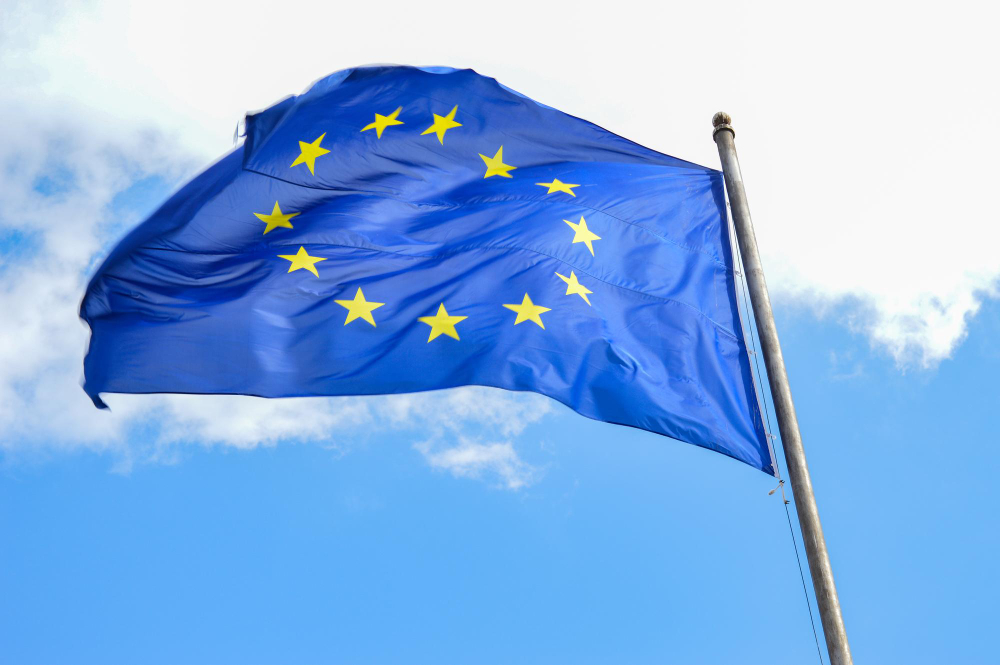

European citizens do not want “more Europe” in the abstract, but rather a European Union that is capable of protecting, investing, anticipating, deciding, and acting whenever national-level policymaking is insufficient. In today’s world, ensuring citizens’ control over their future requires the freedom to act together.
STRASBOURG—In 2027, high-stakes national elections will be held in nine countries—France, Italy, Spain, Poland, Greece, Finland, Estonia, Slovakia, and Slovenia—that together account for over half of the European Union’s population. Although these contests, as well as an indirect federal presidential election in Germany, will hinge on issues such as cost-of-living pressures, immigration, public debt, security, and social protections, a more fundamental question will run through them all: Do we Europeans want to remain masters of our own destiny, or will we allow the decisions that matter most to be made elsewhere?
The urgency of this choice is already apparent. The Alternative for Germany’s (AfD) recent victory in Saxony-Anhalt is a warning not only for Germany, but for all of Europe. Controlling our own destiny requires that we can defend ourselves as the United States scales back its commitments to allies. It also means maintaining support for Ukraine; upholding democracy, the rule of law, and media pluralism; harnessing AI for the common good; securing our military, scientific, technological, energy, and industrial autonomy; and preserving our social and environmental model.
Although the ingredients of European power already exist, they have yet to be melded into an effective compound. We Europeans often discuss defense without defining the sovereignty it should protect. We allude to competitiveness without adequately implementing the solutions already identified to address Europe’s strategic vulnerabilities, and without pursuing the policies needed to significantly and structurally raise Europe’s growth potential. We speak of reindustrialization without deciding how to finance it. And we proclaim the importance of AI without offering a social vision for it.
Such muddling through will not do. Echoing the Strasbourg Declaration of November 27, 2025, Canadian Prime Minister Mark Carney accurately described the breakdown of the international order as a result of the growing use of energy, technology, finance, and supply chains as instruments of power and coercion.
This issue will come into sharper focus in Strasbourg on September 16, when Carney will attend European Commission President Ursula von der Leyen’s State of the Union address as a guest of honor, before addressing the European Parliament the following day. Carney has urged middle powers to act together as great-power rivalries intensify, and his presence will put this task squarely on the EU’s political calendar. But Europe’s ambition must go further. Rather than settle for middle-power status, it must become a democratic superpower—powerful, sovereign, and non-imperial. That is why we founded the Europa Power Initiative, whose goal is to bring coherence to Europe’s efforts to adapt to the geopolitical challenges it faces.
Europe must be careful neither to overestimate nor underestimate its strengths. Its powerlessness in some areas is real, but in others, it is merely presumed. Europeans must reckon with how to transform a supranational polity into a democratic, sustainable, and responsible power capable of defending its own interests, preserving its citizens’ freedoms, and offering a vision grounded in shared rules, cooperation, and multilateralism.
Fortunately, our citizens are not demanding “more Europe” in the abstract. They want the EU to be more than a mere market with shared rules and procedures. They want it to become a real power capable of protecting, investing, anticipating, deciding, and acting when national-level policymaking is no longer sufficient. The choice, then, is not between one’s country and “Europe.” It is between declining individually or exercising power together.
By transforming the EU into a democratic power capable of acting swiftly in a crisis, we would be creating not a superstate that erases nations, but rather a community that enables states to exercise powers that none can wield alone. Such a project would respect the will of Europe’s peoples and the diversity of its member states. It would establish common capabilities in decisive areas—defense, energy, research, semiconductors, cloud computing, data, AI, and investment—while keeping decision-making at the local or national level whenever that is most effective and legitimate (the subsidiarity principle).
True power does have a price; but continued powerlessness would cost more: deeper dependencies, weaker democracies, and the undermining of our social and environmental model and cohesion. The key challenge is to avoid impossible choices like spending more on defense at the expense of health, education, research, social protection, climate action, or culture. Pooling investments that require scale, for example, could overcome this dilemma by increasing the impact of every euro spent.
Technological sovereignty is not merely about limiting the risks of AI. It also calls for harnessing new tools to improve health care, education, research, and governance. It requires shared digital infrastructure controlled in Europe, measures to protect our citizens’ and businesses’ data, and expanded rights and freedoms to give everyone greater agency.
The 2027 elections will be national in form but European in consequence. Any decision by one state on defense, energy, immigration, industrialization, Ukraine, or technology affects the others. Every European therefore has a stake in elections where they will not vote. Managing this asymmetry demands better coordination among national campaigns: candidates should be asked similar questions, and the implications of their proposals for the EU should be compared. The point is not to erode European voters’ sovereignty, but to ensure that they are exercising it with full awareness of their interdependence.
Independent, diverse, innovative, and high-quality media—especially public-service media—have an essential role to play here. Joint investigations and transnational debates would give next year’s elections a European perspective, thereby cultivating a sense of shared consciousness. The Europa Power Initiative was founded in Strasbourg in this spirit. With the goal of turning our interdependence into democratic debate and common proposals, our October 21–23 conference will bring together political leaders, experts, media representatives, and citizens to prepare for challenges Europe must confront.
Building the power to exercise sovereignty and preserve Europeans’ way of life means restoring our freedom to act together. There is no other way citizens can gain control over their future.

About the Author
Guillaume Klossa is a former AI special adviser to the president of the European Commission and co-chair of the Europa Power Initiative, is the author of Fierté européenne, manifeste pour une civilisation d’avenir (Telemaque/Editis, finalist of the European Book Prize, 2022).
Catherine Trautmann is a former French minister of culture and communication, is Mayor of Strasbourg, President of the Strasbourg Eurometropolis, and a co-founder of the Europa Power Initiative.
Slavoj Žižek is Professor of Philosophy at the European Graduate School, is the author, most recently, of Christian Atheism: How to Be a Real Materialist (Bloomsbury Academic, 2024), and a co-chair of the Europa Power Initiative.