
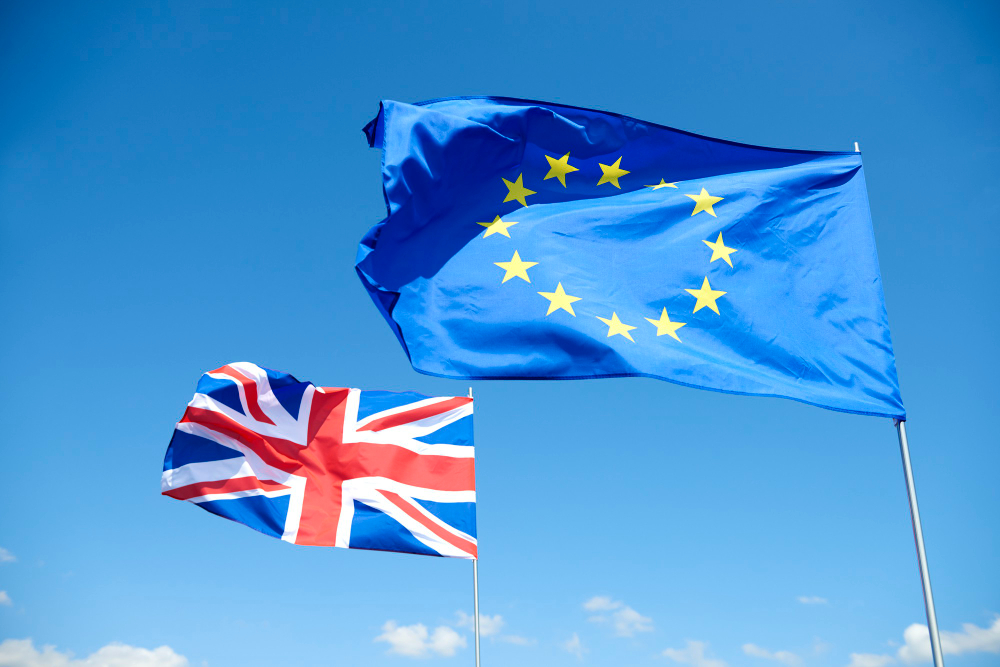
Europe’s economic and security difficulties are often presented as reasons for Britain to keep its distance from the European Union. However, Giray Gozgor argues that insufficient coordination makes several of these difficulties harder to address.
Europe faces a demanding combination of industrial competition, energy insecurity and pressure to strengthen its defence capabilities. These problems invite an understandable question in Britain: why move closer to a bloc struggling to adapt?
The answer depends on the alternative. Britain faces many of the same pressures. Leaving European institutions does not remove exposure to global energy prices, concentrated technology markets or security threats. It changes the instruments available to respond.
Europe’s vulnerabilities therefore strengthen the case for reconsidering Brexit, provided closer integration is judged against realistic alternatives and accompanied by institutional reform.
Integration creates economic capacity
The economic case begins with the difference between free trade and deep integration. Removing tariffs helps, but firms also encounter customs formalities, regulatory differences and restrictions on providing services. A single market reduces these obstacles through common rules and institutions that make cross-border transactions more predictable.
The EU offers access to roughly 450 million consumers. In trade theory associated with Paul Krugman, larger markets can support economies of scale and greater product variety. Firms can spread development costs across more customers, while consumers gain access to more suppliers. Integration can also widen the pool of workers, researchers and investment available to businesses.
These mechanisms matter especially when innovation requires substantial upfront expenditure. Dividing a regional economy into smaller regulatory markets can make it harder for new firms to expand. The relevant question is how European integration can improve that environment, including for British businesses.
Brexit shows the costs of separation
Britain’s experience demonstrates why a tariff-free agreement cannot reproduce single-market participation. Using firm-level customs data for 2012–2022, research by Rebecca Freeman and colleagues estimates that leaving the single market and customs union in January 2021 reduced worldwide UK goods exports by 6.4% within the following two years, relative to the estimated counterfactual.
Larger firms were less affected, while many businesses stopped trading with the EU. This estimate should not be confused with a simple comparison of exports before and after Brexit.
The Office for Budget Responsibility also assumes the post-Brexit trading relationship reduces long-run productivity by 4% relative to remaining in the EU. This is a forecast assumption, not an observed fall in annual GDP or a guarantee that rejoining would immediately recover the loss.
The evidence also requires balance. A House of Commons Library briefing in June 2026 reported that UK goods exports to the EU in 2025 were 14% below their 2019 level in real terms, whereas UK services exports to the EU were 28% higher. Pandemic disruption and other shocks complicate attribution. Britain retains considerable strengths, but those strengths do not make additional trade barriers costless. The EU still accounted for 41% of UK goods and services exports in 2025.
Shared vulnerabilities require shared investment
Europe’s competitiveness problems are real. Eurostat reports that the EU’s goods trade deficit with China reached €359.8 billion in 2025. EU goods exports to China fell 6.5% from 2024, while imports from China rose 6.4%. This imbalance suggests commercial pressure, but a bilateral deficit alone does not mean European industry is disappearing.
The 2024 Draghi report identified a need for €750–800 billion in additional annual investment. It also reported electricity prices for EU companies at two to three times US levels and gas prices at four to five times US levels. These are the report’s historical comparisons, rather than current price quotations.
Such challenges create a coordination problem. Research, electricity interconnections and resilient infrastructure generate benefits beyond the country that pays for them. As a result, national governments may invest too little or duplicate spending. Joint projects can share costs, connect complementary capabilities and make investment more attractive by providing predictable demand.
Britain has scientific, financial and industrial capabilities that could contribute to this effort. Its association to Horizon Europe since January 2024 shows that institutional cooperation can be rebuilt. That arrangement does not require EU membership, but it illustrates why access to shared networks remains valuable.
Sovereignty includes the ability to shape outcomes
Integration also matters for bargaining power. A large market can influence the standards international suppliers apply. A smaller country may remain formally free to choose its rules while its exporters follow overseas requirements to retain customers.
The May 2025 UK–EU Common Understanding makes this trade-off explicit. Its proposed arrangements for food standards, electricity cooperation and linked carbon markets envisage regulatory alignment and mechanisms for British input. Sectoral agreements can reduce barriers, but participation in shaping decisions differs from members’ voting rights.
These benefits do not establish that full membership is preferable to every alternative. They do, however, justify comparing membership, which combines market access with formal participation in EU decision-making, with arrangements that require alignment while offering more limited influence.
Reversing Brexit requires a credible political settlement
Closer integration will not automatically distribute gains fairly. Competition can disrupt particular industries and expanding markets can concentrate activity in already prosperous regions. Any renewed settlement must therefore include housing, infrastructure, skills and support for affected communities.
Nor should partial cooperation be confused with full membership. Britain can pursue practical agreements while assessing broader single-market participation and eventual re-accession. Each route carries different obligations. Rejoining would require a durable democratic mandate, agreement with EU members and negotiated terms. Britain could not presume its former rebate and opt-outs would be restored.
The EU also needs reform. Integration should improve coordination where benefits cross borders while preserving accountability and avoiding unnecessary centralisation. Recognising these shortcomings makes the argument for renewed membership more credible.
Britain should therefore place re-accession within a serious assessment of its long-term economic and strategic options. The case rests on lower trading costs, wider investment opportunities and greater influence over shared challenges. Europe’s problems make the quality of its institutions more consequential. They also make the costs of standing outside them harder to dismiss.
About the author
Dr Giray Gozgor is an Associate Professor of Economics and Finance at the University of Bradford School of Management.