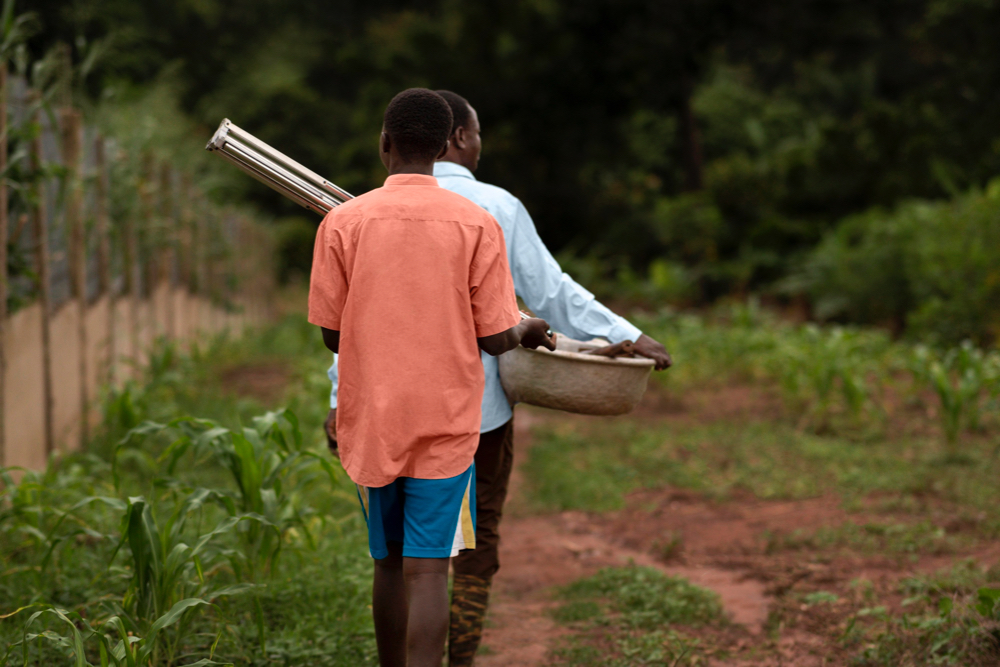

African countries find themselves in a global green transition, for which adapted ‘green skills’ will be paramount.
The main purpose of supporting green skills for African countries is to bolster youth employability, promote economic growth and development and strengthen socioenvironmental and economic resilience. This paper takes these priorities as a starting point and looks at how the EU and China respectively approach this in partner countries.
As the EU and China both increase their investments in Africa to source materials for their own green transition, they are key partners in Africa’s green transition and engage in different forms of (green) skills development in Africa. The paper outlines the strengths and weaknesses of their respective approaches and lays out some takeaways for future support to green skills development.
Rather than being a traditional ‘soft sector’, skills are now increasingly linked to hard, strategic priorities related to accessing critical raw materials. Yet there is still some way to go to make green skills development part and parcel of a strategy to build mutually beneficial partnerships with third countries.
About the Authors:
Pauline Veron is a policy analyst working in ECDPM’s European foreign and development policy, migration and mobility and peace, security and resilience teams. She specialises in the humanitarian-development-peace nexus and peacebuilding and conflict prevention, with a geographic focus on the Sahel and West Africa.
Katja van der Meer is a policy analyst in ECDPM’s European foreign and development policy and inclusive governance and accountability teams. She is also the gender focal point for the Europe and Africa in the world cluster. She specialises in EU and international development cooperation at large, global health, human development, SRHR, gender equality and anti-corruption.