
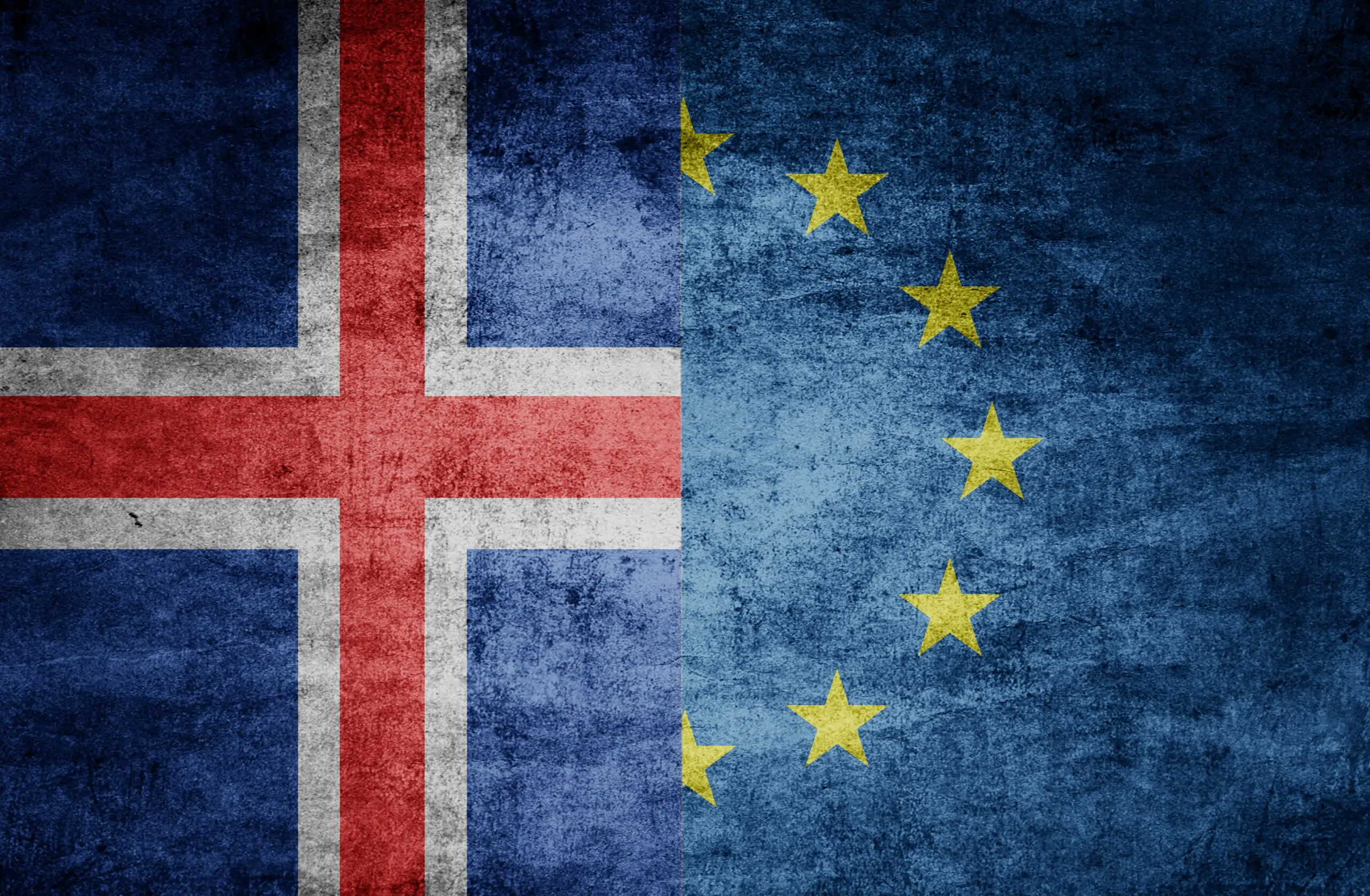

In their referendum this past weekend, Icelanders rejected resuming EU accession talks but only by a narrow margin: 52.8 % against, 47.2 % in favour. This suggests that concerns over fishing, long linked to Icelanders’ sense of national identity, ultimately prevailed at the ballot box, triumphing over existential security threats and the broader geopolitical case for Europe.
For now, Iceland’s possible EU accession has been shelved. But the referendum has nevertheless put Iceland’s status as a European country and the EU’s enlargement policy back to the forefront of the political debate.
Iceland’s EU question isn’t new
Iceland first applied for EU membership in 2009 following the country’s severe economic crisis as part of the wider 2008-09 global financial crisis, the rationale being that Iceland would fare much better by economically anchoring itself to the much larger and more resilient EU. It became an official candidate country in 2010 and had already provisionally closed 11 of the 35 negotiating chapters by 2013, due to already being deeply integrated with the EU through the European Economic Area (EEA). The process was halted following a change of government in 2013.
The current government, led by Prime Minister Kristrun Frostadóttir, had promised to run the referendum on resuming EU accession talks in 2027. Alas, Russia’s ongoing war in Ukraine and Donald Trump’s repeated claims over Greenland brought the EU question back onto Iceland’s political agenda much sooner than expected.
Iceland’s security concerns are real: the country is one of the few in the world with no standing army as it has traditionally relied on its NATO membership and its 1951 defence pact with the US. However, with Trump’s growing ambitions over the Arctic, these security alliances are now under strain and increasingly questioned.
The referendum itself
The EU question clearly mattered to Icelanders: turnout was actually higher than at the country’s last parliamentary election.
Polls had pointed to stronger support for a ‘yes’ vote earlier in the summer, but support declined as the referendum approached. The ‘no’ campaign appears to have been better funded and more effective in mobilising voters, particularly by claiming EU membership would threaten Iceland’s fisheries – and, by extension, Iceland’s national identity and sovereignty.
The geography of the vote reflected this divide. Reykjavík and more urban areas leaned towards ‘yes’, while the ‘no’ vote prevailed across more rural areas, where concerns over fisheries and agriculture are particularly strong.
Many warned of a ‘Brexit moment‘ – the risks of disinformation, foreign interference and AI influencing the referendum campaign. While it will take time to unearth any evidence of foreign interference, the fiercely effective ‘no’ campaign and the almost mirror-image result already give Iceland’s referendum striking echoes of the Brexit vote.
For the EU, while Brexit should have been a harsh lesson learned, Brussels once again largely stayed on the sidelines of the Iceland vote, ensuring that the narrative on possible membership was dominated by the ‘no’ campaign, who were not afraid to indulge in a bit of anti-EU disinformation. This included claims that reopening negotiations would automatically give EU fishing fleets access to Icelandic waters (categorically not true) and that membership would leave Icelanders exposed to being conscripted into a non-existent EU army.
What Icelanders said no to
The ‘no’ vote means Iceland will retain its deep economic ties with the EU through the EEA and Schengen. But it also means foregoing the important benefits that full EU membership could have brought.
The biggest missed opportunity is political influence. Iceland already implements a substantial part of the EU acquis through the EEA but has no vote in shaping these rules. EU membership would have given this small country a seat at the decision-making table and greater capacity to defend its interests when EU policies are negotiated. And, in areas where unanimity applies, such as the Common Foreign and Security Policy, Iceland could have wielded a veto, with the veto giving smaller EU Member States far more clout than they otherwise would possess.
Economically, the EU is already Iceland’s biggest trading partner, representing 53.6 % of Iceland’s total trade, and the EU is Iceland’s largest export destination, taking around 66.5 % of Iceland’s total exports. Joining the EU would have meant joining its customs union, which could have generated wider benefits for trade and investment. Adopting the euro could certainly help in stabilising currency volatility, a recurring issue for the Icelandic economy.
In terms of security, EU membership wouldn’t have replaced NATO, but it could have provided a stronger political and strategic anchor within Europe as the North Atlantic and Arctic regions become increasingly contested by the world’s great powers.
For the EU, Iceland’s decision is arguably even more of a missed opportunity. Integrating a small but prosperous and stable democracy that already speaks the EU’s regulatory language would have been both easy and strategically important. Iceland’s location gives it growing geopolitical importance.
In short, Iceland’s eventual membership would have been a big win for the EU’s enlargement policy, boosting its credibility and delivering a strong message that the EU is attractive not only to poorer and fragile democracies, but also prosperous and already well-integrated countries.
Next time, the EU needs to do more
Iceland’s referendum highlighted that fears over fishing and farming can still trump security threats and the broader geopolitical case for Europe.
The takeaway lesson for the EU is obvious: it needs to make sure that those voting over whether to join fully understand what they’re being asked to choose – and are equipped to tell the difference between blatant disinformation and reality.
At a time when enlargement is gaining in geopolitical importance, ultimately Iceland is a reminder that the attractiveness of EU membership cannot ever be taken for granted – even among countries that are already deeply integrated with the EU.
Maybe this time the EU will finally learn the lesson that it cannot leave defining the meaning and value of membership in the hands of those who vehemently oppose it.
About the author:
Dr. Tinatin Akhvlediani is Head of the Enlargement Programme at the Centre for European Policy Studies (CEPS), where she specialises in EU enlargement and Eastern neighbourhood policies. Her regional expertise spans the Western Balkans, Ukraine, Moldova, Georgia, as well as the South Caucasus.