
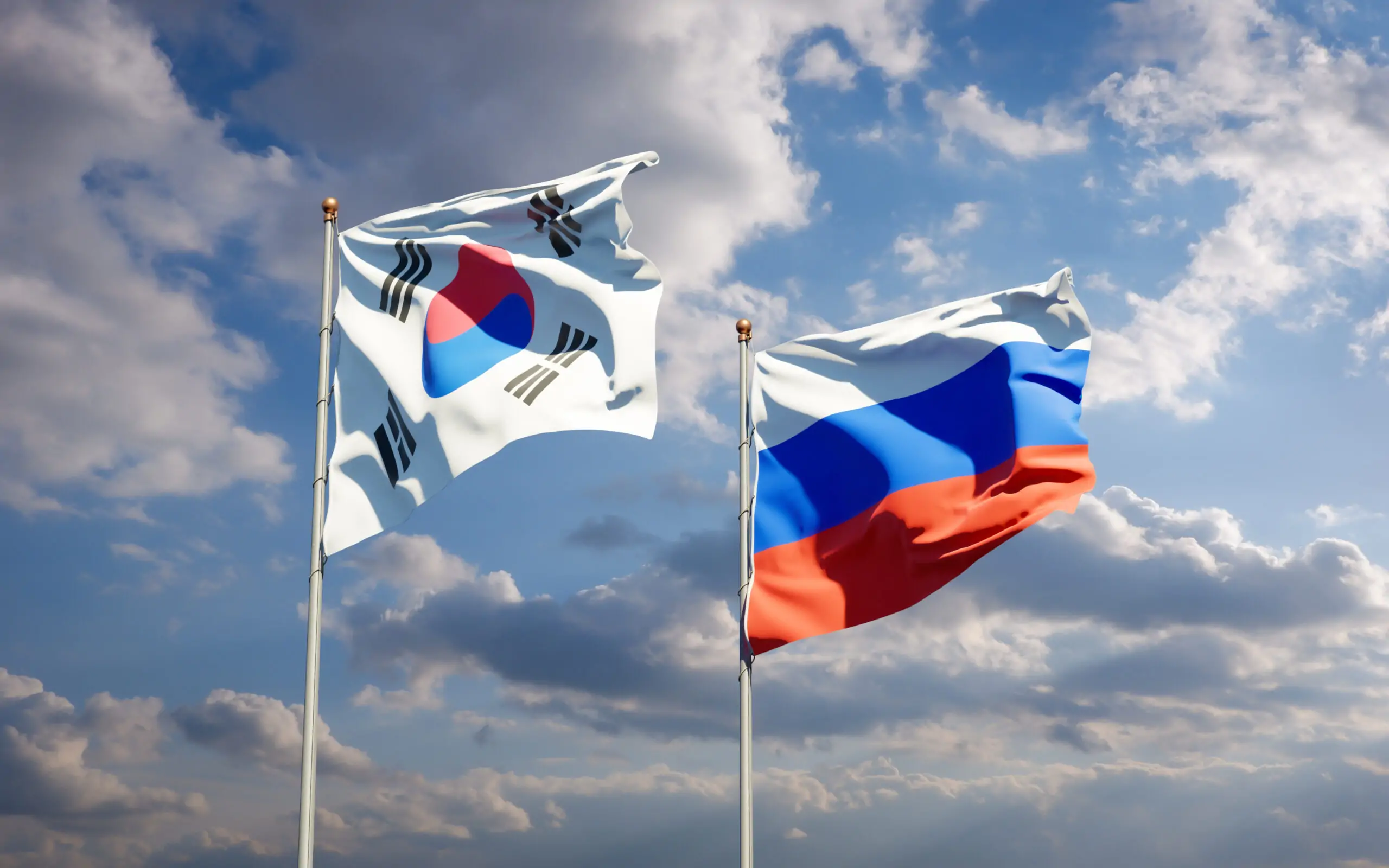
On 13 October 2026, the Republic of Korea’s President Lee Jae Myung visited Busan Port to congratulate the return of Pan Acro’s captain and crew after a 50-day trip along the Arctic route returning from Europe, something that would not have been possible without Russian co-operation. The trip is the first step in Seoul’s broader effort to operate the Arctic Route regularly, with some projections indicating it could become economically viable by 2040 (ArcticToday, 2026).
The event suggests Russia remains vital to Seoul’s commercial interests. That holds true even as Moscow deepens ties with Pyongyang, with which South Korea is technically still at war.
Since 2022, North Korea has increasingly supported Russia’s war against Ukraine, with some estimates indicating that during the years it has supplied around 15 million artillery rounds, ballistic missiles and self-propelled artillery pieces. Since 2024, it is also estimated that around 16,000 North Korean troops have been sent to the Ukrainian front (Lee, 2026). The arms trade and labor exports between Russia and North Korea have reportedly generated around $14 billion for Pyongyang, resulting in a huge boost to its economy (Cha, 2026).
This growing alignment has not gone unnoticed by Seoul, which has since then become increasingly vocal and interested in exploring collaborative efforts with Kyiv. Since 2022, South Korea has been sending humanitarian and financial support to Ukraine, but it has never directly sent weapons or ammunition to the country (Ministry of Foreign Affairs, Republic of Korea, 2022; Young, 2023).
The relations between the two nations became strained in September 2026 after President Volodymyr Zelensky disclosed the transfer of two North Korean Prisoners of War (POWs) captured in the Kursk Region to Seoul. This was denounced by South Korean officials as a direct violation of a non-disclosure agreement, sparking a diplomatic fallout that led to the recall of the ambassador and part of the embassy staff from Kyiv (Cha, 2026).
Even if the war in Ukraine is still very much active, during the summer of 2026, sources said that South Korea shipped seven tankers to Russia, three of which were sanctioned by the UK and the EU. These shipments amounted to 176,000 tonnes of fuel, mostly diesel, although Korean officials dispute the claim. In August 2026, South Korea alone supplied about 31% of Russia’s seaborne oil product imports (Rashid, 2026).
This comes as Moscow has been constantly under pressure after Ukraine scaled up its attacks against oil refineries in the country, as the latest attack on 3 November at the Yaroslavl plant showcased (Kyiv Post, 2026).
About the author
Giulio Civettini is a Research Trainee at Finabel.