
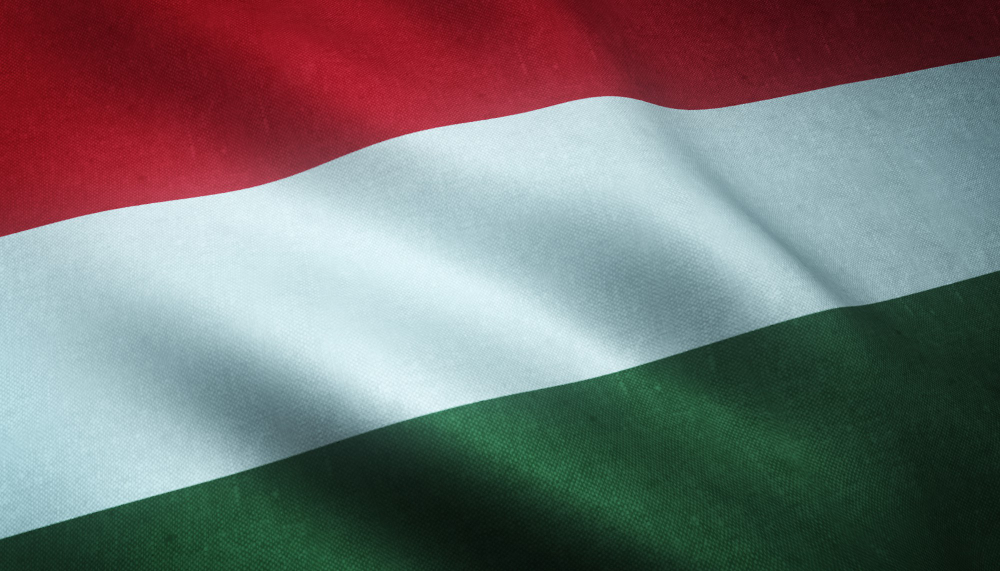

For the first time in 16 years, Hungary’s prime minister won’t be called Viktor Orbán. Péter Magyar, an erstwhile Orbán ally who built a resistance movement from seemingly nothing, emerged victorious from yesterday’s parliamentary election.
And victorious he was – following record turnout, his TISZA party secured a supermajority with a projected 138 of 199 seats (69%).
Orbán’s Fidesz, meanwhile, suffered an enormous defeat (only 55 seats). The extreme right Our Homeland Movement may have narrowly cleared the 5 % threshold, though with some absentee votes trickling still in from abroad, this could still change.
Credit where credit’s due, Orbán quickly phoned Magyar with his congratulations. He then delivered a sombre, teary-eyed concession speech, vowing to serve the nation from opposition. An hour or two later, Magyar was greeted by a euphoric crowd, where he spoke for the first time as PM-elect with a firm, yet conciliatory tone that centred on the promise of a new beginning for all Hungarians.
Spring breeze
Fidesz, once the undisputed master of political communications and propaganda, stumbled its way through the campaign with uncharacteristic clumsiness. Having already started the year with a disadvantage in the polls, the government was also shaken by several scandals.
Leaked audio recordings between Orbán, Foreign Minister Péter Szijjártó and their Russian counterparts laid bare where Fidesz’s loyalties lay. The campaign was then further derailed by whistleblowers who – among other things – detailed a James Bond-worthy secret service operation to bring down TISZA.
To turn things around towards late March, Orbán had to embark on a nation-wide tour. At a stop in Győr, when confronted by counter-protesters chanting ‘filthy Fidesz’, Orbán, who usually appears calm and personable in public, lost his cool and lashed out. His hoarse-throated outburst revealed the desperate fury of a man whose grip on power was slipping away.
As a last hail Mary, JD Vance campaigned alongside him, which most likely only hurt Fidesz’s campaign further. Likewise, not even the documented attempts at electoral fraud in rural areas – where the votes of the poorest were secured by money, food, threats and even drugs – could help save Fidesz.
While Fidesz deteriorated, the TISZA campaigned remained laser-focused on domestic issues. Over the past year, Péter Magyar visited every corner of the country, from big cities to small villages, engaging hundreds of thousands of voters and turning districts that were previously Fidesz strongholds into promising battlegrounds.
Unlike Fidesz, which hasn’t produced an actual electoral programme in over a decade, Magyar presented a comprehensive plan that offered policy proposals that appealed to left and right alike. And wherever he went, he brought a message of hope as opposed to Orbán’s fearmongering, encouraging people to ‘fear no more’.
A recently released film documenting Magyar’s road to the election only underlined him as the anti-Orbán seeking unity forged by hope, not fear. The hope for change has become so central to TISZA’s campaign that supporters have dubbed the phenomenon ‘hopium’ – a portmanteau of ‘opium’ and ‘hope’ – which highlights just how addictive the promise of meaningful change can be after 16 years built on inciting hatred and exclusion.
Are we out of the woods?
As the election novelty wears off, the country is at a point of transition and uncertainty. Domestically, TISZA’s programme outlines a clear roadmap towards system change, including uncovering past political and economic abuse, restoring the democratic rule of law, increased spending on healthcare, education and social welfare, as well as restoring media freedom and putting an end to political propaganda.
At the same time, there’s little to say about Magyar’s foreign policy aspirations, as his focus has been firmly on domestic affairs. While Fidesz’s propaganda machine painted him as an ardent supporter of Ukrainian President Zelenskyy, it’s difficult to gauge what his approach will be. It’s likely he’ll abandon Orbán’s staunch opposition to sanctions against Russia and he could be more amenable when it comes to enlargement or aid.
However, one shouldn’t expect him to immediately join the Coalition of the Willing or rally behind EU efforts to maintain its spheres of interests and increasingly controversial allegiances, especially as the beginning of his term will likely be all about domestic affairs.
Nevertheless, the EU should hope for much better cooperation, at least in most policy areas. Though Magyar said that TISZA has no interest in cooperating on migration, it is seeking to restore Hungary’s place as a ‘respected, influential member of the community’ and to ‘constructively shape’ the direction of EU integration.
The new government will also be keen to unlock currently frozen EU budgetary commitments, which also suggest a willingness to rebuild the Brussels-Budapest friendship through cooperation and mutual support.
The next few months will also test whether the EU institutions are ready for some soul-searching after 16 conflict-ridden years. Despite Orbán’s departure, the EU must assess its own mistakes and the structural weaknesses he exploited to ensure that the Treaty framework is ‘fit’ for the challenges of this decade and beyond. He may be gone, but his way of doing politics lives on through his fellow ‘Patriots’ across the EU.
The promise of Prometheus
While this is a moment of joy for many, it would be dangerous to paint Magyar as a messiah that freed Hungarians from their chains – we should still be cautious. Though the supermajority could allow him to begin a sweeping overhaul of Orbán’s self-serving system, uprooting the entire regime won’t happen immediately. And just like Orbán or any political leader, he must be held accountable by the people and the EU alike.
But at the end of the day, Magyar pulled off an enormous feat. In the span of merely two years, not only did he build a nationwide movement from the ground up, he brought together over three million voters to unseat a deeply entrenched strongman backed up by a corrupt, unjust system. Things may not get better in the blink of an eye and dismantling Orbán’s ‘kingdom’ will be very difficult – but now we have the chance to at least try.
And an empowered population that came together and overcame the slim odds of ridding itself of Fidesz by democratic means will be much better suited to keeping a vigilant eye on the new man in charge, ensuring he’s held accountable for how he takes the country forward.
About the author:
Júlia Pőcze is a Researcher in the Institutions unit at CEPS. A lawyer by training who specialises in European and comparative constitutional law, her research focus is on Article 2 TEU, particularly on the rule of law, democracy, institutional affairs and political integrity.