
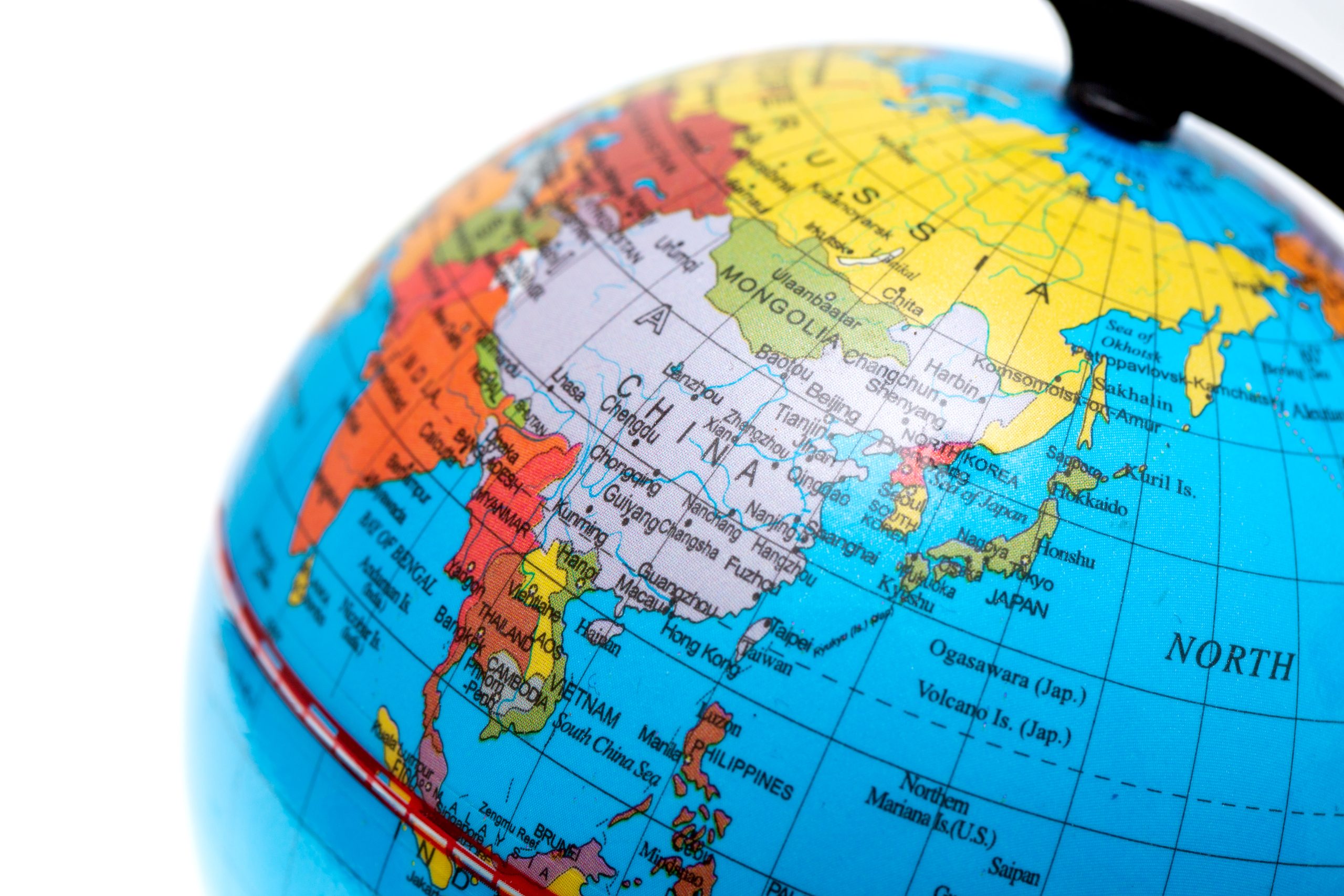

For years, the Indo-Pacific region has been at the centre of the redefinition of power dynamics, and its growing importance is related to economic, political, and security factors. Home to some of the world’ s fastest-growing economies, the Indo-Pacific is one of the European Union’ s top trading partners and one of its largest export markets (Borrell, 2021; Grare & Reuter, 2021; Keßler, 2024).
As the Indo-Pacific ’ s sea routes connect Europe with the rest of the world, maritime security and the protection of sea lanes are essential for safeguarding EU trade (Pajon, 2025b). Consequently, this calls for an intensification of the EU security engagement in the region, which takes into account defence and political considerations (Borrell, 2021). Indeed, this is also related to China ’ s expanding role in the Indo-Pacific, framed by the strategic rivalry between the latter and the United States (U.S.), which indirectly draws in the EU. In fact, its economic security and geopolitical future is becoming increasingly intertwined with the evolving dynamics of Sino-U.S. rivalry in the region (Grare & Reuter, 2021; Pugliese, 2023). Within this context, the Council of the European Union has called for increased efforts in the European countries to address security challenges, while stressing the need for enhanced cooperation with Indo-Pacific partners and organisations (Council of the European Union, 2025). Efforts became concrete when the EU released its Indo-Pacific strategy in 2021. However, four years after its adoption, those efforts have fallen short of expectations. This is partly because the EU mostly acted through bilateral relationships (although these have often been successful and more significant) rather than as a united front (Smith, 2025). Thus, while the EU strives for a more significant presence in the Indo-Pacific, moving to a multilateral and more targeted approach is necessary. This paper examines how and why the EU should shift from bilateral engagements to a more coordinated, EU-level approach to protect trade, supply chains, and critical maritime infrastructure. First, it outlines the actions taken by the EU, and then uses France as a case study, focusing on its role as a leading security actor in the region. Finally, the paper will explain why moving towards EU-level multilateralism is necessary to strengthen its influence and position it as a global player.
2. Between Ambition and Reality:
The EU’s Indo-Pacific Engagement Since Russia ’ s invasion of Ukraine in 2022, European Member States and Asian countries have increasingly recognised their growing interdependence as developments in the Indo-Pacific have direct consequences on European security. Both Russia and China represent a source of concern for the EU. Firstly, China is supporting Russia by supplying military equipment to be used in the war in Ukraine, and most dual-use exports originate from there. Secondly, Russia is pursuing a military programme in China for the production of long-range attack drones (Gers & Matlé, 2025). Therefore, China ’ s threat is twofold: it indirectly threatens Europe by supporting Russia, and directly by disrupting supply chains, particularly for semiconductors. This underlines the need for the EU to reconsider its economic and technological engagement with China, and consequently, with the Indo-Pacific countries (Schreer, 2025). The Indo-Pacific countries represent an area of crucial economic and technological importance to European countries, especially now that the EU seeks to strengthen its own security posture mostly for two reasons. The first is to ensure the flow of goods through Asia ’ s trade routes. However, this is not only to guarantee the passage of commercial vessels, as EU countries often focus on the security of sea lines of communication. There is also a need to protect freedom of navigation, partners ’ exclusive economic zones, undersea data cables and fisheries (Grare & Reuter, 2021). The second reason represents the growing defence-industrial market. In fact, increasing doubts about the reliability of the U.S. as a defence partner and the consequent rise of EU defence spending call for the Union to deepen its engagement. Arms cooperation with IndoPacific partners could both reinforce Europe ’ s defence-industrial base and support regional stability by strengthening military capabilities and regional deterrence (Schreer, 2025). At the moment, Indonesia and Singapore represent the most open markets for European suppliers (Schreer, 2025). Japan is also willing to deepen its defence-industrial ties with the EU, while India though still heavily dependent on Russia for armaments has faced delays in deliveries. Thus, by acknowledging its difficulties in developing a defenceindustrial base, India has become more open to alternative suppliers, such as European manufacturers (Schreer, 2025). However, it remains difficult for the EU to increase its market share in the region. To address these issues, the EU has taken concrete policy steps over the years, but will its ambitions keep up with actual defence engagement? The first of these initiatives was the 2016 EU Global Strategy (EUGS), which marked the beginning of a more strategic approach to Asia by emphasising its importance for trade and connectivity. This was followed by the 2018 Connecting Europe and Asia strategy, which focused on rules-based infrastructures and trade (Pugliese, 2023). The EU-Asia connectivity strategy was widely seen as an attempt to offer countries in the region an alternative to Beijing ’ s Belt and Road Initiative. However, the broad scope of what can be considered as connectivity has led individual Member States to pursue their own priorities (Grare & Reuter, 2021). Then, in 2021, the Council of the European Union approved the EU Strategy for Cooperation in the Indo-Pacific to increase the EU’ s political, economic, and military presence in the region (Pugliese, 2023). The strategy aimed to establish a naval presence for joint exercises and enhance information sharing in the region (Schreer, 2025). It also incorporated military elements, such as the deployment of European warships and the extension of the EU’ s Critical Maritime Routes in the Indian Ocean (CRIMARIO) capacity-building project to the Southern Pacific, to enhance maritime security and intelligence sharing (Reiterer, 2023; Bouffaron & Blandin, 2025).
About the Author:
Jennifer Kalushi publishes policy-oriented publications on European defence and security and attends conferences reporting on key developments in defence policy for Finabel.