
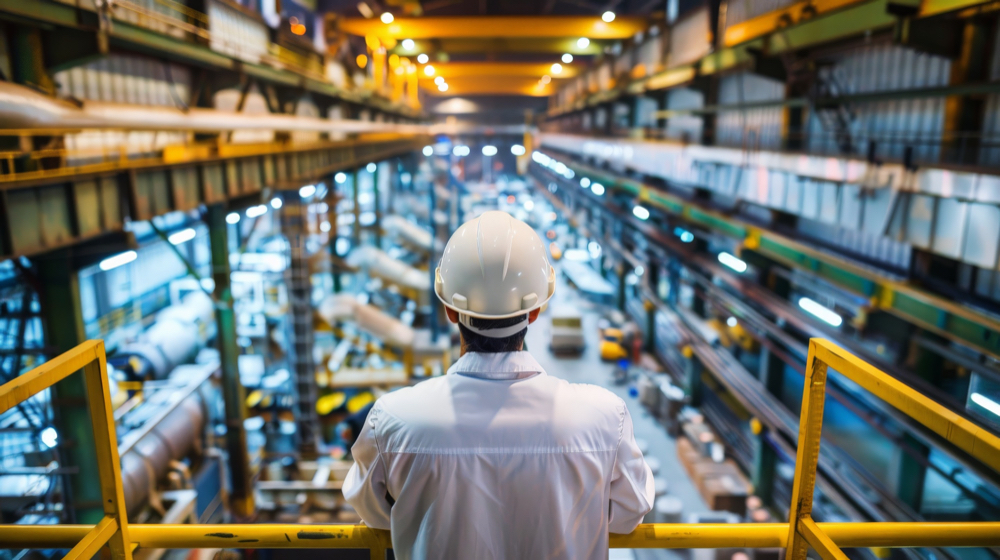
In the competitiveness and energy transition battles, the European Union (EU) must master a determinant factor: skills.
After the 2022 energy crisis, the competitiveness debate in Europe has been mostly focused on energy costs and the simplification agenda, whereas several surveys and reports (European Investment Bank, Eurobarometer, Organisation for Economic Co-operation and Development) show that for a majority of EU businesses the most acute issue and the biggest obstacle to investment is the insufficient availability of skilled staff. To succeed in delivering the twin low-carbon and digital transition, the EU needs to put workers and skills at the heart of the European project.
The twin transition is nothing less than a skills revolution, with lifelong learning and cross-sectoral collaboration front and center. Up to 4.8 million additional energy transition jobs could be created in Europe in key clean technologies by 2030, but this depends on skills availability, on the thorough implementation of the Green Deal 2030 framework and on EU’s ability to retain domestic clean tech manufacturing capacities. While the energy transition is expected to be a net job creator in Europe, the ongoing crisis in traditional manufacturing sectors has been translating into almost 1 million jobs losses since 2019 and, by 2040, about 8 million people in a number of fossil-fuels related industries (coal, oil refineries and petrochemical industries, internal combustion engine cars) will need to be reskilled and upskilled for new roles, with countries in Central and Eastern Europe being particularly challenged. The EU and Member States must dedicate specific funding lines for skilling and reskilling, which can be estimated to be in the order of 17-25 billion euros for skills in the realm of the energy transition and clean industrial deal, amounts comparable to the firepower of the Just Transition Fund. The most sought skills pertain to the field of Science, Technology, Engineering and Mathematics (STEM) and vocational education and training (VET), but also to transversal occupations such as project management.
Following the Draghi report, the European Commission (EC) has included skills among the pillars of the Clean Industrial Deal, recognizing their strategic value for the success of the energy transition and industrial transformation. The Union of Skills could mark the beginning of a stronger European action to address the three most important challenges for the EU: a weakened performance on basic competences (mathematics, reading and science, but also digital skills), an aging workforce (with more than a third of workers in the electricity sectors being 50-74 years old), and ensuring a just transition across European regions. The overarching objective should be a European skills vision for a truly European social and industrial policy, financed by a strong and forward-looking European budget.
Member States should commit more resources to boosting education systems, supporting life-long learning, incentivizing companies to provide trainings, while also taking a more active and systematic role in monitoring the evolution of skills needs and their availability on the market, the gap in existing education and training offers compared to business needs, the fluctuations of the jobs market, and put a specific focus on the just transition regions with heightened challenges in terms of industry restructuring and attracting new economic opportunities.
About the author:
Diana-Paula Gherasim is a Research Fellow, Head of European Energy and Climate Policies, Energy and Climate Center at Ifri.