
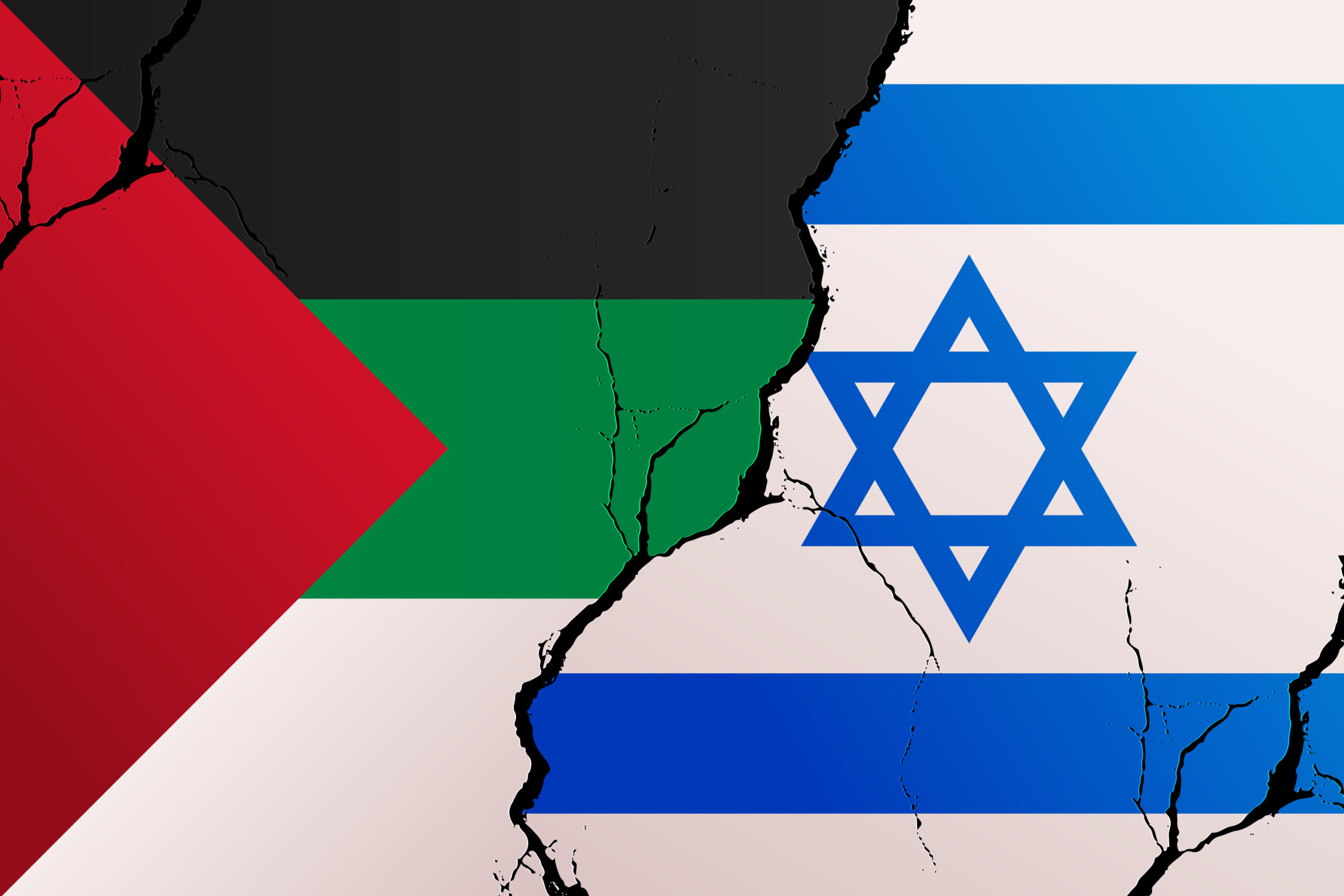

European states should offer support for the broad principles of the plan conditioned on a clear Israeli commitment to a full withdrawal from Gaza.
Problem
President Donald Trump’s 20-point plan announced on September 29th could be an important step towards ending nearly two years of devastation in Gaza. Its core principles are largely sound but, as usual, the devil is in the details.
The current plan effectively grants Israel a veto over the pace and scope of its withdrawal from Gaza after Benyamin Netanyahu, the Israeli prime minister, secured last-minute changes. These condition Israeli redeployments on Gaza’s demilitarisation and reform of the Palestinian Authority (PA)—with Netanyahu demanding a long list of concessions.
At the same time, Israel is not required to make any commitments to a broader political track, or end settlement expansion in the West Bank, which continues to erode the slim possibility of a two-state solution. Soon after Trump’s announcement, Netanyahu made clear that the IDF will stay in large parts of Gaza and that he will block the creation of a Palestinian state. His coalition partners have also rejected the plan.
Hamas now faces significant pressure to accept a deal which would involve the immediate release of all the remaining hostages, a step it has thus far refused without a permanent ceasefire and a full IDF withdrawal from the strip. There is a real risk that the lack of guarantees pushes Hamas to reject the plan. This would play into Netanyahu’s hands by easing international pressure on Israel and giving him a green light to maintain a military campaign.
Solution
European states should offer support for the broad principles of the plan. They will need to work closely with Arab and Muslim states such as Saudi Arabia to ensure that it includes firm guarantees and necessary benchmarks to lock in credible implementation by the two parties.
The plan’s success will depend on US pressure on Israel and Europeans should strengthen their hand with Trump by committing significant resources to ensure the successful implementation of his “historic” plan. But this support needs to be conditioned on Israel’s explicit acceptance of a full withdrawal from Gaza and commitment to a genuine political pathway. Without this, the process will likely unravel, and Europe risks becoming trapped in it as enforcers of Israeli occupation by proxy.
On this basis, Europeans should offer to deploy a joint peacekeeping force in Gaza—which the plan calls the International Stabilisation Force—that will be instrumental in disarming Hamas (and other Palestinian armed groups) in line with Israeli security concerns. Europe should also offer significant funding to meet Gaza’s urgent humanitarian and reconstruction needs.
The EU should also deploy its economic leverage to ensure Israel sticks to its commitments. The EU could pre-emptively announce that it will immediately suspend the EU-Israel Association Agreement if the Israeli government derails the deal. Europeans should also step up its efforts to counter Israel’s actions in the West Bank by sanctioning Israeli settlements and banning trade and investment with them.
On the Palestinian side, Europe needs to press hard for political and institutional renewal beyond just technocratic reform. It should also do more to support Palestinian national reconciliation, which will invariably require an agreement with Hamas to demilitarise and become a purely political group. This should be part of a broader effort to revive Israeli-Palestinian negotiations, a goal that must remain at the heart of ongoing international diplomacy.
Context
Beyond securing the immediate release of Israeli hostages, Trump’s plan envisages a humanitarian surge and future reconstruction for Gaza as well as de-commissioning Hamas weapons. Just as importantly, it rejects the forcible displacement of Gazans and Israeli annexation of the strip, and at least pays lip service to the need for a credible pathway to Palestinian self-determination.
About the author:
Julien Barnes-Dacey is the director of the Middle East & North Africa programme and interim director of the Africa programme at the European Council on Foreign Relations.
Hugh Lovatt is a senior policy fellow with the Middle East and North Africa Programme at the European Council on Foreign Relations.