Commission sets up new EU Sanctions Office and appoints new EU Sanctions Envoy
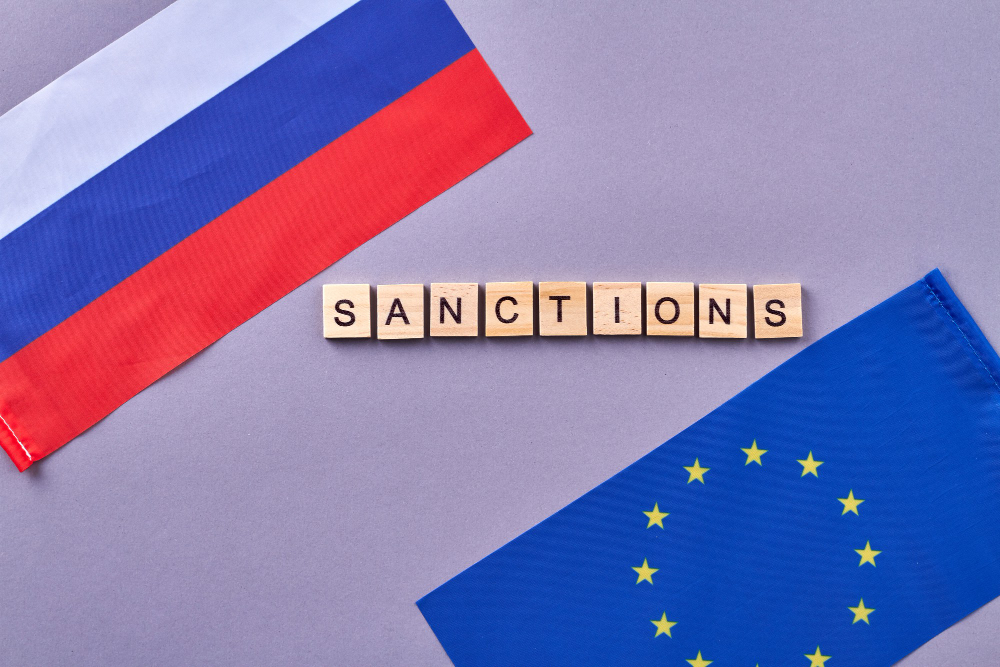
Today, the Commission has created the EU Sanctions Office to bring together the Commission’s expertise on the entire sanctions lifecycle, from policy design to implementation, enforcement, and anti-circumvention, including outreach to and engagement with third countries.
This approach will ensure the role of sanctions coordination for the EU vis-à-vis Member States and third countries and is relevant for all sanctions regimes, in particular Russia and Belarus but also Iran, North Korea, Syria, and hybrid and organised crime. It will support Member States with faster compliance guidance, data sharing, and economic and technical analysis to ensure harmonised implementation and enforcement of our sanctions.
Russia’s invasion of Ukraine and the EU’s response reshaped sanctions as a foreign policy tool and as a key instrument of the EU’s response to major international challenges. Since the start of Russia’s war of aggression against Ukraine, the EU has adopted 21 packages of sanctions. As the demands on designing and implementing sanctions evolve, strengthening the Commission’s capacities and structures is essential.
The scale and complexity of these measures have also shown the need for stronger coordination, closer cooperation with Member States, and deeper engagement with international partners.
The EU Sanctions Office will be established within the Secretariat-General and will be under the political responsibility of Commissioner Maria Luís Albuquerque.
A central part of the new Office’s work will be to support the EU Sanctions Envoy, whose role is key to the EU’s efforts to prevent circumvention and work with partner countries. The Envoy engages with third countries to reduce the risk that EU sanctions are bypassed notably through alternative trade routes, financial channels, or procurement networks.
The Commission has appointed Lars DANIELSSON as International Special Envoy for the Implementation of EU Sanctions. Mr Danielsson will take up the position on 6 February 2027, when the mandate of the current Envoy, David O’SULLIVAN, ends. Mr Danielsson, a career Swedish diplomat with extensive diplomatic and EU experience, held senior positions in the Swedish Prime Minister’s Office, including as State Secretary for International and EU Affairs, and most recently served as Sweden’s Ambassador and Permanent Representative to the EU from 2016 to 2023.
As part of the creation of the new EU Sanctions Office, the Envoy will be attached to the Secretary-General and will keep a direct reporting line to Commissioner Albuquerque.
Next steps
These changes will take effect on 16 January 2027.
Background
The Office will support the EU Sanctions Envoy in the preparation, conduct and follow-up of missions, and will provide administrative and logistical support.
The new structure will bring together expertise from across the Commission, including from the Secretariat-General, DG FISMA, DG TRADE, DG TAXUD, OLAF and other relevant services. This will help ensure a more joined-up approach across the full sanctions cycle from policy design to implementation, enforcement, anti-circumvention and international outreach.
Quote(s)
“EU sanctions are a central part of our response to Russia’s war of aggression against Ukraine. With each package we are eroding the foundations of Russia’s war economy. But to be effective, they must be fully implemented, rigorously enforced and protected against circumvention. And that is why we are creating the EU Sanctions Office, to strengthen our capacity and ensure the impact of all our sanctions regimes.”
“Sanctions are only as effective as our ability to implement and enforce them. The new EU Sanctions Office will strengthen coordination across the Commission, bringing together expertise from different policy areas to ensure a more coherent approach to sanctions, wherever and whenever they are needed. Working closely with Member States and international partners, we will reinforce implementation, close loopholes and prevent circumvention. A stronger, more coordinated European approach will make our sanctions more effective and our external action more credible.”