We are delighted to invite you to a hybrid event which will be held on Tuesday, 23rd of September at 16.30.
The event will consist of an afternoon of discussion on the question of energy prices in Europe. This event will also be a timely opportunity to discuss how the EU can foster both the decarbonisation and the competitiveness of the EU economy, with our distinguished speakers:
- Rosalinde van der Vlies, Director, Just Transition, Consumers, Energy Efficiency and Innovation, European Commission, DG ENER;
- Nicolás González-Casares MEP (S&D/ES);
- Elisabetta Cornago, Assistant Director, Centre for European Reform (CER);
- Nicole Haft-Zboril, Senior Vice President of Real Estate Management, BMW Group.
The discussion will be moderated by Paola Tamma, EU Correspondent at the Financial Times.
Due to a limited number of seats, please await final confirmation from us after registration, if you wish to attend this event in person.
This event is public and will be held both onsite and online.

This event is kindly supported by

About the debate
The European Union is currently facing a dual challenge: reducing energy prices while advancing the decarbonisation of its economy and society. These objectives are closely interconnected, as the emerging economic model in Europe is increasingly centred around the concept of sustainable competitiveness. High energy prices not only place a strain on households and industries, but also risk slowing down the green transition by making clean technologies less affordable and less attractive for widespread adoption. At the same time, phasing out fossil fuels is essential to achieve climate neutrality and mitigate the EU’s long-term exposure to volatile global energy markets.
The 2022 energy crisis exposed the EU’s vulnerability to external shocks, particularly its dependence on imported fossil fuels such as natural gas. This shock has also intensified calls for a more rapid and equitable energy transition. More recently, the so-called Iberian energy crisis of April 2025 renewed demands for a more integrated Energy Union. Indeed, greater market integration is increasingly seen as essential not only to improve the functioning of the single energy market, but also to secure lower prices and enhance energy security across the bloc.
In response, the second von der Leyen Commission has launched several major initiatives aimed at enhancing the sustainability and competitiveness of the European economy through energy policy. These include the Clean Industrial Deal, the Action Plan for Affordable Energy, and the ongoing public consultation on the forthcoming Industrial Decarbonisation Accelerator Act. In addition, the EU executive body has adopted a Clean Industrial Deal State Aid Framework (CISAF) in order to put member states in a better position to advance on clean energy initiatives, industrial decarbonisation and clean technology development.
Two key levers in achieving lower energy prices whilst supporting decarbonisation which have emerged are prioritising energy efficiency and completing the integration of EU energy markets. Indeed, a robust application of best available techniques (BATs) can drive innovation and enable cleaner, more affordable energy production. Simultaneously, investing in EU-wide energy infrastructure and market integration would enhance cross-border flows, further foster the development of renewables, and promote competition and price stability contemporarily.
Nonetheless, a recent report by the Energy Efficiency Movement (EEM) highlights that financial barriers remain a major obstacle to advancing energy efficiency in the industrial sector. According to the report, businesses across the EU continue to struggle with uncertain returns on investment, volatile energy costs and limited access to external financing.
Both the Draghi and Letta reports have provided a strategic outlook by highlighting the critical importance of completing the single market, especially in the energy sector. In this sense, they have stressed that, without deeper market integration, streamlined regulatory frameworks and increased infrastructure investment, Europe will struggle to mobilise the necessary public and private capital to deliver its green transition. Ultimately, reducing energy costs, accelerating decarbonisation and boosting competitiveness are not stand-alone objectives, but rather interconnected pillars of Europe’s long-term economic resilience.
This is a public event, hence the Chatham House Rule will not apply.
The event will start at 16.30 both onsite and online, while the onsite welcoming will begin at 16.00. The discussion will last around an hour and a half.
Due to a limited number of seats, please await final confirmation from us after registration, if you wish to attend this event in person.
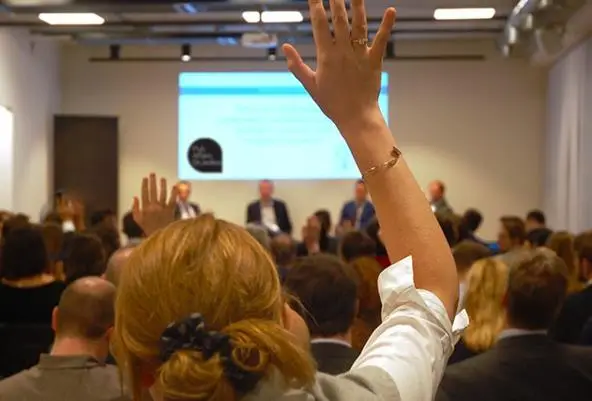
The audience will be able to ask questions both in person and through sli.do #EnergyPrices
We look forward to hosting you on the 23rd of September 2025.
