
We are delighted to invite you to an in-person only event which will be held on Wednesday, 19th of November 2025.
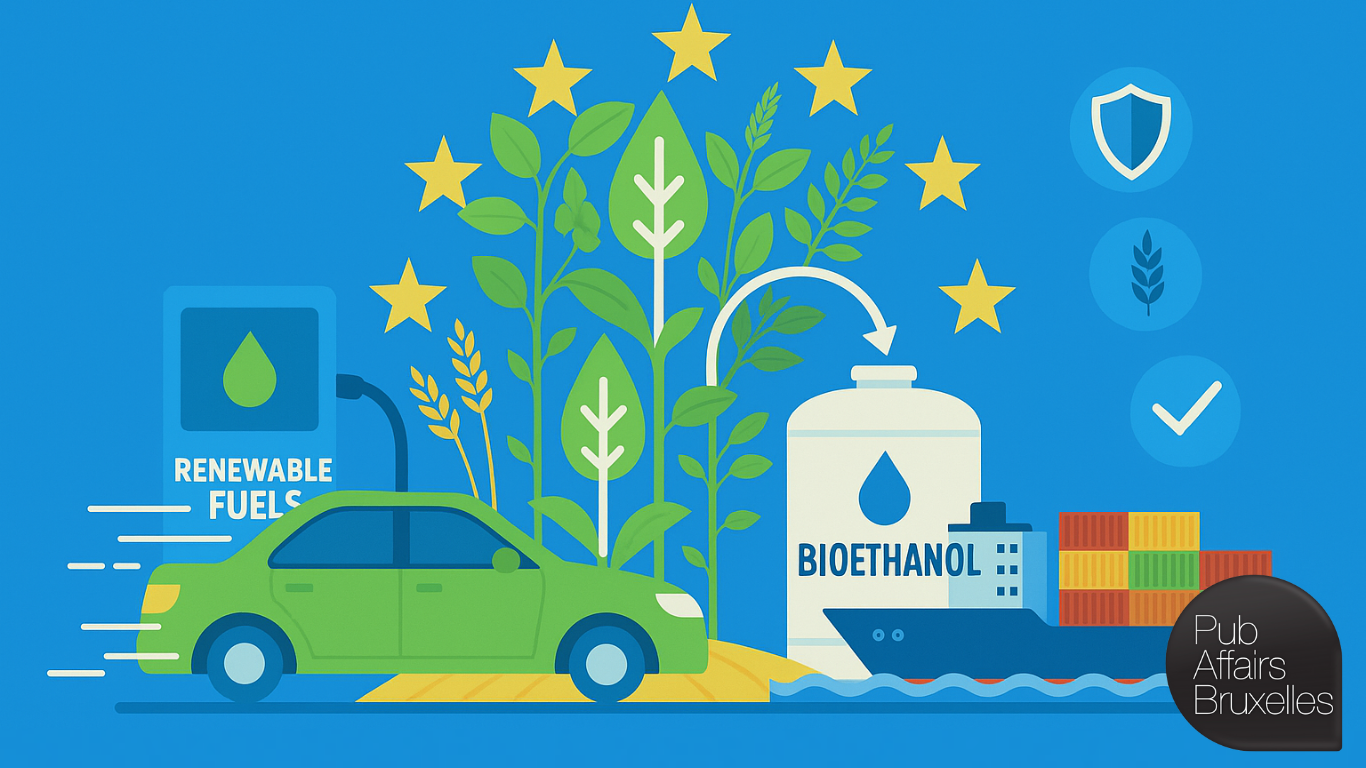
This event will consist of an afternoon of discussion on how the EU’s renewable fuel production can drive the de-fossilisation of road transport and strengthen food security. The event will also be a timely opportunity to discuss how Europe can retain economic value within its borders, build resilience and foster its strategic autonomy, with our distinguished speakers:
- Alarik Sandrup, Director of Public and Regulatory Affairs, Lantmännen;
- Claude Soudé, Vice-Chair of the Working Party on Bioenergy, COPA-COGECA;
- Hans Hoefnagels, Global Public Policy Director, Horse;
- Massimiliano Vascotto, Head of Public Affairs, ACEA.
David Carpintero, Director General, ePURE will give the introductory remarks.
Benoît Cassart MEP (Renew Europe/BE) will give some introductory statements.
The discussion will be moderated by Emily Waterfield, Freelance Journalist & Editor.
This event is public and will be held onsite.
Due to a limited number of seats, please await final confirmation from us after registration.

This event is organised in partnership with

About the debate
The European Union faces the complex challenge of balancing its decarbonisation objectives with the equally critical goals of economic competitiveness and industrial strategic autonomy. The twin priorities of environmental sustainability and economic resilience can, at times, create tensions in policy-making and implementation. While defossilisation remains imperative for the EU’s climate goals, the pathways to achieve it should take into account all proven solutions to reduce emissions. Against this backdrop, the recognition that no single technology can adequately address the challenge of decarbonising the European transport sector has gained further ground.
Although electrification undeniably remains a cornerstone of the EU’s decarbonisation strategy, renewable fuels represent an option that can deliver greenhouse gas reductions while supporting Europe’s broader environmental and economic objectives. In fact, several observers have argued that renewable fuels, such as bioethanol, should be evaluated through objective, science-based assessments of their potential contributions to EU policy goals and their full lifecycle emissions, to the extent that it has been argued that they could be recognised as CO₂-neutral.
As outlined in the Draghi report, Europe needs pragmatism and technological openness to meet its defossilisation goals. The integration of renewable fuels enables continued use of combustion engine vehicles while still advancing decarbonisation objectives. This approach reflects the practical reality of Europe’s vehicle fleet and would help avoid the premature obsolescence of existing assets, which would be particularly relevant for lower-income households and small businesses. Moreover, high-blend renewable fuels can significantly reduce emissions from conventional engines, offering a complementary pathway alongside electrification, rather than a competing technology.
European bioethanol production also represents a vital market for the agricultural sector, creating stable demand for sustainably grown crops and increasing food production, while generating high-protein feed and other co-products. This integrated production model supports rural economies and contributes to the EU’s protein self-sufficiency, thus reducing dependence on imported feed materials. This sector’s development aligns with the objectives of the Common Agricultural Policy by enhancing environmental sustainability while maintaining competitive farming across EU member states.
In this context, a higher level of domestically produced renewable fuels would further enhance EU strategic autonomy across multiple dimensions: reducing dependence on energy imports, strengthening food security through co-product generation, and supporting both agricultural and industrial competitiveness. By developing homegrown value chains for renewable energy production, Europe can retain economic value within its borders and build resilience against potential global market disruptions. This approach supports the EU’s broader objectives of maintaining technological sovereignty and industrial leadership, while creating jobs and investment opportunities across both rural and industrial regions.
This is a public event, hence the Chatham House Rule will not apply.
The event will start at 17.00, while the onsite welcoming at the premises of L42 will begin at 16.30. The discussion will last around an hour and a half.
Due to a limited number of seats, please await final confirmation from us after registration
The audience will be able to ask questions both in person and through sli.do #Resilience
We look forward to hosting you on the 19th of November 2025.
