

The Finder | Our monthly Insights | Issue 29 – May 2026
The international arena is in a permanent state of crisis – but where does the EU stand legislatively, and where is it heading at?
The European Union is no longer operating in a stable geopolitical environment. Between the return of an apparent and aggressive industrial protectionism in the United States, the rise of Chinese state-backed manufacturing, geopolitically-driven supply-chain vulnerabilities, the economic fallout of Russia’s war against Ukraine and renewed instability in the Middle East, the European Union is increasingly seeking a new industrial policy strategy as a question of long-term survival rather than simply market regulation.
As outlined in a recent analysis, the Trump–Xi summit may offer temporary relief to the global economy by easing trade tensions and restoring some confidence to international markets. Yet while a prolonged truce could reduce uncertainty for businesses and supply chains, it is unlikely to end the deeper strategic rivalry shaping the future world order. Indeed, economic fragmentation and geopolitical competition remain defining risks for the years ahead.
The latest scenarios of a possible end of the Iran war suggest that both Washington and Tehran have reached broad agreement on the principles of a possible deal, including guarantees for commercial navigation through the Hormuz Strait and a gradual easing of restrictions on Iranian oil exports. However, negotiations remain extremely fragile. At the same time, markets remain highly sensitive to developments around the Strait of Hormuz, through which, notably, roughly one fifth of global oil and LNG trade passes.
The significance of these negotiations for the EU extends well beyond the Middle East itself. The Hormuz crisis has reinforced a central lesson already drawn from the pandemic and the war in Ukraine: Europe’s economic stability remains dangerously exposed to external geopolitical shocks. This is precisely why the European Union increasingly links industrial resilience, energy diversification, supply-chain security and trade defence into a single framework. In this connection, the US-Iran negotiations are further evidence of the permanent instability that is triggering Europe’s new industrial and economic doctrine.
Over the past two years, Europe has therefore accelerated a profound rethinking of its economic governance. The dominant logic is no longer exclusively about competition and market openness. Indeed, it is now increasingly more about resilience, strategic autonomy and industrial capacity. The European Commission’s response, for instance, has taken the form of an expanding legislative ecosystem aimed at protecting European production whilst maintaining the Union’s traditional attachment to rules-based trade.
At the centre of this shift stands the EU’s Clean Industrial Deal, presented by the Commission as a new growth strategy combining decarbonisation with industrial competitiveness at the very beginning of this legislative mandate. The package directly responds to concerns that the European industry is losing ground to both Chinese overcapacity and US trade aggressiveness, and has fostered measures to reduce energy costs, simplify regulation, strengthen supply chains and channel major investment into clean manufacturing. The financial question is not a secondary aspect as the EU has long discussed how to make a proper Europe-wide capital market.
The Clean Industrial Deal also reflects a conceptual evolution inside the EU institutions. Climate policies are no longer purely framed as environmental regulation, as they are increasingly treated as an industrial strategy. EU institutions have realised that Europe’s green transition can only succeed if industrial production remains anchored inside the European Union rather than outsourced abroad. This explains the growing emphasis on “Made in Europe” requirements, strategic procurement and industrial sovereignty within the Industrial Accelerator Act, arguably one of the most significant files emerging from this new approach.
The legislative proposal seeks to stimulate demand for low-carbon European products through public procurement and support schemes favouring EU-made technologies and industrial goods. This represents a remarkable shift in mindset, which historically defended open procurement rules and global competition, features which have often defined the economic global order which is partially fading. Accordingly, the European Commission is now openly discussing resilience criteria and European preference mechanisms in strategic sectors.
Closely connected is the forthcoming Circular Economy Act, expected to reinforce the EU’s objective of reducing dependence on imported raw materials through recycling, reuse and domestic resource efficiency. Behind the environmental language lies a geopolitical rationale: Europe has recognised its structural dependence on foreign critical raw materials, particularly, but not exclusively, those connected to China-dominated supply chains.
The automotive sector illustrates particularly well the EU’s balancing act between climate ambition and industrial pragmatism. The Commission’s Automotive Package and Action Plan for the Future of the Automotive Sector attempt to reconcile climate targets with fears over deindustrialisation. The package introduces greater flexibility into emissions rules while simultaneously trying to preserve incentives for clean mobility investment.
A central component of this new strategy consists of the Carbon Border Adjustment Mechanism (CBAM), notably strictly connected with the European Emission Trading System (ETS) reform. This has become one of the clearest examples of the EU’s changing economic posture. Officially designed as a climate instrument preventing carbon leakage, the CBAM is also widely understood as a trade and industrial policy tool. By imposing a carbon price on imports in sectors such as steel, cement, aluminium, fertilisers and hydrogen, the EU is attempting to shield European producers from competitors operating under weaker environmental standards. In practice, the CBAM demonstrates the EU’s growing willingness to use access to the Single Market as an instrument in defence of both industrial competitiveness and climate objectives.
Digital policy follows a similar logic. Over the past mandate, the EU built an extensive regulatory architecture through the Digital Markets Act, the Digital Services Act, the AI Act, the Chips Act, and broader data governance legislation. Together, these files seek to reduce Europe’s technological dependence while shaping global standards in digital governance. The European Commission, although with some hiccups, increasingly presents digital sovereignty as inseparable from economic sovereignty, particularly in strategic sectors such as artificial intelligence, semiconductors, cloud infrastructure and cybersecurity.
EU Trade policies are equally undergoing a transformation. The EU remains rhetorically committed to the World Trade Organization and multilateralism, yet Brussels-based institutions are progressively equipping themselves with more defensive tools. Anti-subsidy investigations into Chinese electric vehicles, the Foreign Subsidies Regulation, strengthened trade-defence instruments, and CBAM all reflect a change of posture.
China occupies a central place in this recalibration. The EU no longer views Beijing solely as a trading partner but increasingly through the familiar triptych of “partner, competitor, and systemic rival”. European policymakers are particularly concerned about Chinese industrial overcapacity in sectors such as electric vehicles, batteries, steel, solar panels and clean technologies.
This tougher stance is increasingly shared across member states that previously defended more open trade positions. France, Italy, Spain and the Netherlands have jointly pushed for stronger EU trade measures against what they describe as unfair Chinese industrial practices. Although this push has been met with resistance, the emergence of such a coalition is significant because it suggests that concerns over Chinese overcapacity are now reshaping European consensus itself. Even traditionally trade-oriented economies are beginning to prioritise industrial resilience and economic security.
Yet the EU remains reluctant to fully abandon its traditional attachment to open trade and WTO legality. This tension defines much of the current legislative debate. Brussels wants to defend European industry without openly embracing the large-scale protectionism associated with Washington or Beijing. The conscious or subconscious result is a hybrid model: the EU is constructing a more interventionist industrial policy whilst attempting to preserve the framework of rules-based openness. This balancing act is indeed shaped by broader geopolitical instability beyond Europe’s immediate neighbourhood. Renewed tensions around Iran and the Strait of Hormuz have highlighted Europe’s continuing vulnerability to external energy shocks.
The geopolitical fragmentation explains the convergence between industrial policy, climate policy, trade policy and economic security inside the EU legislative agenda. Europe is now trying to preserve its traditional commitment to openness and multilateralism whilst simultaneously adapting to a world characterised by rivalry, coercion and permanent instability.
Ultimately, the EU’s legislative response to the current international crisis can be understood as an attempt at strategic fine-tuning rather than a rupture as the old-continent is not abandoning globalisation, but is trying to reshape globalisation around resilience, decarbonisation and economic security. Europe is increasingly recognising that industrial policy, climate policy, digital regulation and trade defence can no longer be treated separately.
The bottom line is therefore clear: the EU is elaborating, with visible fatigue, a coherent response to crises largely born outside its borders. Through industrial legislation, digital regulation, climate instruments and trade-defence mechanisms, Brussels-based institutions are attempting to adapt the European economic model to a world defined by geopolitical rivalry, technological competition and chronic instability. How can Europe be better equipped in terms of defence capacity otherwise?
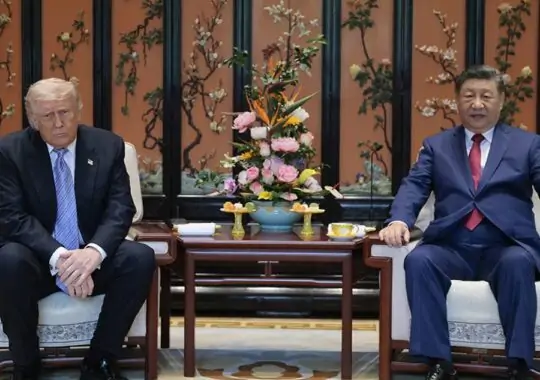
A Project Syndicate Commentary argued that the Trump-Xi summit in Beijing could represent an historical moment and an opportunity to reduce tail risks for the world economy. The main points of discussion concern a longer-lasting, Sino-American trade truce and a path to reopening the Strait of Hormuz. The Commentary argued that a temporary easing of the US-China trade tension would benefit both countries, enabling more stable economic relations. The summit could also create the conditions for a sustainable reopening of the Strait, benefiting world economies with lower oil prices. The Commentary concluded that the summit will not end the era of strategic competition, but could be a glimmer of hope in a complicated geopolitical era.
An ECFR Commentary argued that the EU is experiencing a “quarter-life crisis” marked by weakened self-confidence. Dependence on the US for security, on Russia for energy, and on China for industrial production, combined with insufficient efforts to maintain economic growth and innovation, are presented as the main causes of this situation. This is reflected in asymmetric trade deals with Donald Trump’s America, Europe’s marginal role during the US-Israeli attack on Iran, and its difficulties in helping Ukraine repel Russian aggression. According to the Commentary, change could come through greater European self-reliance in defence, a clearer reflection on the future shape of the EU beyond debates on enlargement and treaty reform, and the development of a competitiveness policy aligned with European values.
A CER publication stated that, despite criticism of Europe’s tech sector, firms such as ASML, SAP and Spotify show Europe can produce global tech leaders. It noted that startups and investment have grown, but Europe’s global tech share has declined. The publication highlighted three lessons: openness to foreign innovation and AI adoption boosts competitiveness, strong EU standards and the single market help firms scale, and sustained public and private R&D investment remains vital. It concluded that Europe should focus on innovation, smarter regulation and greater R&D investment to strengthen competitiveness and
independence.
An ECDPM Brief argued that the EU possess strong capabilities in digital connectivity infrastructure, including subsea cables, satellite systems, 5G/fibre networks, and data centres, but this is not supported by strong local operators. It highlighted that this inconsistency leads to fragmentation and dependency on non-EU providers that create structural vulnerabilities and weakens Europe’s digital sovereignty ambitions. The lack of cohesion across key sectors reflect the need for a better coordinated and competitive European connectivity offer that can provide a reliable alternative for partner countries. Finally, the EU should strengthen digital infrastructure operators to boost its tech competitiveness.
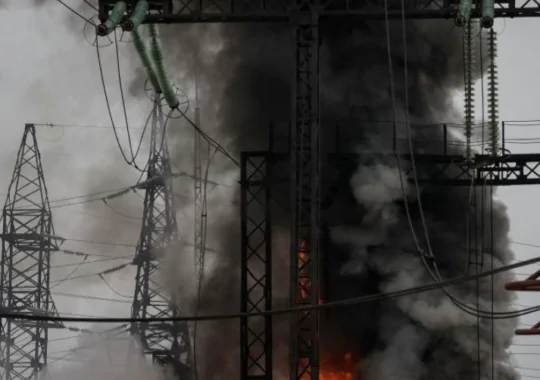
A Clingendael Policy Brief maintained that energy resilience is vital to Europe’s security, military readiness and the energy transition. It warned that energy supplies are increasingly weaponised, while Europe faces a “double bind” of reducing fossil fuel dependence and expanding clean energy capacity. The brief stressed the need for stronger civil-military planning, infrastructure protection, and more resilient energy systems. It concluded that cooperation, coordinated investment, and shared research and development (R&D) can strengthen competitiveness, as well as support dual-use technologies for defence and wider societal transition needs.
An Ifri Analysis examined Germany’s decision to preserve its federal unity, market liquidity, and industrial competitiveness by maintaining its single electricity price zone. Despite recommendations from ENTSO-E, Germany refused to split its bidding zone, arguing that this would have caused a “north-south divide”. However, the analysis noted that maintaining a single price zone increases dependence on expensive transmission lines and exacerbates north-south grid congestion. It concluded that these imbalances create a spillover effect on neighbouring countries, such as France, requiring them to invest in their grids to manage flows, without necessarily gaining profits out of it.
A CEPS Commentary warned that Russia’s war in Ukraine, instability in the Middle East, and uncertainty from the second Trump administration have intensified Europe’s security crisis while the US reassesses its NATO role. The publication highlighted that Europe has increased defence spending, but progress remains uneven and fragmented. The Commentary highlighted fears of Russian attacks and doubts about US support in a NATO crisis. It explained that a CEPS-led task force proposed three defence pathways, with the preferred option being greater European leadership within NATO and preparation for reduced US involvement. The Commentary concluded that Europe must shift to a more proactive and resilient security posture.
A Finabel Research Report argued that the growing use of Article 122 TFEU reflects a broader transformation in EU governance, where emergency situations are increasingly invoked to justify the rapid adoption of far-reaching measures based on solidarity between Member States. Through the example of the Security Action for Europe (SAFE) instrument, adopted in response to the consequences of the war in Ukraine, the Report highlights tensions between efficiency in times of crisis and democratic legitimacy within the Union. By relying on Article 122 instead of the ordinary legislative procedure, the Commission and the Council limited the role of the European Parliament, raising concerns about institutional balance and the normalization of exceptional governance mechanisms in the EU.
An SWP Commentary highlighted that the conflict over the Strait of Hormuz following the US-Israel war against Iran is reshaping trade and energy routes between Europe and Asia, giving Turkey the opportunity to position itself as a key transit hub between East and West. Ankara is strengthening its role as an energy hub through infrastructures such as the Southern Gas Corridor, Iraq’s Development Road Project, and the Baku–Tbilisi–Ceyhan pipeline. Istanbul Airport has also emerged as a major transit point linking Europe to Central and East Asia. For Europe, this alternative corridor is expected to influence energy prices, supply-chain resilience, and trade routes in the years ahead.
This editorial is authored by Massimiliano Gobbato, Communications Director. Contributions by PubAffairs Communications Team’s Kristina Vilenica, Jacopo Bosica, Giulia Piera Furlan, Simon Rolland and Arthur Fertier to the drafting of ‘The Finder’ are gratefully acknowledged.
From our Editorial Partners
The World Economy after the Trump-Xi Summit | Project Syndicate
If Donald Trump and Xi Jinping’s Beijing summit produces a sustained Sino-American trade truce and a path to reopening the Strait of Hormuz, that will give the world economy something it has lacked for the past year and half: a reduction in tail risks. In a year when so much has gone wrong, that is a welcome prospect.
Image credits: Evan Vucci/POOL/AFP via Getty Images

The EU’s quarter-life crisis | European Council on Foreign Relations (ECFR)
Let’s say you have a friend who fell asleep five years ago and has only just woken up. That friend asks you: “How is Europe these days?” What would you respond?
You would probably associate Europe with the EU, and you would perhaps recognise that the EU is in a delicate state; not just because of the wars surrounding it, the looming economic crisis and the fraying transatlantic relationship, but also because of its growing self-doubt.
Image credits: Anadolu | Pablo Esparza ©
Europe has produced tech champions: here is what they can teach us | Centre for European Reform (CER)
Despite the gloom about its place in the digital economy, Europe has produced tech leaders. Their experience should inform Europe’s policies to support competitiveness, innovation and entrepreneurship.
It is popular to criticise the state of Europe’s tech sector. The debate is often framed by Europe’s lack of equivalents to US tech giants and their Chinese competitors, and its supposed preference for regulating over innovating. Europe also lacks a deep pool of private finance to support tech development and broader enterprise growth – a problem that the EU’s efforts to establish a capital markets union are meant to address.
Building a European industrial offer on digital connectivity | ECDPM
The European Union (EU) possesses world-class industrial capabilities across foundational digital connectivity infrastructure, including subsea cables, satellite systems, 5G/fibre networks, and data centres. However, this strength is fragmented and not always backed by strong local operators, leading to dependencies on non-EU providers that create structural vulnerabilities that undermine the EU’s goal of digital sovereignty.
Image credit: Huancong Meng via Unsplash
Powering resilience: why energy innovation matters for European security and defence | Clingendael
Europe’s security, readiness and transition objectives converge in a critical dimension: energy resilience. This policy brief analyses this nexus, outlining the strategic considerations and entry points linking energy innovation with the security and defence agenda. At a time when energy supplies are increasingly weaponised for political leverage and targeted to undermine stability, integrated planning is necessary to address vulnerabilities across both liquid fuel and electricity systems.
Image credit: ©Reuters
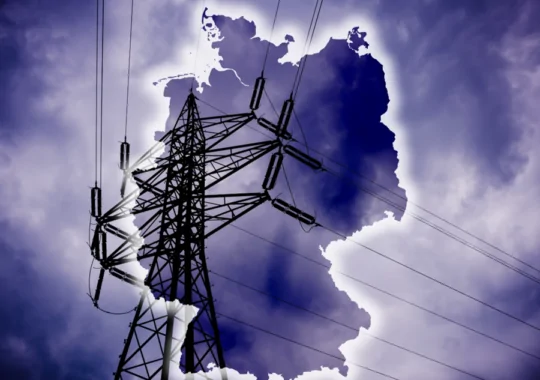
Germany maintains its single electricity price zone: implications | Institut Français des Relations Internationales (Ifri)
In December 2025, Germany refused to split its bidding zone despite recommendations from ENTSO-E, in order to preserve its federal unity, market liquidity, and the competitiveness of its industry, at the cost of persistent North-South imbalances.
Image credits: © Mino Surkala/Shutterstock.com
How to get ‘more Europe’ in defence | Centre for European Policy Studies (CEPS)
Russia’s war of aggression against Ukraine and destabilising actions by the second Trump administration have pushed geopolitics to the brink. With conflict spreading across the Middle East and tensions rising worldwide, the US is now reconsidering its role in NATO and preparing to shift critical assets away from Europe.
Image credits: © NATO, 2026.

The European Parliament’s challenge to SAFE: balancing democratic legitimacy and urgency in EU defence competence under articles 122 and 173 TFEU | Finabel
As the world passes the fourth anniversary of Russia’s invasion of Ukraine, the European Parliament’s action to annul the Council’s Security Action for Europe (SAFE) instrument, adopted by Council Regulation (EU) 2025/1106, highlights the fragility of the EU’s competence in defence and crisis response matters.
Turkey capitalises on Hormuz disruption: connectivity as a foreign policy strategy | German Institute for International and Security Affairs (SWP)
The US-Israel war against Iran and the standoff in the Strait of Hormuz are reshaping trade and transport links as well as changing regional connectivity across Eurasia. Disruptions to shipping and energy flows in the Strait, through which a fifth of global oil and gas trade passes in peacetime, are prompting regional actors to seek alternatives and creating openings for new transport corridors. Turkey is moving quickly to capitalise on this shift.