

The Finder | Our monthly Insights | Issue 30 – June 2026
The current legislative mandate midway through: can the EU lay the foundations for long-term competitiveness and strategic autonomy?
While the United States and Iran remain engaged in a diplomatic confrontation over control of the Strait of Hormuz, the European Union is slowly approaching the midpoint of its legislative mandate. At this stage, EU institutions are increasingly compelled to confront not only several mounting geopolitical challenges but, more importantly, its own economic and institutional weaknesses.
European Commission President Ursula von der Leyen has notably placed competitiveness at the heart of her second term, identifying single market reform, regulatory simplification and the implementation of the Clean Industrial Deal as the cornerstones of Europe’s new course. This agenda has been significantly shaped by the publication of the Draghi Report, which has provided a blueprint for the Union’s economic strategy.
As some observers have highlighted, EU institutions are gaining momentum on the competitiveness agenda. In fact, according to a recent assessment by the Institut Montaigne, the EU has already implemented around 30% of the recommendations set out in the Draghi Report. This suggests that Europe has made more progress than critics often acknowledge and lends support to the European Commission’s recent assessment of the “One Europe, One Market” Roadmap. However, the same institution also reportedly acknowledges the persistent political and diplomatic divides, noting that “the hardest reforms still lie ahead, many of them touching on the powers of EU countries and therefore likely to prove more difficult to agree”.
Indeed, the debate on the EU’s long-term budget for 2028-2034 – officially known as the Multiannual Financial Framework – is reaffirming the longstanding divide between the “Frugals” and the now-called “Friends of Cohesion”, reflecting the broader North-South and East-West cleavages within the European Union. During the latest budget negotiations, attempts to broker a compromise by proposing cuts of €32.8 billion sparked renewed tensions between the two sides. Meanwhile, the European Parliament – whose approval is ultimately required – rejected the EU Presidency’s proposal, particularly the measures affecting agricultural and regional funding.
The “old priorities”, such as agriculture and cohesion funds, and the “new priorities”, such as industrial policy and defence, are not the only fault lines in the budget negotiations. Divisions have also emerged over the overall size of the budget itself and the debate surrounding the EU’s “own resources” as the European Commission has proposed that member states introduce new EU-wide taxes to help financing the shortfalls of the bloc’s next long-term budget. However, this is only a part of the new European Commission’s stance on budget-related questions.
The ETS, for example, has become part of the discussion on new EU “own resources” as the Commission would like a share of ETS revenues to flow directly into the EU budget to help finance EU priorities, especially in terms of innovation and defence, as well as to repay the borrowing taken under the NextGenerationEU recovery programme. In addition, the EU executive body has put forward the Carbon Border Adjustment Mechanism (CBAM) also as a new EU own resource as it should generate revenue through sale certificates to importers of carbon-intensive goods, complementing the EU ETS and helping finance the EU budget, while preventing carbon leakage.
Regarding these two tools, however, governments and industries across sectors and regions have expressed opposite positions: some argue, with different nuances, that the ETS and CBAM are necessary for decarbonisation, whilst others fear they will increase costs, undermine European competitiveness, or even lead to deindustrialisation.
The question of European resources to increase the old continent’s competitiveness has also increasingly concerned trade imbalances – which at a recent European Council this month have been defined as “global macroeconomic imbalances” – with China in terms of manufacturing and raw materials, and with the United States in terms of digital services.
Some commentaries have argued that this awareness, however, did not lead to the definition of a coherent strategy at the latest EU leaders’ meeting in Brussels, making some other observers reckon that the EU is delaying the confrontation with Beijing, even though Germany, France, Italy, Poland and the Netherlands have pushed for new trade defence instruments, as well as for measures that would compel companies to diversify away from China for critical inputs.
Paradoxically, on the 22nd and the 23rd of June the EU, China and Canada gathered to discuss expectations ahead of COP31 at the 10th annual “Ministerial on Climate Action” in Brussels, during which China’s Minister for Ecology and Environment remarked that climate cooperation should continue despite the US’s absence.
By contrast, the US government’s move to limit foreign access to some advanced AI models has reinforced advocates of European technological sovereignty, who are now urging EU companies to cut their reliance on US-based cloud providers. Shortly before, in fact, the European Commission has presented the European technology sovereignty package, a wide-ranging set of policy measures and legislative initiatives aimed at reducing Europe’s dependence on non-EU providers for essential technologies such as digital infrastructure, semiconductors and artificial intelligence.
The Cloud and AI Development Act (CADA) has gained the spotlight as it aims to triple the EU data center capacity over the next 5 to 7 years to support high-performance computing and cutting-edge AI. Additionally, it mandates the creation of “data center acceleration zones” and introduces a single EU-wide assessment framework with four cloud sovereignty tiers. This last should govern public sector procurement and define which cloud services are deemed “sovereign” from foreign interference.
The parliamentary debate on EU tech sovereignty, however, highlighted that this question is not a straightforward partisan issue, as it has frequently crossed traditional ideological boundaries and even split members within the same political groups. Additionally, lawmakers disagreed over the future of the transatlantic alliance, questioning the degree to which the United States can still be viewed as a reliable partner.
At the same time, the discussion exposed deep rifts concerning the overall EU trade strategy, specifically regarding how much protectionism Europe should adopt to shield its interests. MEPs reportedly remained sharply divided also on the regulatory philosophy, debating whether the pursuit of technological independence requires sweeping deregulation or sustained governmental oversight.
Mario Draghi’s landmark report on European competitiveness has warned that Europe’s massive reliance on foreign technology is a core economic liability. Additionally, it identified capital markets as the engine that Europe lacks to fund its tech sector, remarking that Europe’s tech sovereignty ambitions will remain purely theoretical without a deeply integrated Capital Markets Union (CMU).
In addition to these outstanding questions, the United States’ decision to launch a trade investigation into Germany over allegations of unfair pricing practices has reignited transatlantic trade tensions roughly ten days before the European Council’s final approval of the EU-US trade agreement. At the heart of the dispute on drugs there is the argument advanced by the US Trade Representative that lower drug prices in Europe contribute to higher prices in the American market. According to this view, US patients should not be expected to shoulder a disproportionate share of the costs associated with global pharmaceutical research and development.
Within this context, the tenth anniversary of Brexit has created a revival of a wide range of topics, including its costs, its political consequences, the changing British public opinion, as well as the future of a possible UK-EU “reset”. Nevertheless, few observers have remarked that, in recent contemporary history, the United Kingdom has not been able to thrive without a flourishing European continent.
An ECFR Policy Brief argued that Europe can no longer afford to remain passive in the face of growing economic, industrial, and security dependencies on China. Beijing’s industrial policies, support for Russia, and dominant position in strategic supply chains are accelerating Europe’s deindustrialisation and exposing the continent to coercive pressure. The paper proposes a more assertive European strategy based on six conditions for access to the EU market, the “Six Nos”, including reciprocity, fair competition, supply-chain diversification, transparency, and security requirements. Rather than targeting China directly, this framework seeks to leverage the EU’s regulatory power and single market to reshape incentives, strengthen resilience, and reduce vulnerabilities.
An Ifri analysis explored Europe’s energy transition and the need for a greater expansion of its electricity grid. At a time of geopolitical instability, climate change, and shocks in oil & gas markets, the EU plans to put forward massive investments to accelerate permitting and increase grid planning coordination. The analysis argued that, to overcome substantial obstacles, these investments must be optimised by managing the system flexibly, ensuring the infrastructure is resilient, and signing long-term framework agreements. It concluded that the success of Europe’s energy transition will depend on its actors’ ability to coordinate and rapidly build supply chains and electricity grids.
A Project Syndicate Commentary argued that the US’s decision to restrict access to some of its advanced AI systems demonstrates that AI sovereignty is increasingly a geopolitical issue. It noted that governments’ attempt to build domestic alternatives may result in addressing the wrong problem. With AI advancing at a fast pace, the real question is not whether a country can build alternative models, but rather whether it can secure reliable access to AI systems wherever they are developed. The Commentary explained that competitiveness will depend on the ability to switch between competing systems and avoid dependence on a single supplier. It concluded that, in this context, AI sovereignty lies in preserving freedom of action.
A CEPS Commentary highlighted that quantum technology could become a major economic driver alongside AI, transforming fields such as medicine, navigation, cybersecurity, and communications. It noted growing investment from major technology companies and argued that quantum and AI will evolve together through the integration of quantum and classical computing. The publication stressed that Europe has strong quantum research capabilities but lags behind the US and China in patents, investment, and commercial scaling. It recommended focused investment, stronger public-private partnerships, and prioritising technological quality over headline metrics. Europe’s success, it concluded, will require a coordinated industrial strategy combining quantum with AI, supply chains, talent, and international cooperation.
An SWP Commentary argued that, as cybersecurity becomes an increasingly critical issue, particularly in the context of global conflicts marked by a rise in cyberattacks, software developers are not doing enough to ensure the security of their products. Critical software vulnerabilities remain relatively common and, while they are generally the result of ordinary human error rather than malicious intent, they can impose significant costs on both companies and states. The commentary therefore advocates for stricter cybersecurity regulations, including stronger fines for SaaS (Software as a Service) companies that fail to adequately monitor and manage the security of their software. Existing European legislation could be further strengthened, refined, and more effectively targeted to address these shortcomings.
An ECDPM Brief explored the EU’s new security strategy and whether this is not just a document among many. The current geopolitical landscape pushed the EU to assume a more assertive position and increase military spending. However, the brief argued that a first challenge is the lack of a shared European concept of security, which hinders the possibility of having a cohesive EU security strategy. It highlighted that, for this strategy to make a difference, it should focus on providing strategic clarity, strengthening coherence, and promoting a proactive mindset. Finally, the EU must recognise the importance of cooperation with its partners, and make sure that a new security strategy simplify and connect already existing frameworks.
A Finabel Research Report argued that the European Defence Industry Programme (EDIP) marks a significant shift in the EU’s approach to defence readiness by promoting long-term industrial integration rather than simply increasing defence spending. Through the Structure for European Armament Programme (SEAP) and the European Defence Project of Common Interest (EDPCI), EDIP seeks to support joint procurement, strengthen industrial capacity, reduce external dependencies, and address capability gaps within the European Defence Technological and Industrial Base. While its success will ultimately depend on sustained political alignment among Member States, the programme has the potential to stimulate demand aggregation and expand European defence production.
A Clingendael publication argued that EU enlargement has regained momentum, with Member States proposing new approaches to accelerate accession. It highlighted progress in talks for Moldova and Ukraine, while Montenegro continues advancing negotiations. The publication noted that reform debates have expanded beyond experts, with a Franco-German proposal promoting gradual integration and a Benelux-Franco-German proposal introducing risk-focused accession treaties, though potentially reducing membership attractiveness. It concluded that successful enlargement requires reforms in both candidate countries and the EU itself, with proposals needing to strengthen the accession process and the Union.
A CER publication finds that Brexit has significantly reduced UK-EU trade in goods and services. It explains that political debate is shifting, with more politicians recognising the economic costs of Brexit and considering closer EU ties. The publication lays out options from a customs union to single market participation, each involving economic benefits and political trade-offs. While a customs union could reduce barriers, it would not fully restore trade and could limit UK trade policy. The publication concludes that clearer evidence is needed to guide future decisions on the UK’s relationship with the EU.
This editorial is authored by Massimiliano Gobbato, Communications Director. Contributions by PubAffairs Communications Team’s Kristina Vilenica, Jacopo Bosica, Giulia Piera Furlan, Simon Rolland and Arthur Fertier to the drafting of ‘The Finder’ are gratefully acknowledged.
From our Editorial Partners

The art of the swarm: Systemic rivalry with China on European terms | European Council on Foreign Relations (ECFR)
China has had remarkable success in persuading European policymakers that this is not an answer they can give, too. Even as the case for saying no grows, Beijing’s economic policies are fuelling Europe’s deindustrialisation. The continent’s supply-chain dependencies on China leave it exposed to coercive pressure and debilitating shocks, and China’s support for Russia magnifies Europe’s biggest security threat.
Image credits: Portia Kentish

Europe’s power grid challenge: A make-or-break for accelerating electrification | Institut Français des Relations Internationales (Ifri)
At a time of international warfare, shocks on oil & gas markets and heightened climate change impacts, the EC is choosing to double down on the energy transition. This legislative proposal mostly addresses the need for improved EU coordination in grid planning and accelerated permitting. However, crucial parts of the challenge remain, notably ramping up grid supply chains.
Image credits: © chuyuss/Shutterstock.com

AI sovereignty is about options, not ownership | Project Syndicate
The US government’s abrupt decision to suspend foreign access to Anthropic’s Fable 5 and Mythos 5 models clarifies what “AI sovereignty” is really about. In the emerging AI economy, competitive advantage will come not from owning a single model, but from being able to evaluate, select, and orchestrate many models.
Image credit: Daniel Ceng/Anadolu via Getty Images

Quantum is the EU’s next big competitiveness test – to pass, here’s what it needs to do | Centre for European Policy Studies (CEPS)
There’s more than the AI revolution in our future. Quantum computing promises breakthroughs across domains thanks to its ability to simultaneously explore vast computational spaces. Quantum sensing offers precision that could transform medical diagnostics and autonomous navigation. Quantum networking aims to establish unconditionally secure communication.
Image credit: www.vecteezy.com
Cybersecurity needs secure software | German Institute for International and Security Affairs (SWP)
Cybersecurity incidents cause harm – for example, when adversarial states paralyse critical infrastructure or steal sensitive data. Many such incidents are only possible because many software products have known vulnerabilities. Software vendors could fix these, but they have little incentive to invest in the security of their products. To date, cybersecurity policy and protective measures have primarily addressed the symptoms of insecure software, rather than the root cause, namely software insecurity itself.
A new European security strategy: What for? | ECDPM
The European Union has adopted a growing number of strategies, roadmaps and doctrines in recent years, spanning economic security, defence, preparedness and resilience. While these initiatives reflect a shifting (and increasingly nervous) geopolitical landscape, they also risk creating fragmentation and confusion, precisely when the EU needs to project credibility and clarity on its vision.
Image credits: Marzia Cosenza via Audiovisual Services
From fragmented markets to strategic autonomy: the European defence industry programme | Finabel
“Spend more, better, and European.” This quote, coming from the President of the European Commission, Ursula von der Leyen (2024), encapsulates well the strategic dilemma currently facing the European Union: how to translate political urgency into structural defence transformation. Weighed down by decades of underinvestment and national fragmentation, today the European Defence Technological and Industrial Base (EDTIB) is far from efficient and suffers from serious capability gaps, often causing Member States to opt for weapons systems originating outside Europe (Besch and Quencez, 2019).
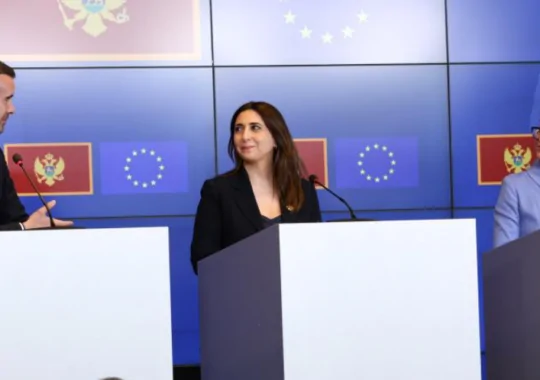
Challenge accepted? EU Enlargement non-papers provide mixed picture of EU integration commitment | Clingendael
EU enlargement is again in full swing. On June 15, the Council took the long-anticipated decision to open the fundamentals cluster for Moldova and Ukraine, marking the actual start of their accession negotiations. Montenegro closed yet another 2 negotiation chapters on the same day, getting ever closer to its objective to finalise negotiations by the end of 2026. Debates on how to facilitate enlargement on the EU side have equally received a boost in recent weeks.
Image credits: © European Union
The cost of Brexit, ten years on: The impact of leaving the customs union and single market on UK trade | Centre for European Reform (CER)
A decade after the British public voted to leave the EU in the 2016 referendum, the debate about Britain’s relationship with the bloc is shifting gears. After many years of keeping quiet about the costs of Brexit, British politicians on the centre-left have become more vocal. Prime Minister Keir Starmer has said that Brexit did “deep damage to our economy” and that his Labour government will be “defined by rebuilding our relationship with Europe”. Chancellor Rachel Reeves has described better trading relations with the EU as “the biggest prize” for reviving economic growth and argued that Britain should align with EU rules when doing so brings economic benefits.