
This issue is supported by EUMEPS, the voice of the European EPS industry, Montgomery International School and the European Training Institute (ETI)
The Finder | Our monthly Insights | Issue 33 – September 2026
“It was the best of times, it was the worst of times”: will the European Union eventually learn to act strategically?
By comparing the current era to Charles Dickens’s “A tale of two cities”, Ursula von der Leyen opened the State of the Union address stating that a stronger, independent Europe is emerging amidst an age of great potential and risk. “These two statements may seem incompatible. But they are both true. And they reflect these exceptional times. This complex age of great possibilities and great perils, which all countries are seeking to navigate”, she added at the very beginning of her annual speech before the European Parliament.
Notably, for much of the past decade, the European Union has become accustomed to managing crises. The financial crisis, the pandemic, Russia’s war against Ukraine, the energy shocks, disruptions to global trade and the increasingly uncertain transatlantic relationship have all forced Europe to develop new instruments of resilience. Whereas, for decades, the EU’s greatest geopolitical asset was often assumed to be the size of its Single Market.
Today, however, market access alone may not provide sufficient leverage in an increasingly competitive global economy. Chinese industrial capacity, US trade policies, geopolitical disruptions to supply chains and, more in general, the weaponisation of economic (inter)dependencies have encouraged European policymakers to reconsider the vision of the world underlying the contrast between openness and protectionism.
Therefore, the emerging European public debate is (or should be) increasingly less about choosing between openness and protectionism than about asking where (inter)dependence creates unacceptable strategic vulnerabilities, and where it remains an essential source of European prosperity and security.
The same question also lies behind the discussions over competitiveness. Simplifying regulation, completing the Single Market, reducing energy costs, supporting investment and developing strategic technologies are increasingly presented not merely as economic objectives, but as conditions for maintaining Europe’s security and its capacity to act globally.
This setting creates a difficult balancing act as the Old Continent cannot simply withdraw from globalisation without imposing significant costs on its own economy, nor can it assume that economic interdependence will remain politically neutral or under a stable open rule-based international trade order.
The next EU budget may provide a test of these ambitions. The negotiations over the 2028–2034 Multiannual Financial Framework force the European Union to confront a critical question: Europe has arguably accumulated more strategic priorities than it has financial resources. Against this backdrop, defence, competitiveness, cohesion, agriculture, climate policy and energy infrastructure are all competing for attention. The political difficulty lies not only in identifying priorities and determining how they should be reconciled, but also, more fundamentally, in deciding on the overall size of the budget.
The same dilemma applies to the enlargement process. Ukraine, Moldova and the Western Balkans have given enlargement renewed geopolitical significance. Yet, a larger Union raises unavoidable questions about decision-making, financing and institutional reform. The challenge is therefore not simply whether the EU can enlarge, but rather whether it can enlarge while retaining the capacity to make and implement common decisions. Indeed, before the EU undergoes its next round of enlargement, it must address difficult questions about how power is allocated among its member states.
The European Commission has advocated for expanding the use of qualified majority voting instead of unanimity in foreign and security policy to prevent national vetoes from limiting the EU’s ability to respond effectively to an increasingly unstable geopolitical environment. However, as a recent analysis of qualified majority voting in an enlarged EU argues, extending this voting system to a significantly larger Union could have wide-ranging implications that the European Commission will need to carefully consider, and that member states would be most likely unwilling to concede.
Although the European Union as a whole has valuably increased its spending, defence presents another dimension of the same questions. Strengthening European defence capabilities, ensuring security and deterrence, and responding to emerging threats are increasingly treated as a Europe-wide sovereignty and security issue. Yet the effectiveness of these efforts ultimately depends on cooperation between member states, greater coordination at European level, especially on both industrial and procurement policies, and partnerships with countries and organisations beyond the Union.
These partnerships are therefore becoming an increasingly important dimension of European prosperity and security. President Ursula von der Leyen invited Canada to become the EU’s first “associate member”, presenting the proposal as part of a broader effort to “reimagine” the European Union’s alliance in a changing geopolitical environment. Symbolically, the proposal signals that the EU is seeking to build a closer community of security, economic and technological cooperation with like-minded democracies, and Canada is especially relevant in this context because of its shared democratic values with the EU, its role as a NATO ally and its strategic importance in areas such as trade, critical minerals, energy and defence.
The relationship has already moved beyond political rhetoric as the EU and Canada signed a Security and Defence Partnership in 2025, while Canada subsequently became the first non-European country to participate in the EU’s Security Action for Europe (SAFE), opening possibilities for Canadian participation in European defence procurement. At the same time, the proposal illustrates the ambiguity surrounding the EU’s emerging partnership model. Indeed, the notion of “associate membership” has no established legal or institutional definition. The EU has therefore effectively proposed a new diplomatic framework before defining its precise institutional terms.
In perfect alignment with the concept expressed in the above-mentioned Charles Dickens’s quote, this ambiguity can be seen both as a limitation and as an opportunity as it leaves considerable room to develop cooperation in strategic areas such as defence-industrial integration or artificial intelligence without requiring Canada to become a member state, or the EU to create a conventional accession process. At the same time, the absence of clearly defined rules raises questions about governance, decision-making, market access and the rights and obligations that would distinguish “associate membership” from the existing forms of partnership.
Migration presents another dimension of the same problem. Control of external borders, returns, legal migration and cooperation with third countries are increasingly treated as questions of European sovereignty and security. Yet the effectiveness of these policies ultimately depends on cooperation between member states, first, and with countries outside the Union, second.
Across these debates, one theme therefore keeps returning: capacity. Can the EU make decisions quickly enough? Can it mobilise sufficient financial resources? Can it translate its economic weight into geopolitical influence? Can it reconcile national interests sufficiently to act collectively? And can it do all of this while preserving the internal market, democratic accountability and the principles on which European integration has been built?
Europe’s current strategic debate is often described as a search for “autonomy”. However, autonomy does not mean isolation or self-sufficiency. A more useful interpretation may be the capacity to choose strategically, namely put the EU in the position to cooperate when cooperation serves European interests, to diversify when dependencies become excessive and to act collectively when national action is insufficient. This may ultimately be the significance of the discussions unfolding this autumn after the State of the Union speech.
Indeed, the European Union is no longer faced with the question of how to withstand the next crisis, but rather of what capabilities it needs to shape the environment in which that crisis will occur. This setting, however, presupposes a scenario in which Europe’s political and diplomatic fragmentation does not prevent the European Union from continuing to fail forward, and turn successive crises into further integration and institutional gains.
An Ifri Editorial explored the rapprochement between the EU and Canada, which is translating into concrete cooperation benefiting both sides. While acknowledging the US as its main economic partner, the Canadian Prime Minister recognised the need to diversify Canada’s partnerships amid growing tensions. The analysis highlighted that the EU and Canada share the same interests, particularly in the security and defence field, where they tightened their cooperation, allowing Canada to be the first third country to be associated with the Security Action for Europe (SAFE) instrument. This alignment on key sectors could evolve into a stronger and fruitful economic alliance; however, the analysis concluded that this would require greater coordination among EU member states and clarity from Canada vis-à-vis its relations with the US.
A Project Syndicate Commentary argued that the growing competition from China undermined Germany’s industrial economy foundations and contributed to its recent political shift. It noted how China’s dominance in industries that formed the backbone of Germany’s regional economies resulted in a decline in German manufacturing. The Commentary linked these economic disruptions to the rise of AfD, particularly in the recent Saxony-Anhalt elections, registering higher support among industrial workers. While noting that the economic factors caused by the China shock are not the sole reason for the party’s success, it concluded that these recent developments shook the foundations that, for long, supported social cohesion, with the risk of losing faith in the political system that maintained stability.
An ECFR Policy Alert argued that the AfD’s 43.8% result in Saxony-Anhalt’s state election could deepen political instability in Germany and weaken Merz’s ability to provide European leadership. While the AfD’s lack of executive experience could discourage voters if it struggles to govern effectively, a coherent government could give it greater influence and strengthen the radical right elsewhere in Europe. The report therefore calls for stronger action against extremist elements and funding streams and more substantive responses from pro-European parties to radical-right support. It also argues that other European capitals should reduce their reliance on German leadership and develop alternative sources of political momentum.
A CER Insight argued that the 2028-2034 EU budget offers an opportunity to strengthen democracy and the rule of law. It explained that the Commission proposes linking more EU spending to rule-of-law compliance: the proposed €771-billion fund would extend compliance requirements to cohesion, agricultural, migration and other spending. In parallel, the Commission would get tools linking payments to continued compliance. However, through qualified-majority voting, member states would retain influence, potentially limiting effectiveness of these new Commission tools. The article pointed out that democracy funding would also increase through the proposed €8.6-billion AgoraEU programme, though it would still remain a small share of the budget. The article concluded that political will would ultimately determine whether the proposed mechanisms were effectively enforced.
An ECDPM Report examined how China, Indonesia, and Morocco use industrial policy to develop electric vehicle (EV) battery value chains, analysing strategies from mining and processing to battery and EV manufacturing. The industrial policy has a pivotal role for national policy-makers worldwide and the report used China, Indonesia and Morocco as case countries, noting their different use of subsidies, local content rules, investment incentives, infrastructure, and value chain integration. The report concluded that the three countries offer different lessons. While such policies can support economic growth, EV adoption, and green transitions, they also create challenges, including overcapacity, trade tensions, environmental damage, labour concerns, and policy coordination gaps.
A Clingendael Commentary argued that clean-energy partnerships can strengthen EU energy security and competitiveness while supporting development in partner countries. It stressed the importance of local value creation over resource exports, where development aid supports energy and industrial investments through technical assistance, regulatory reform and skills development. It provided the examples of Morocco’s green hydrogen and low-carbon fertiliser sectors and of Uzbekistan’s critical-raw-material processing as mutually beneficial arrangements. The article concluded that Official Development Assistance (ODA) can advance EU strategic interests alongside local development when aligned with partner-country priorities.
A Finabel Research Report argued that Poland’s large-scale procurement of South Korean defence equipment since 2022 illustrates a structural challenge for European rearmament. Poland signed agreements worth an estimated USD 14.5 billion with Hyundai Rotem, Hanwha and Korea Aerospace for tanks, artillery and combat aircraft. At the same time, Poland became the largest applicant to the EU’s SAFE fund, receiving €43.7 billion for defence-industrial investment. The report highlights a tension between Warsaw’s reliance on externally sourced equipment and the EU’s objective of strengthening its own defence-industrial base, and examines whether this pattern could undermine European defence-industrial integration.
A CEPS article explained that, in the debate over AI risks, some warn about catastrophic threats, while others focus on current harms such as disinformation, manipulation, and discrimination. It noted that agentic AI has increased concerns following incidents of AI systems accessing networks without authorisation and cooperating during attacks. The article contrasted the EU’s focus on systemic risks with the US’s focus on catastrophic risks. While the EU’s approach is more flexible, it can be interpreted as open-ended, whereas US rules are clearer but may overlook broader societal harms. The article called for evidence-based governance based on probability and impact, and underlined that stronger powers given to the EU AI Office since August 2026 could support this more forward-looking approach.
An SWP Point of View argued that France’s weak economic growth and rising borrowing costs could become a systemic risk to the Eurozone. The significant structural imbalance in French public finances is illustrated by a budget deficit exceeding 5% of GDP, rising public debt that could exceed 130% of GDP by 2030, and an interest burden that could reach €120 billion (3.5% of GDP) by 2030. Furthermore, the political ability to address this situation is uncertain. The absence of a parliamentary majority and numerous promises of additional spending from candidates in the next presidential election could weaken the French economy and, in turn, disrupt eurozone stability, creating tensions and undermining confidence in the monetary union.
The editorial is authored by Massimiliano Gobbato, Communications Director. Contributions by PubAffairs Communications Team’s Jacopo Bosica, Giulia Piera Furlan, Simon Rolland, Arthur Fertier, Ginevra Caruso and Irene Falcone to the drafting of ‘The Finder’ are gratefully acknowledged.
From our Editorial Partners
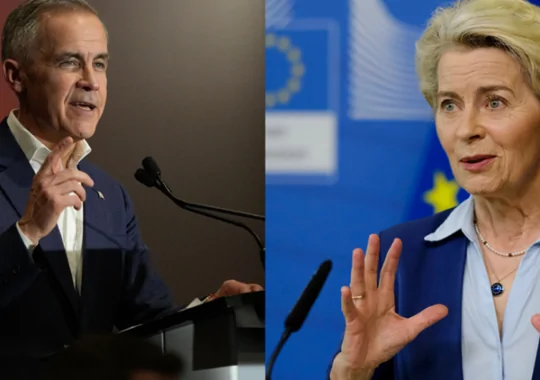
Canada : vers un retour aux sources européennes ? | Institut Français des Relations Internationales (Ifri)
Quand Ursula von der Leyen prendra la parole le 16 septembre pour le traditionnel discours sur l’état de l’Union européenne (UE), de nombreux regards risquent de se tourner vers la tribune d’honneur, où aura pris place le Premier ministre canadien Mark Carney.
Image credits: Harrison Ha & Alexandros Michailidis / Shutterstock.com
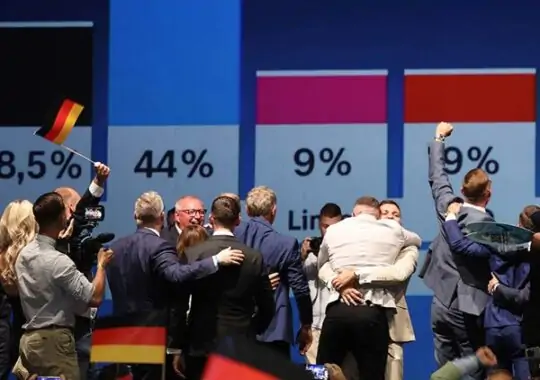
The Political Earthquake From Germany’s China Shock | Project Syndicate
For decades, Germany’s stability rested on an implicit bargain: high-value manufacturing would provide good jobs, strong export revenues, and broad-based prosperity, which political institutions would translate into social cohesion. Competition from China shakes that bargain to its foundations.
Image credits: Sean Gallup/Getty images
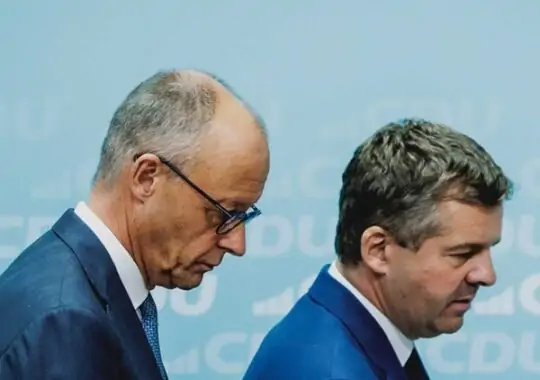
Beyond Saxony-Anhalt: What Merz’s crisis means for Europe | European Council on Foreign Relations (ECFR)
Saxony-Anhalt has returned 43.8% of the vote for the Alternative for Germany (AfD) in its state election. The result puts the party within reach of forming what would be the first state government run by the far-right in the history of the German federal republic.
Image credit: picture alliance / photothek.de | Florian Gaertner

Can the EU's next budget defend democracy and the rule of law? | Centre for European Reform (CER)
Viktor Orbán’s electoral defeat in April 2026 marked the EU’s return to a community governed by the rule of law and democracy in all of its member-states. But as far-right and illiberal populist parties continue to gain ground across Europe, the EU’s ability to defend its core values is shaping up to be one of the key challenges of the next decade.
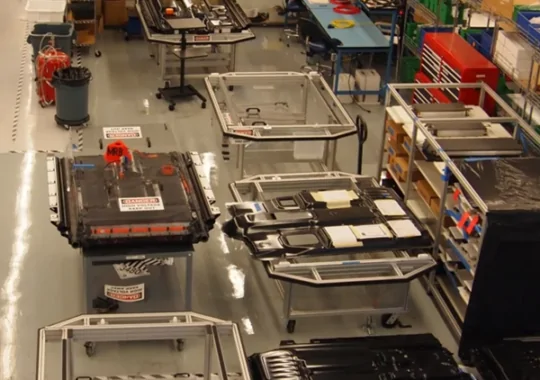
Industrial policy for the battery age: Lessons from China, Indonesia, and Morocco | ECDPM
Industrial policy is now a fact of life for national policy-makers worldwide. A recent World Bank report characterized industrial policy as “back with a vengeance.” Indeed, it can be argued that it was never “gone” but rather was quietly practised by most economies, even during the years when it was officially out of fashion.
Image credits: Windell Oskay via Flickr
Between aid and interest: the case for smarter energy partnerships | Clingendael
As the EU seeks to reduce its dependence on imported fossil fuels, an accelerated domestic energy transition will not be sufficient. Europe will continue to rely on international partners for critical raw materials (CRM), green hydrogen and low-carbon industrial inputs. This policy brief examines how Official Development Assistance (ODA) can support sustainable development in partner countries while advancing EU energy security and industrial competitiveness.
Image credit: ©Clingendael/AI-generated
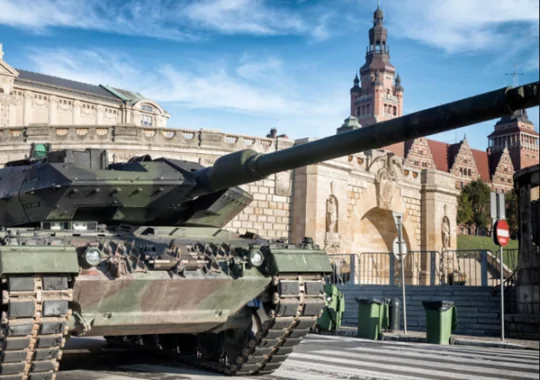
Off-SAFE, Not Anti-SAFE: Poland’s K2 Procurement and the Limits of EU Defence-Industrial Integration | Finabel
Poland’s 2022 purchase of South Korean K2 tanks and K9 howitzers resolved an urgent capability and delivery gap with off-the-shelf, NATO-interoperable equipment. All the while, Poland became the largest applicant to the European Union’s Security Action for Europe (SAFE) fund. This paper argues that NATO interoperability and EU industrial integration are distinct achievements, and that Poland has secured the first without yet securing the second.

Europe needs a more strategic approach for tackling AI risks | Centre for European Policy Studies (CEPS)
As AI models’ capabilities keep increasing, the debate over the risks posed by AI is becoming divisive. To some, AI poses ‘catastrophic risks’, with AI systems being used to create weapons or conduct cyberattacks, as well as pursuing their own goals and ‘building themselves’ through recursive self-improvement.
Political Instability Meets Fiscal Limits: Is France the Euro’s Next Big Stress Test? | German Institute for International and Security Affairs (SWP)
With around half a year remaining before the next presidential election, France is in danger of becoming a stress test for the eurozone: a political crisis, a deteriorating fiscal position and growing market doubts about the country’s ability to finance its mounting debt burden are all converging. France faces a significant structural imbalance in its public finances.