

This issue is supported by EUMEPS, the voice of the European EPS industry and the Montgomery International School
The Finder | Our monthly Insights | Issue 34 – October 2026
Great disorder under heaven: the underlying economic challenge behind the EU budget negotiations, the upcoming European national elections and the old continent’s external relations
The negotiations on the European Union’s next Multiannual Financial Framework (MFF), also known as the EU budget, are entering a critical phase, as member states grapple with competing spending priorities, national contributions and the future of EU financing. The emergence of a €70 billion funding gap in Ukraine’s projected needs for 2027 has added urgency to an already contentious debate.
To illustrate the scale of the commitment, this amount is comparable to the EU’s average annual disbursements under the Recovery and Resilience Facility (RRF), also known as the Recovery Fund, during its first three years of operation, which totalled €220.8 billion between 2021 and 2023, or approximately €74 billion per year.
Energy prices have been adding pressure to the negotiations, on top of the broader challenges faced by the EU economy. Indeed, at the European Council meeting in mid-October, member states have faced renewed calls to reconcile industrial competitiveness, energy affordability and decarbonisation, alongside demands for greater fiscal flexibility and measures to reduce electricity costs.
Although the financing of Ukraine and the next MFF remain formally separate files, their political dynamics are increasingly intertwined, reflecting the broader challenge of matching Europe’s wider ambitions with its available financial resources.
The debate is increasingly shaped by two opposing camps: the “Frugals” and the “Friends of Cohesion”. The “Frugals”, comprising Germany, the Netherlands, Austria, Denmark, Finland and Sweden, are advocating for substantial reductions to the European Commission’s proposed budget of almost €2 trillion. They argue that the proposed increase is difficult to justify given national fiscal constraints, and favour a stronger focus on competitiveness, research, security, defence and innovation.
By contrast, the Friends of Cohesion, a group of 17 mainly southern and eastern European countries, oppose disproportionate cuts to cohesion and agricultural funding, maintaining that these policies remain essential to reducing regional disparities and supporting rural economies.
Disagreements also extend to the revenue side of the budget, with governments divided over the introduction of new EU own resources and the repayment of NextGenerationEU borrowing. Ireland’s October 2026 compromise proposal has sought to bridge these differences by reducing the overall budget by 8% compared with the Commission’s proposal, while limiting cuts to cohesion and agricultural funding to 3%.
The forthcoming negotiations will therefore test the EU’s ability to reconcile national budgetary constraints with the need to finance emerging strategic priorities while preserving social cohesion. This challenge is compounded by political uncertainty ahead of several national elections in 2027, including in France, Italy, Poland and Spain, which could further compound the efforts to reach agreement on the next MFF.
Against this backdrop, in the United States, the midterm elections scheduled for the 3rd of November 2026 could also affect the balance of power in Congress and the Trump administration’s room for manoeuvre on trade, defence, support for Ukraine and transatlantic relations.
These internal divisions are unfolding alongside mounting external economic pressures, particularly in the EU’s relationship with China. Following high-level negotiations in Beijing between the 8th and the 9th of October, the European Commission secured an initial understanding aimed at easing trade tensions, including measures concerning Chinese hybrid and plug-in hybrid vehicle exports, access to critical raw materials such as rare earths, and market access for selected European products.
However, significant disagreements remain over the structural imbalances in bilateral trade. The EU’s goods trade deficit with China exceeded €370 billion in 2025, reflecting a substantial increase in imports relative to European exports and reinforcing concerns about industrial overcapacity, state subsidies and the competitiveness of European manufacturing.
While EU institutions continue to prioritise dialogue, the outcome of the negotiations remains an initial step rather than a comprehensive settlement. The next phase will test the EU’s ability to reconcile open trade with the protection of its industrial base and the reduction of strategic dependencies.
European policymakers are considering stronger trade-defence instruments in sectors exposed to Chinese competition, including chemicals, machinery and plastics, while seeking more reliable access to critical raw materials and greater reciprocity for European businesses operating in China. Nevertheless, member states remain divided over the appropriate response as some are concerned about potential retaliation against exporters and companies with significant exposure to the Chinese market, while others favour stronger safeguards against unfair competition and industrial displacement.
Recent Franco-German calls for more effective instruments to address economic threats reflect a broader shift towards a more assertive European trade policy. Ultimately, the outcome will influence not only bilateral commerce, but also the EU’s wider approach to industrial competitiveness, economic security, supply-chain resilience and international trade rules.
Behind these budgetary and trade negotiations lies a deeper structural challenge: Europe’s persistent productivity gap. As Dani Rodrik, Professor of International Political Economy at the Harvard Kennedy School, argues in a recent analysis, European labour productivity has increased at only half the pace of that in the United States over the past quarter-century, contributing to a widening income gap.
Although Europe’s stronger public services, labour-market institutions and social safety nets have helped distribute the benefits of economic growth more evenly, these achievements cannot be sustained indefinitely without stronger productivity growth.
However, neither the United States nor China provides a model that Europe can simply replicate. The US innovation ecosystem has generated major technological breakthroughs but has struggled to distribute their benefits throughout the economy, while China’s productivity gains have relied heavily on manufacturing, a sector that will play a more limited role in Europe’s increasingly service-oriented economies.
Europe’s challenge is therefore not simply to produce more technological innovations or create global technology champions, but to ensure that existing technological and organisational advances are adopted more widely across businesses and sectors.
This process, according to Dani Rodrik, requires targeted industrial policies and public-private cooperation to address obstacles such as fragmented markets, financing constraints, regulatory complexity, limited business scale and inadequate organisational adaptation. Particular attention should be paid to services, where most European employment is concentrated, and to the effective deployment of artificial intelligence, whose productivity benefits depend not only on the development of new systems, but also on their widespread and effective use.
Addressing Europe’s productivity crisis is ultimately central to resolving the tensions underlying both the EU budget negotiations and its economic relationship with other economic giants.
Indeed, stronger productivity growth can raise incomes, expand the tax base and generate the resources needed to sustain public spending on social protection, infrastructure, research, defence and the green and digital transitions. It can also help European businesses compete internationally, reduce strategic dependencies and strengthen the EU’s capacity to respond to geopolitical shocks.
In this connection, the economic challenge underlying the current public debate is not merely to decide how Europe should allocate its existing resources, but to expand the economic capacity towards future prosperity and public investment that must be financed. Europe’s ability to sustain its social model, meet its geopolitical commitments and compete in an increasingly contested global economy will, in fact, largely depend on turning productivity growth into higher living standards and greater fiscal capacity. Is it not this what economic competiveness, in the end, is worth for?
An SWP Commentary argued that the EU’s proposed 2028–2034 budget faces a key challenge in balancing greater flexibility with financial predictability and democratic oversight. The European Commission’s €1.984 trillion proposal would simplify funding structures and introduce new instruments to respond to crises, potentially making almost €800 billion available for unforeseen expenditure. However, greater flexibility could weaken long-term funding commitments and raise concerns about transparency and the roles of the European Parliament and member states. The Commentary highlighted the need to reconcile the EU’s capacity to respond to new challenges with predictable funding and clear institutional accountability, while avoiding new political tensions between EU institutions.
A Project Syndicate Commentary argued that Europe’s leaders struggle to recognise the EU’s declining competitiveness amid growing industrial dominance in sectors like high-tech, software, and hydrocarbons from the US and China. It highlighted the US’s leading role in advanced technologies and China’s expanding industrial capacity, while the EU lacks sufficient energy resources and leading AI firms. The Commentary argued that European policymakers’ decision to opt for protectionist measures and subsidies has failed to restore competitiveness. Instead, it noted, Europe should focus on the specialised sectors where it still has a competitive advantage, such as the chip-making machinery. Finally, the EU should foster greater flexibility in the economy and increase investment in research and development.
A CEPS publication argued that Europe’s banking competitiveness problem stems less from capital requirements than from market fragmentation and national barriers. It highlighted the need to complete the Banking Union, resolve the home-host issue and safeguard host countries. It noted that EU-US capital ratio comparisons must account for differences in risk-weighted assets, business models and regulatory frameworks, while the output floor may increase capital requirements for certain exposures. The publication concluded that reform should prioritise coherent, proportionate rules, supervisory convergence and market integration alongside prudential recalibration, rather than focusing solely on deregulation.
An ECDPM Commentary examined the foreseen cuts to the Global Europe instrument in the Irish Presidency for the EU’s 2028–2034 Multiannual Financial Framework (MFF), underlining the risk of undermining Europe’s external action and geopolitical influence. The proposition envisaged a 17% cut for Global Europe; meanwhile, sectors like agriculture and cohesion faced cuts of only 3%. The Commentary noted that this reflects the political dynamics of the MFF negotiations, and questioned whether Europe is adapting its budget to a changing world, or allowing established spending patterns and national political priorities to undermine its ambitions. It highlighted the limited support among Member States for protecting external actions, and concluded that the EU’s budget should reflect Europe’s geopolitical ambitions.
An Ifri Analysis explored the European Union’s adoption of the Action Plan for Electrification to structurally reduce European economy’s dependence on fossil fuel imports and accelerate the energy transition. Following the EU’s objective of doubling the electricity share, replacing the combustion of fossil fuels with the consumption of European electricity, it highlighted the need for all EU Member States to adopt national electrification plans and contribute to this transformation. In this regard, the analysis identified three priorities: setting clear electrification targets, introducing incentives for electrification to secure investments by businesses, and accelerating electricity grid connections. It concluded that national plans must align climate, energy, and industrial policies to pursue European energy sovereignty.
An ECFR Commentary argued that competition between three foreign policy “tribes” around Trump is producing an inconsistent US foreign policy that undermines European security. The restrainers favour reducing US global commitments, the prioritisers want to focus resources on China, while the primacists seek to maintain American global dominance. Their competing agendas have left Europe exposed to unpredictable decisions on Ukraine, Iran and US military deployments. However, growing US reliance on European bases and defence industries offers European governments greater negotiating leverage. The Commentary argues that they must coordinate their positions and negotiate collectively with the US to protect their interests and avoid remaining dependent on an unpredictable ally.
A CER article argued that Europe needs a collective, long-term strategy towards Russia, pursuing three objectives: resist Russian aggression, constrain Russian influence and encourage political change without assuming Putin’s successor will be democratic. To reach these goals, the article suggested that Europe should strengthen its defence capabilities, counter hybrid warfare, enforce sanctions and restrict Russian revenues and military technology. It should also address domestic vulnerabilities and counter Russian and Chinese influence internationally. Sanctions and support for Russian democratic opposition could encourage long-term change, while normalisation should depend on Russian behaviour. The article concluded that the cost of inaction outweighs the investments required, recommending a joint European strategy, ideally at the EU–UK summit in November 2026.
A Clingendael report argued that traditional escalation models fail to capture how contemporary conflicts cross domains and follow unpredictable pathways. Hybrid operations and disinformation complicate attribution, while rapid developments can either amplify tensions or facilitate coordination. Three cases involving Russian nuclear rhetoric, explosive parcels across Europe and a drone incursion into Poland illustrated these challenges. The report proposed an “escalation lattice” to visualise non-linear escalation and recommended that the Netherlands and its allies improve information-sharing, communication and response calibration to maintain deterrence without unnecessarily escalating conflict.
A Finabel research report argued that the EU’s proposal to grant Canada associate membership could strengthen European defence capabilities and reduce reliance on the US. Building on existing cooperation, closer integration could improve military interoperability, logistics and information-sharing, while combining Canadian expertise in AI, cyber and Arctic security with European funding and industrial capacity. The report highlights the potential for a more resilient European defence architecture amid growing geopolitical instability and uncertainty over US commitments. However, the proposed status remains undefined and could create overlaps between EU and NATO structures. The next EU-Canada summit could clarify how this partnership might develop.
The editorial is authored by Massimiliano Gobbato, Communications Director. Contributions by PubAffairs Communications Team’s Jacopo Bosica, Giulia Piera Furlan, Simon Rolland, Arthur Fertier and Ginevra Caruso to the drafting of ‘The Finder’ are gratefully acknowledged.
From our Editorial Partners
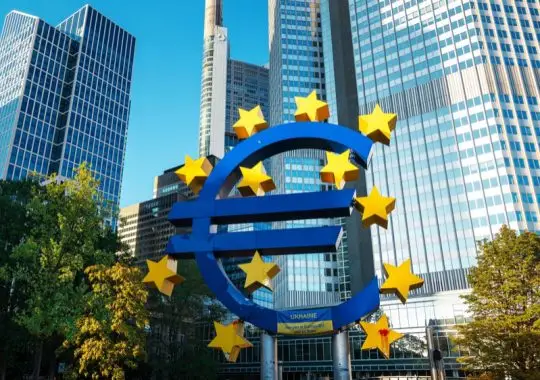
The EU’s Multiannual Financial Framework for 2028–2034: New Conflicts of Interest | German Institute for International and Security Affairs (SWP)
In July 2025, the European Commission presented its proposal for the EU’s multiannual financial framework (MFF) for 2028 to 2034. Since then, the member states have been seeking consensus within the Council of the EU. Ideally this should lead to agreement among the heads of state or government before the end of 2026.
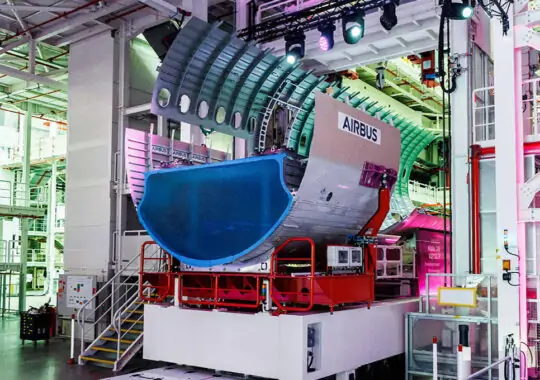
Europe’s Place in the Global Redivision of Labor | Project Syndicate
While the US continues to lead in software, some high-tech sectors, and hydrocarbons, China is becoming increasingly competitive in many high-tech, capital-intensive sectors, not least those once dominated by Europe. The EU does have a relative advantage in this new economic order, if only its leaders would recognize it.
Image credits: Markus Scholz/Picture Alliance via Getty Images

Bank competitiveness in Europe: integration, capital and the unfinished single market | Centre for European Policy Studies (CEPS)
Europe’s debate on bank competitiveness is often framed in terms of high capital requirements. But a more fundamental challenge is the persistent fragmentation of the European banking market.
Image credit: www.vecteezy.com
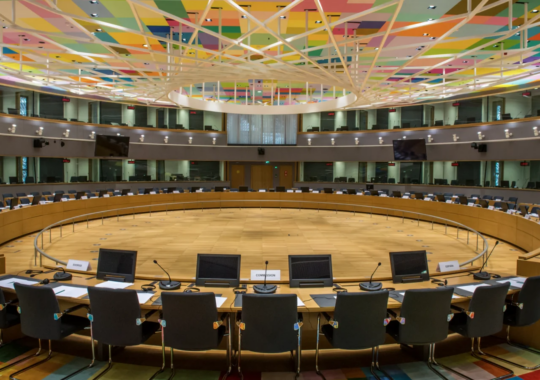
Who will stand up for Global Europe? | ECDPM
The Irish Presidency’s negotiating box foresees a 17% cut for Global Europe. Our experts examine what that would mean for Europe’s external relations and its competitiveness, security and defence.
Image credit: European Council
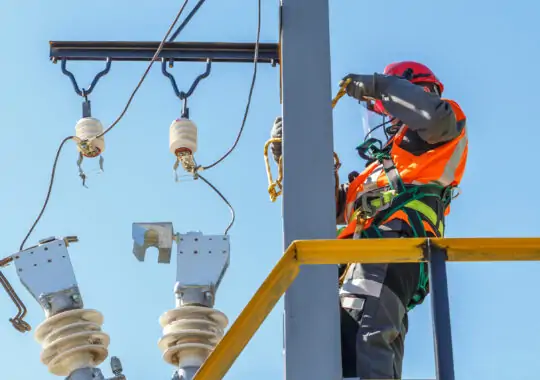
27 Plans for 2027: Turning the Electrification Action Plan into National Action | Institut Français des Relations Internationales (Ifri)
With the aim of structurally reducing the European economy’s dependence on fossil fuel imports and accelerating the energy transition, the European Commission has opted for electrification.
Image credits: Pavel Kosolapov/shutterstock.com
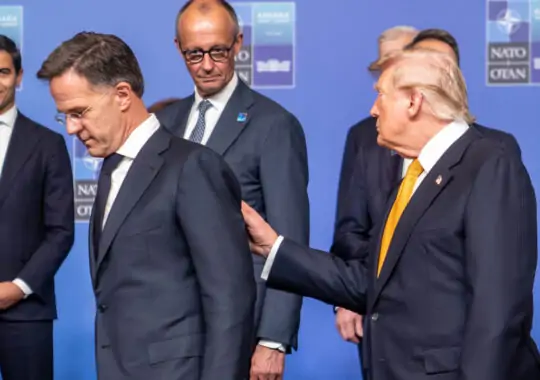
Faction fight: How Europeans can better influence American foreign policy battles | European Council on Foreign Relations (ECFR)
Factional struggles around the US president have left Europe at the mercy of competing foreign policy agendas. But European disunity only undermines European interests
Image credit: Image by picture alliance/dpa | Michael Kappeler
Resist, constrain and change: A European strategy for relations with Russia | Centre for European Reform (CER)
Since the start of Russia’s full-scale invasion of Ukraine in February 2022, European governments and EU institutions have focussed on the short-term demands of deterrence and defence.

Effects of hybrid conflict on escalation management | Clingendael
Contemporary conflict escalation can no longer be adequately understood as movement along a traditional ‘escalation ladder’. Hybrid conflict and new technology create a more contested information environment and enable escalation to proceed through multiple, cross-domain and sometimes discontinuous pathways.
Image credit: ©Clingendael / AI generated
A Reimagined Defence Partnership: Canada as an Associate Member of the European Union | Finabel
In her 2026 State of the Union Address, European Commission President Ursula von der Leyen invited Canada to become the EU’s first-ever “associate member”. If established, this status would constitute a new form of relationship between the EU and a non-member state.